


Play game
Hire me (or not!!)'s itch.io pageResults
| Criteria | Rank | Score* | Raw Score |
| Audio | #1 | 3.625 | 3.625 |
| Visuals | #2 | 4.250 | 4.250 |
| How well does the game fit the themes? | #2 | 4.625 | 4.625 |
| How do you rate the game overall (you can consider fun, dev time, etc.)? | #3 | 3.625 | 3.625 |
| Gameplay | #8 | 3.125 | 3.125 |
Ranked from 8 ratings. Score is adjusted from raw score by the median number of ratings per game in the jam.
How long was your dev time?
3 hours
Leave a comment
Log in with itch.io to leave a comment.
Comments
The different ending were cool to see! Really nice and simple game!
AMAZING GAME!
That’s great there, Toby. Ggrreeaatt.
Very fun to play! Nice work man 😎
Very fun to play! Nice work man 😎
Thank you very much! It turns out Gemini is quite good and fast at generating procedural graphics in python, so asking for items and placing them myself didn't take much time at all. I'm glad you liked the details, I had fun trying to polish them as much as possible!
Funny story game. I like it :D
Thanks!! 😁
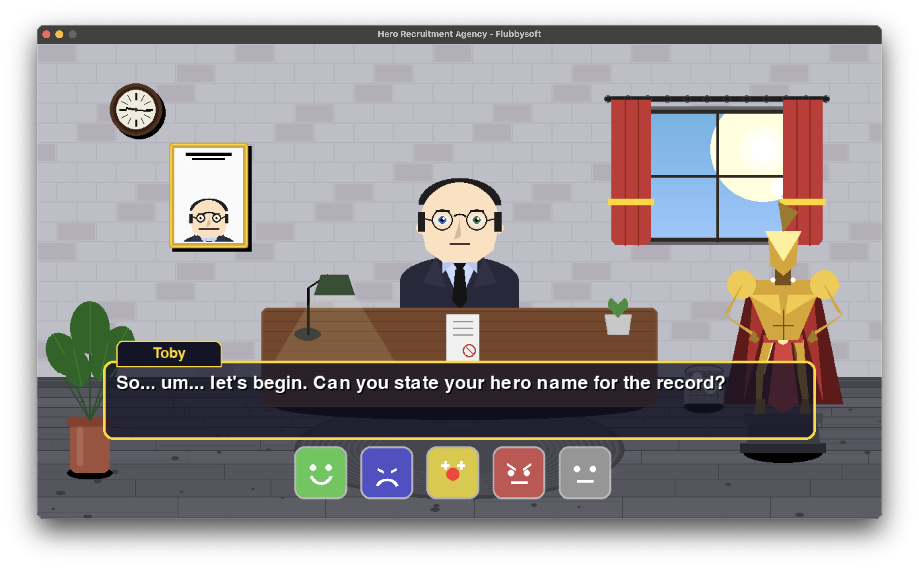
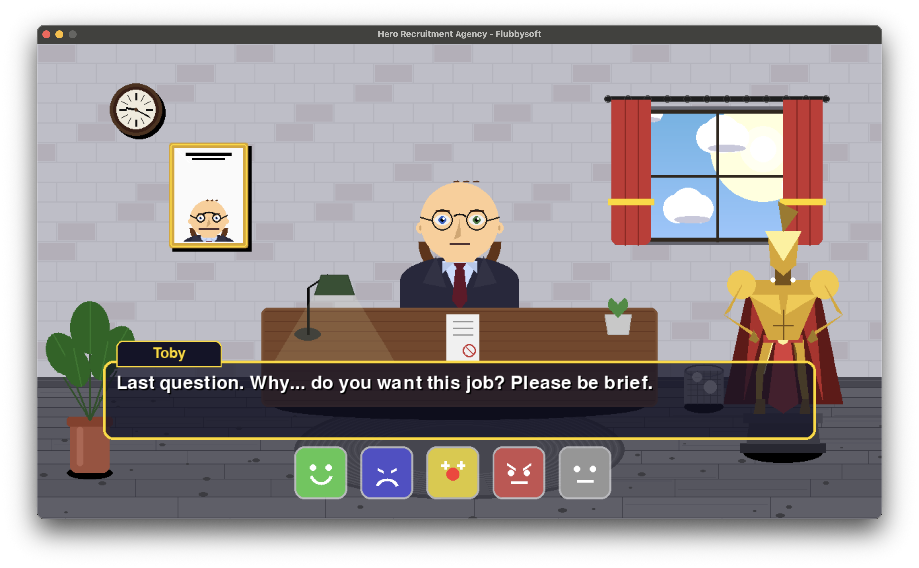
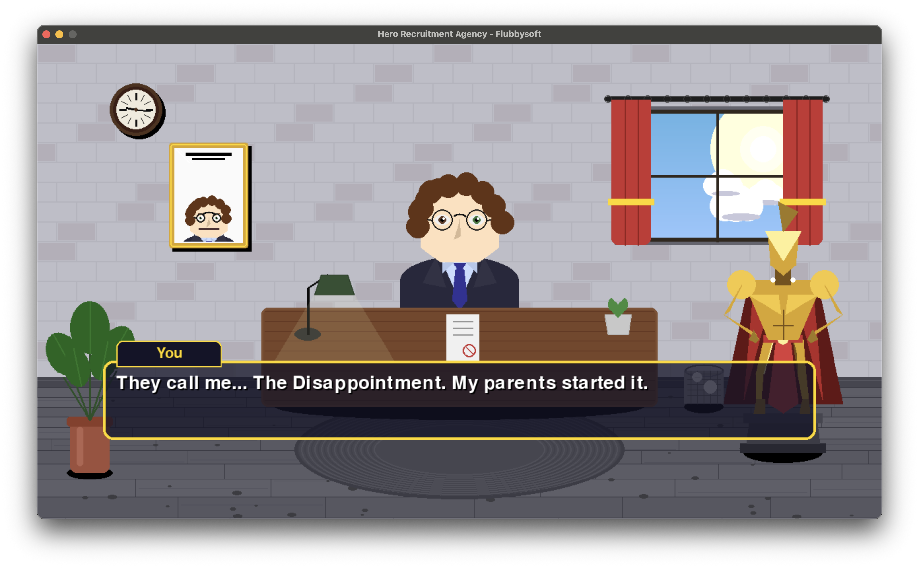
Amazing how careful you were with details on this! The changing appearances, eyes, floors, moving background... And the fact that you didn't use a game engine for a 3-hour game game is absolutely insane and impressive. Any motives behind delevoping directly on python? Or just personal preference?
Wow, thank you!! Most of the code (state machine, popups, juicy buttons, basic dialogue system) is assembled from bits I already had from other games and prototypes. I used AI for most of the procedural graphics and parts of the dialogue, so I can't take all the credit. But the fact that bare code is so easy to reuse and combine compared to game engine scripts is actually why I prefer not using an engine. I have a very soft spot for python too though, and was overjoyed that pygame suddenly was a viable jam option when I discovered pygbag for web exports!
I want to set up something so I can assemble from bits like that. Any tips?
It's all about how you separate logic into small classes, you can look up "composition design pattern for game development", or "composition vs inheritance", there are a ton of great articles and videos out there. The core design I use for my game elements (a button, an enemy, a lamp on the desk, etc.. ), is they all have the following methods: Initialize, Draw, Update, Destroy.
For the state machine, I have a small game template project with a splash, title screen, and gameplay state (screen). Each state has a reference to the Game object, which contains all the settings and game data that is shared between states (basically the data that is saved, like hero stats, last position, etc). I'm not sure if this is the cleanest, but it works for my needs.
Hope that helps a bit!