

I made this game entirely with AI.
**Cozy Garden Night** is a compact browser-based Three.js 3D life-sim about getting a garden dinner party ready: watering flowers, gathering produce, cooking at the grill, serving seated guests, and switching on the garden lights.
Game link: https://gamemakersum.itch.io/cozy-garden-night-seele
I opened the game for a focused hands-on check. On the measured reload from this session, the disabled “Loading…” state became the enabled “Enter the Garden” button after about **58 seconds**. That is simply the wait I observed on this run; other sessions or connections may differ.
What stood out first was how much information the initial playable view communicates without a separate tutorial sequence. The garden is presented from an elevated 3D perspective, with the player character visible in the scene and the full dinner-party checklist pinned at the upper left. The controls are also stated plainly: WASD or arrow keys move, mouse drag changes the view, and E or Space interacts.
The five-part objective structure is especially readable. The HUD tracks three flower beds, six pieces of produce, three cooked dishes, three guests to serve, and one set of garden lights. Those numbers turn the broad theme of “host a dinner party” into a set of concrete actions, while the environment visually supports the same plan: flower planters, dining areas, guests, lighting, and other garden stations are distributed around the grounds.
During my short test I entered the garden, moved with the keyboard, and tried the interaction key. Movement visibly carried the character across the paved area and shifted the camera framing from the central gathering space toward the garden’s edge. Circular highlights around objects and guests provided immediate visual cues about where interactions are likely to happen. The counters stayed at zero during this brief check, so this post should not be read as a claim that I completed the objective chain.
From a game-development perspective, the useful part of this small scene is the alignment between theme, space, and HUD. The player can read the fantasy (prepare a cozy night for guests), see the relevant stations in the world, and keep the complete task list visible while moving. That makes the goal legible even before the first objective is completed.
The attached image is a clean capture of the actual gameplay canvas after entering the garden—not a mockup or loading screen. I’d be interested to see how the pacing feels across the full chain from watering through the final light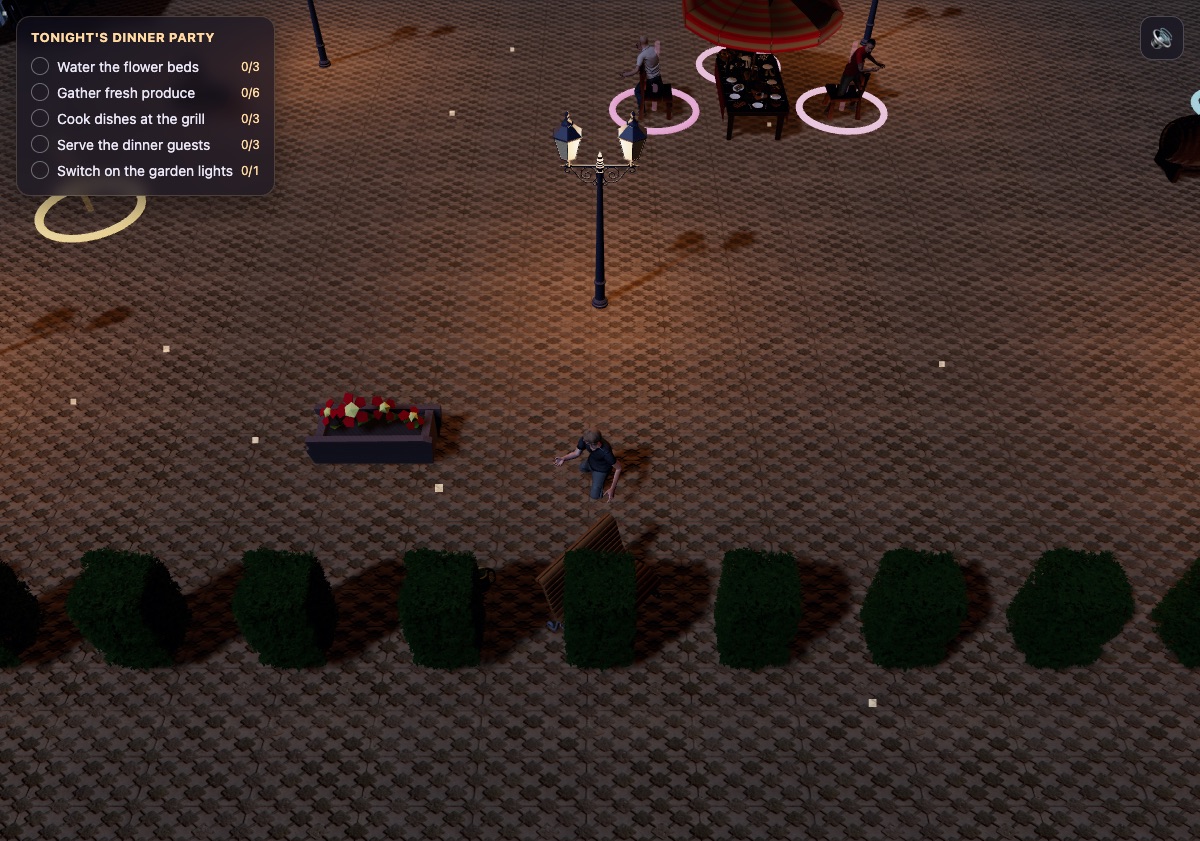 ing objective.