

Play game
The Dog Ate My Castle: Don’t Tell the Teacher's itch.io pageResults
| Criteria | Rank | Score* | Raw Score |
| AI Direction & Mastery | #3 | 3.727 | 3.727 |
| Overall Enjoyment & Value | #6 | 3.455 | 3.455 |
| Production Velocity & Scope | #7 | 3.455 | 3.455 |
| Innovation & Experimentation | #8 | 3.091 | 3.091 |
Ranked from 11 ratings. Score is adjusted from raw score by the median number of ratings per game in the jam.
The Biggest Challenge
Keeping in the boundaries and doing some crative work on myself. In addition The breakthrough was letting the AI play its own game. Claude wrote the game so that the engine also runs without a screen, plus a bot that defends every map twenty times and plays Snack Wars against itself. Every balance change was checked with numbers instead of guesses, and the bot found things I would have missed: soldiers sent on their own between waves achieved nothing, so sending never paid off (now they march in with the next wave), and one new map was won 100% of the time until its enemies got 18% more health. The hard part was everything numbers can't measure. The AI can't feel whether a game is fun or readable, so my own playtesting turned into notes like “make the compass rose
smaller and the prices easier to read” or “the dog logo is too childish”. Two Claude sessions also worked on the same code at the same time and had to message each other so they would not overwrite each other's work.
AI Tools Used
Claude Code by Anthropic, with the Claude Opus 5.5 model (the game's own Settings → About says the same).
Graphics and banners were partially product by GPT-6 Astra.
Areas Where AI Was Used
Code: all of it, written by Claude Code. I directed the design, playtested and decided what changes.
Graphics: no image generator. Everything in the game is drawn by code on a canvas (wobbly pencil lines, stick figures, towers), and that code was written by Claude. The page banner was assembled by Claude from a colleague's cover illustration.
Sound: no audio AI and no recordings. Every sound is synthesised with the Web Audio API in code written by Claude.
Text: the English and Czech texts, the story and the rules were written by Claude from my brief.
Testing: an AI-written bot plays every map to check the difficulty.
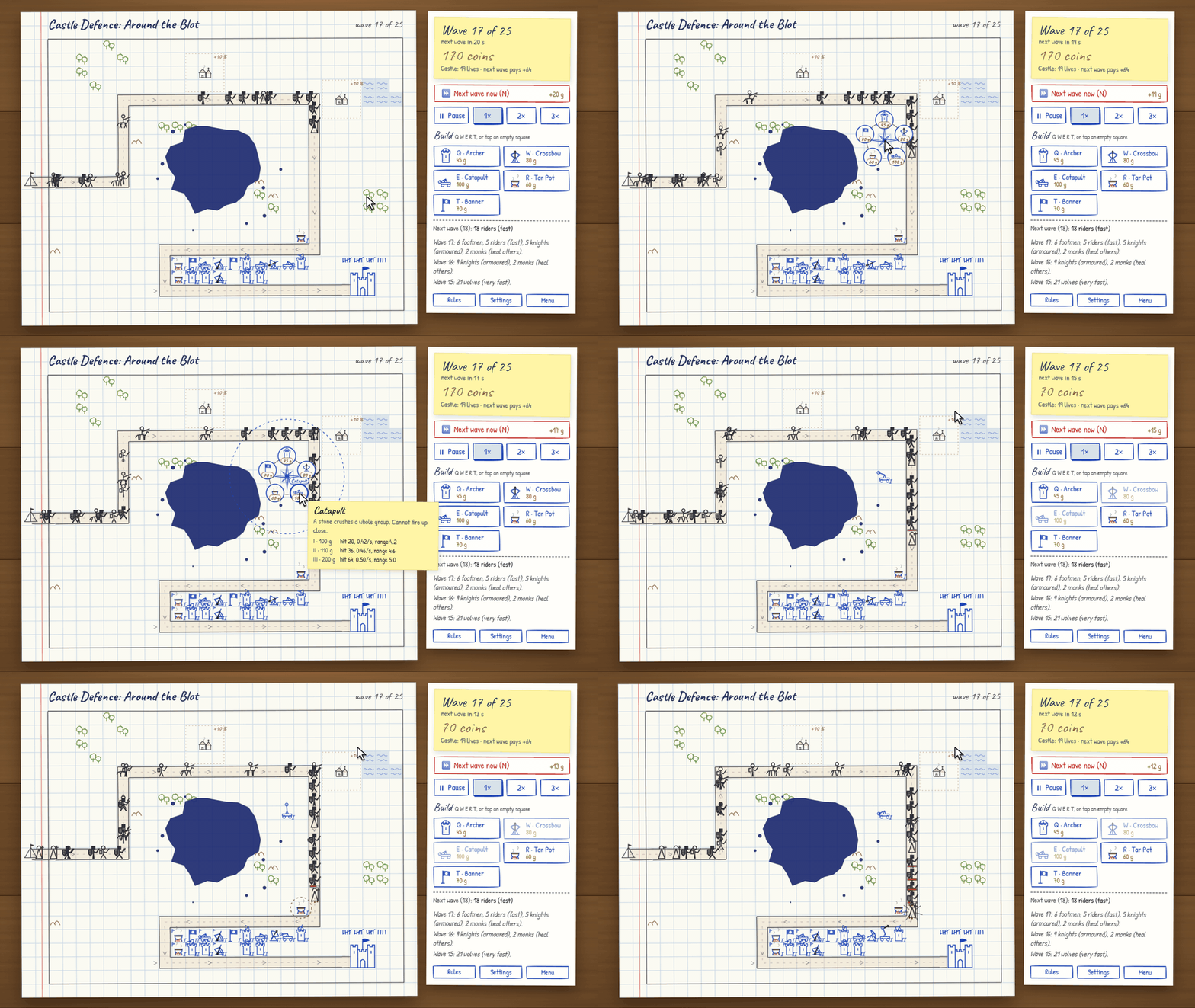
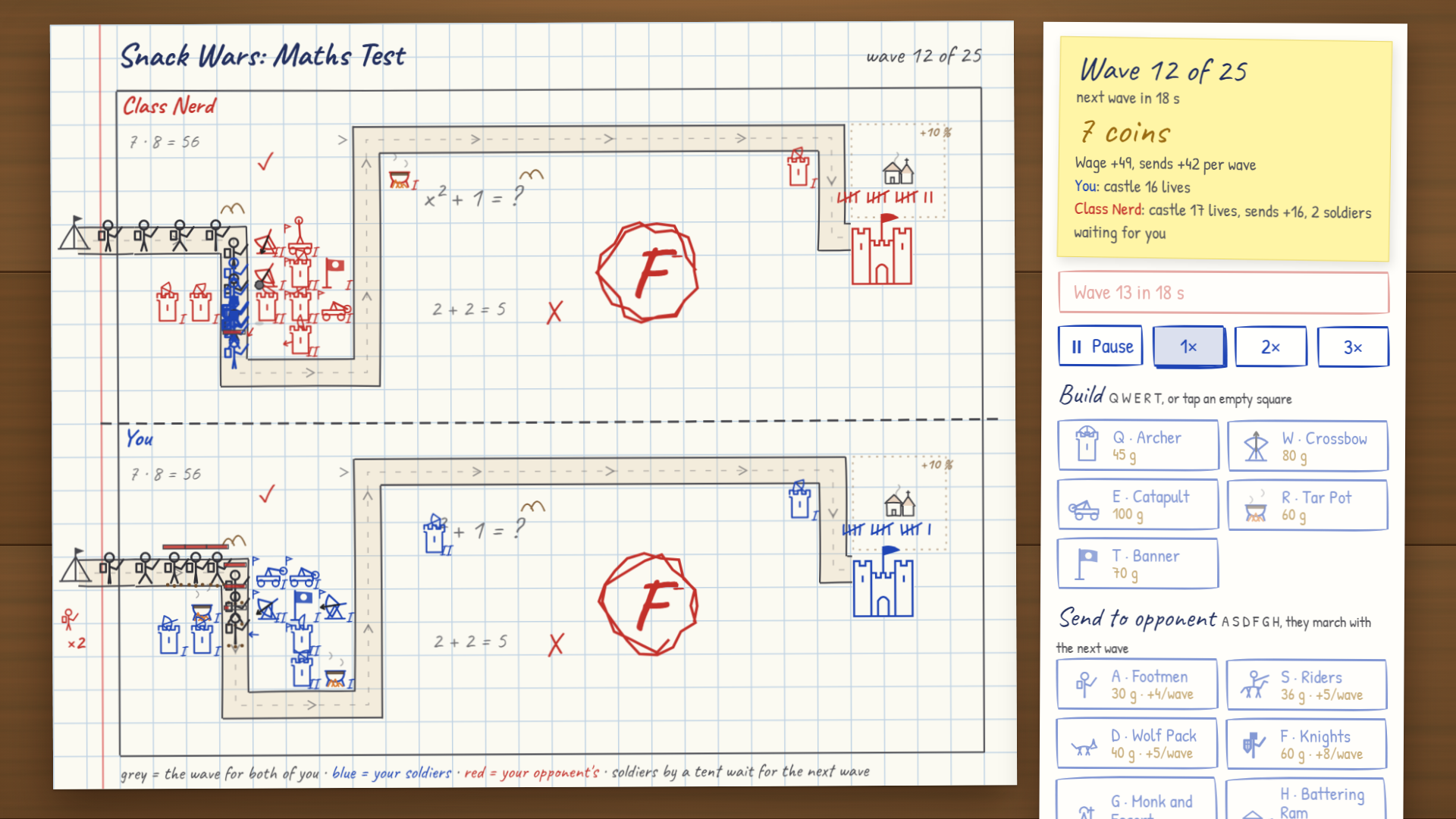
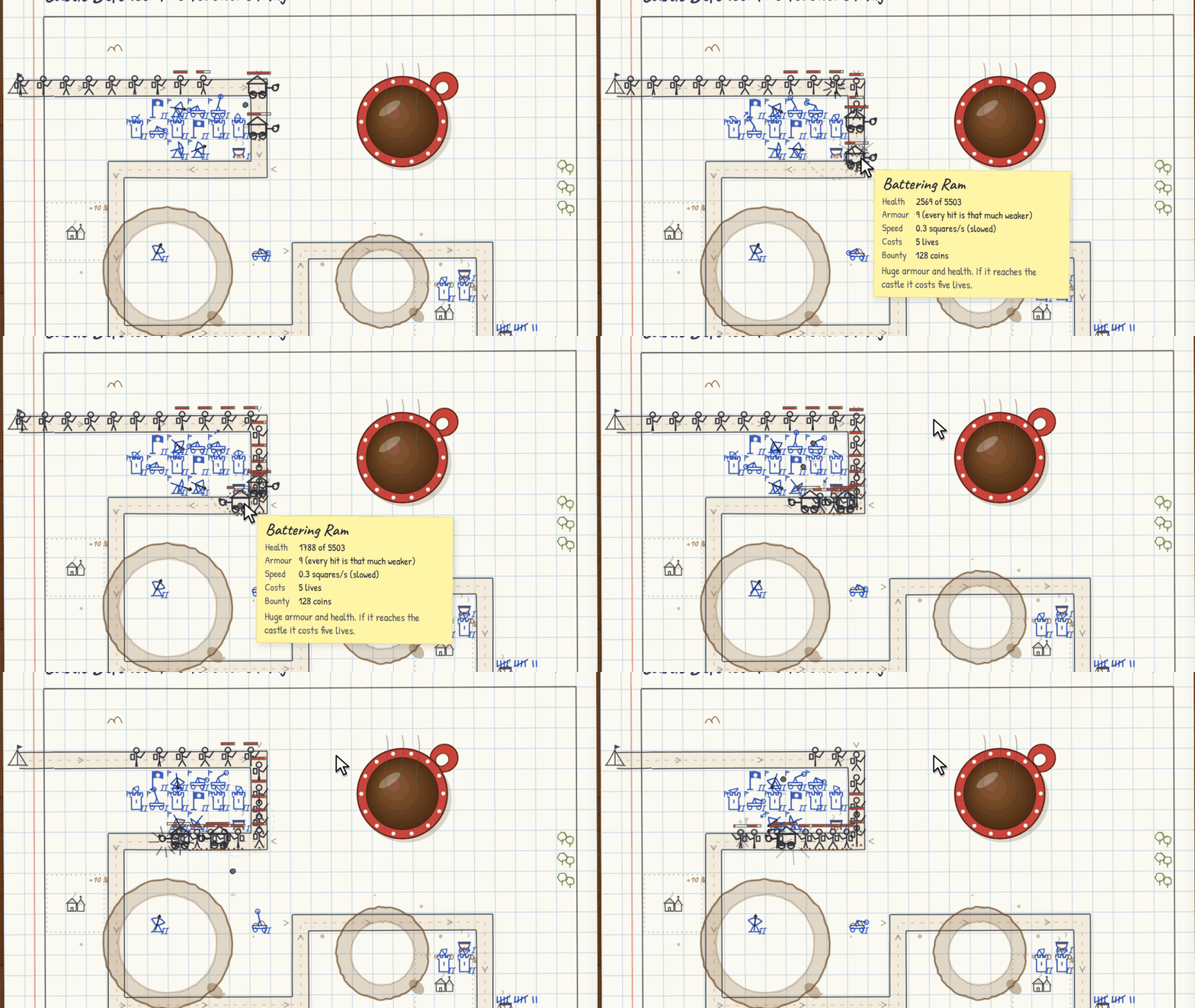
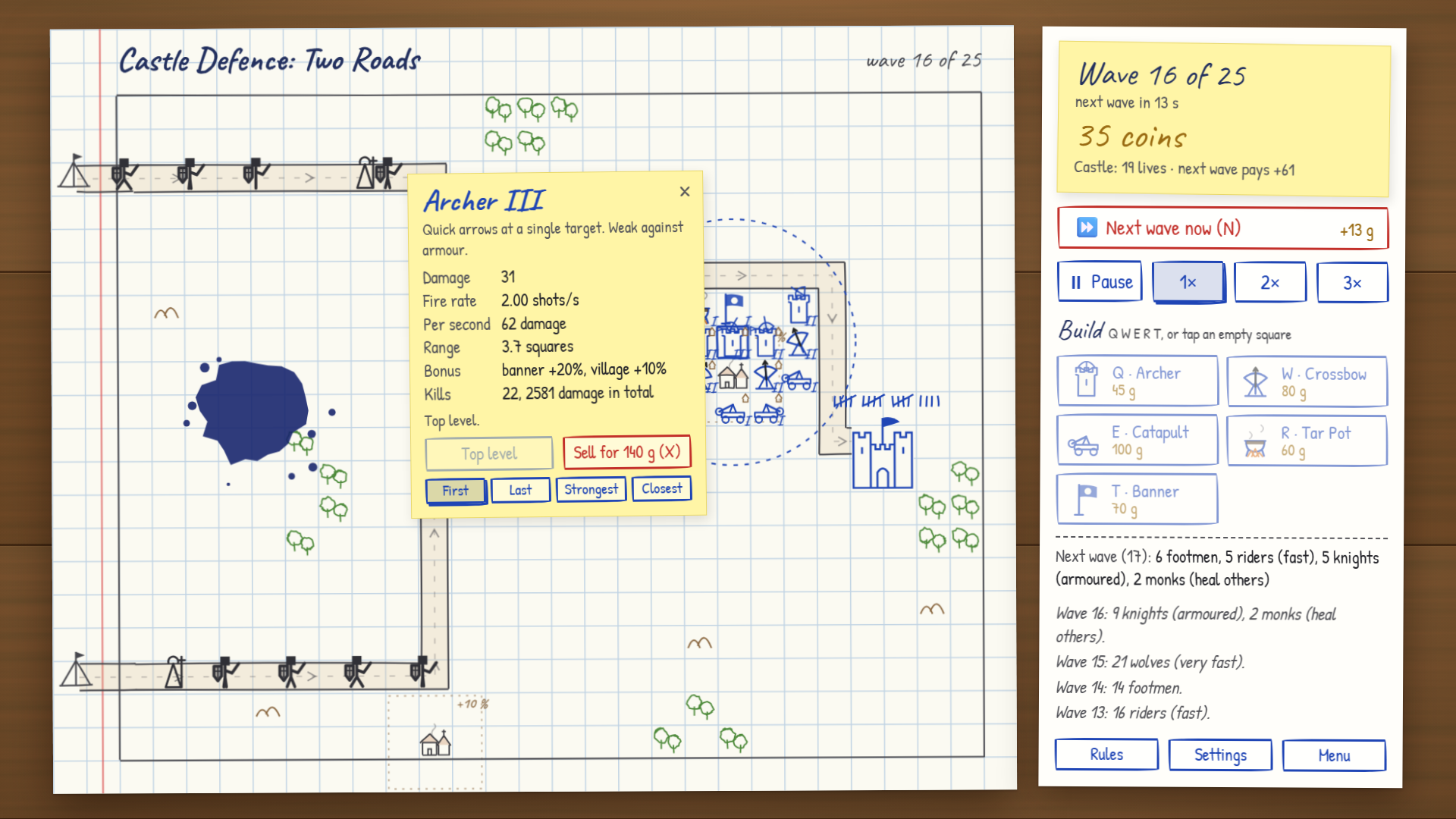
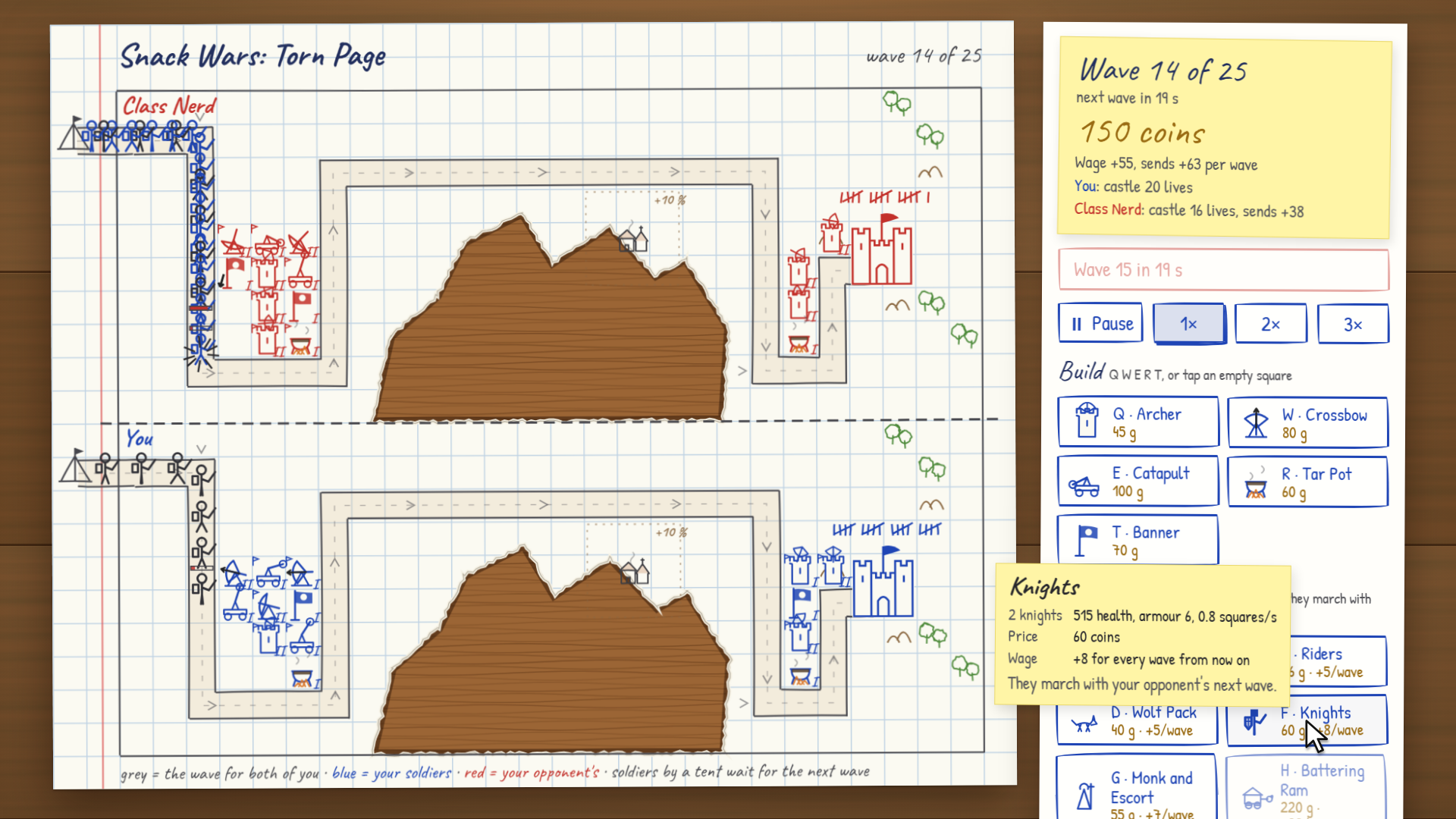
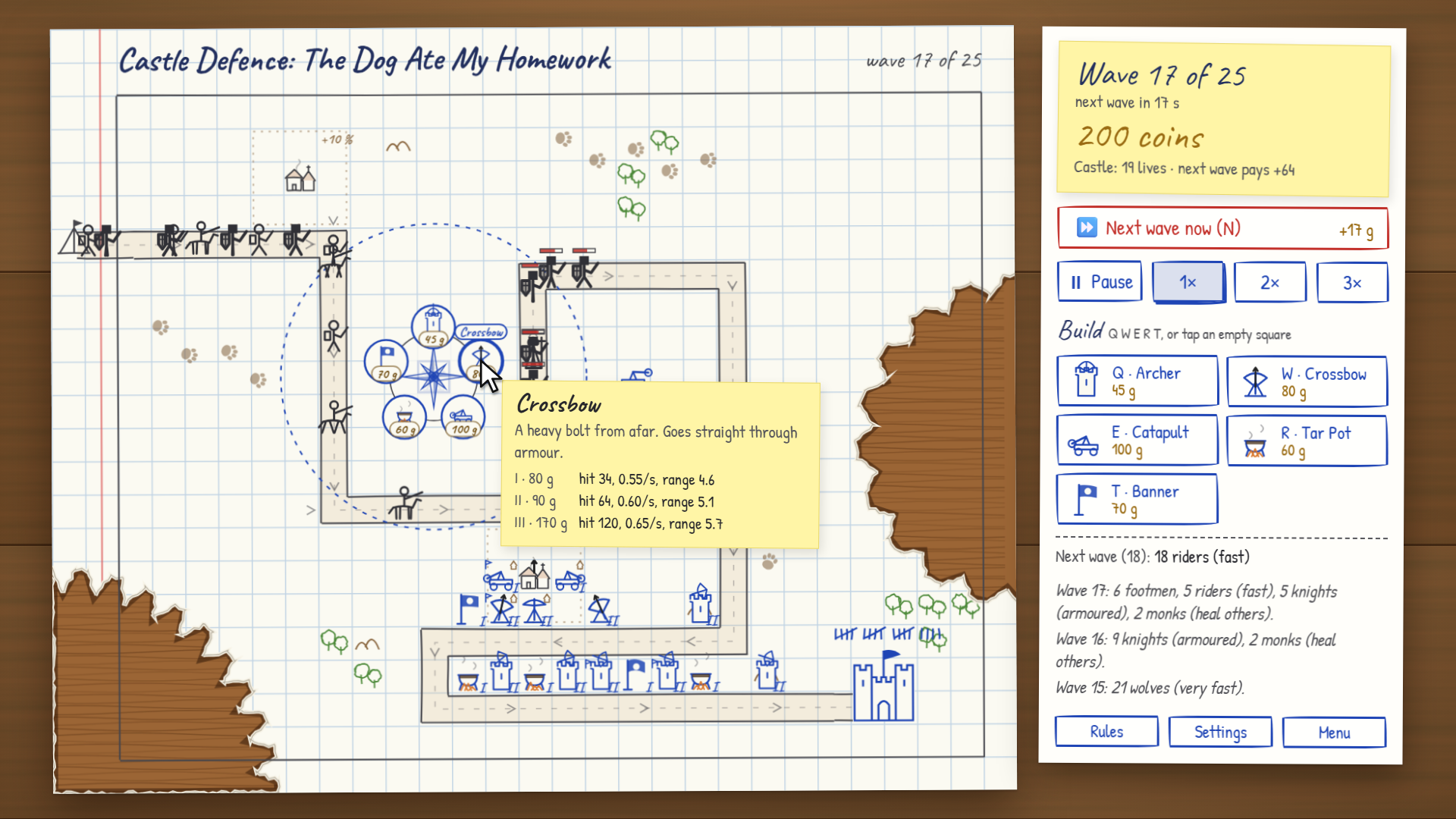
Page assets: the GIFs and screenshots were recorded from the real game by a script Claude wrote.
Not AI: the fonts, Caveat and Patrick Hand (SIL Open Font License).
Leave a comment
Log in with itch.io to leave a comment.
Comments
The combination of notebook doodles and tower defense is perfect! The controls are smooth, and I honestly have nothing to complain about. I’m going to have a lot of fun with this one!
Fantastic work. It just makes sense. It doesn't overwhelm you with anything. I don't know how the school aspect of it factors in other than to explain the art style but will be playing again. Visually making this a a kids drawing type game works really well. The only improvement I think it could use that I noticed would be the sound, I'm personally not a big fan of the code sound, I think some organic noises would be more fun- pencil marks, erasers, kid banging his fist on the desk, you could get really creative with it. But overall- I love this. I think it was my favorite I've played in the jam so far. It doesn't waste my time, or feel half baked. While there is room for improvement, the foundation is as good as it gets I think.
This is definitely a game I'll be coming back to! Very clean and fun!
1. Overall Enjoyment & Value: (Strong )
* Fun, Polish, & Usability: Playing The Dog Ate My Castle: Don't Tell the Teacher immediately charms you with its cohesive paper-sketch aesthetic. The notebook tower defense loop feels snappy, responsive, and surprisingly engaging. While minor balancing hiccups exist in the pacing, the presentation holds attention wonderfully from start to finish.
2. AI Direction & Mastery: (Direct)
* Artistic & Technical Intent: WildMan Games didn't just dump raw text or generic assets here. Using Claude Code for the entire application stack—including canvas-drawn vector sketchy lines, procedural Web Audio API sound effects, and bilingual localizations—shows tight, deliberate curation. The stylistic consistency of a hand-drawn school notebook is maintained flawlessly through programmatic execution.
3. Production Velocity & Scope: (Ambition)
* Ambition vs. Output: Considering the jam timeframe, leveraging an AI-driven coding and asset workflow allowed WildMan to punch way above traditional solo limits. Delivering a fully interactive tower defense game complete with procedural audio, custom programmatic canvas art, and automated simulation testing represents a massive scale expansion.
4. Innovation & Experimentation: ( Fresh)
* Boldness & Novelty: The technical implementation stands out. Generating procedural wobbly pencil graphics and live audio entirely via code written through structured agent instructions is a smart, inventive pivot away from traditional static asset importing.
Technical Pipeline & Architecture Review
* Architecture & Pipeline Integration: Strong evidence of local agentic oversight. Using Claude Code directly within the development workflow allowed for tightly scoped, programmatic generation rather than disjointed third-party SaaS wrappers.
* Production & QA: The developer explicitly utilized an AI-written simulation bot to test maps and check balance difficulties, directly aligning with advanced automated playtesting practices.
Comparing this to my own work on Meeka's Storyteller portfolio and the strict constraints of the Ultimate AI-Powered Game Jam #4, WildMan executed a focused, highly creative submission that uses AI tools as an extension of an intentional design vision.