On Sale: GamesAssetsToolsTabletopComics
Indie game storeFree gamesFun gamesHorror games
Game developmentAssetsComics
SalesBundles
Jobs
TagsGame Engines

Alice in the Park – A Visual Basic Tale (Version 0.1)

A topic by DimaLink created 13 days ago Views: 165 Replies: 1
Viewing posts 1 to 2
(1 edit)

Alice in the Park – A Visual Basic Tale

I love fairy tales. And fantasy. Alice in Wonderland is one of my favorite stories. I’ve already written my own version, titled Alice in the Park. It’s structured like an "endless story," composed of individual, self-contained episodes. Alice walks through a park, encountering something new each time. Now, I want to turn this into a story-based project using Visual Basic.

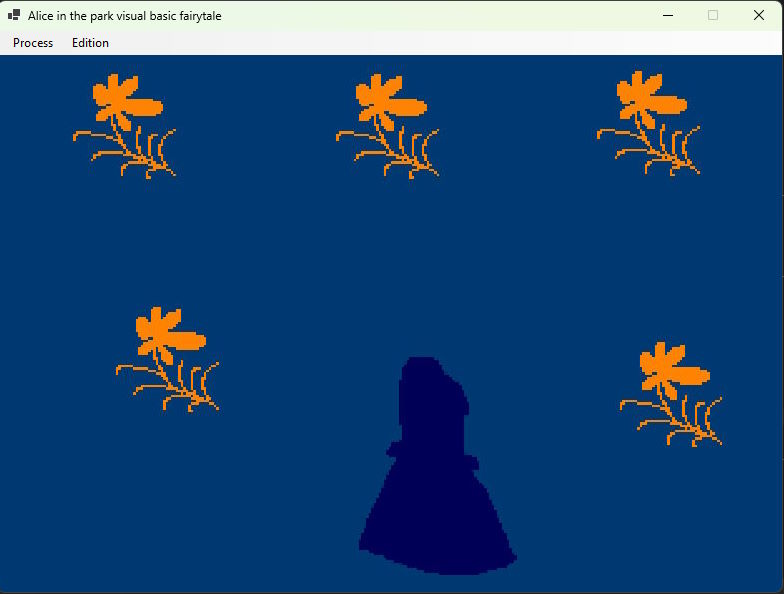
This is the very first, simplest version. The main window displays a background image, with a menu bar at the top containing options like "Start Story" and "Settings"—where you can choose between Russian and English. Once you hit "Start," the story begins.

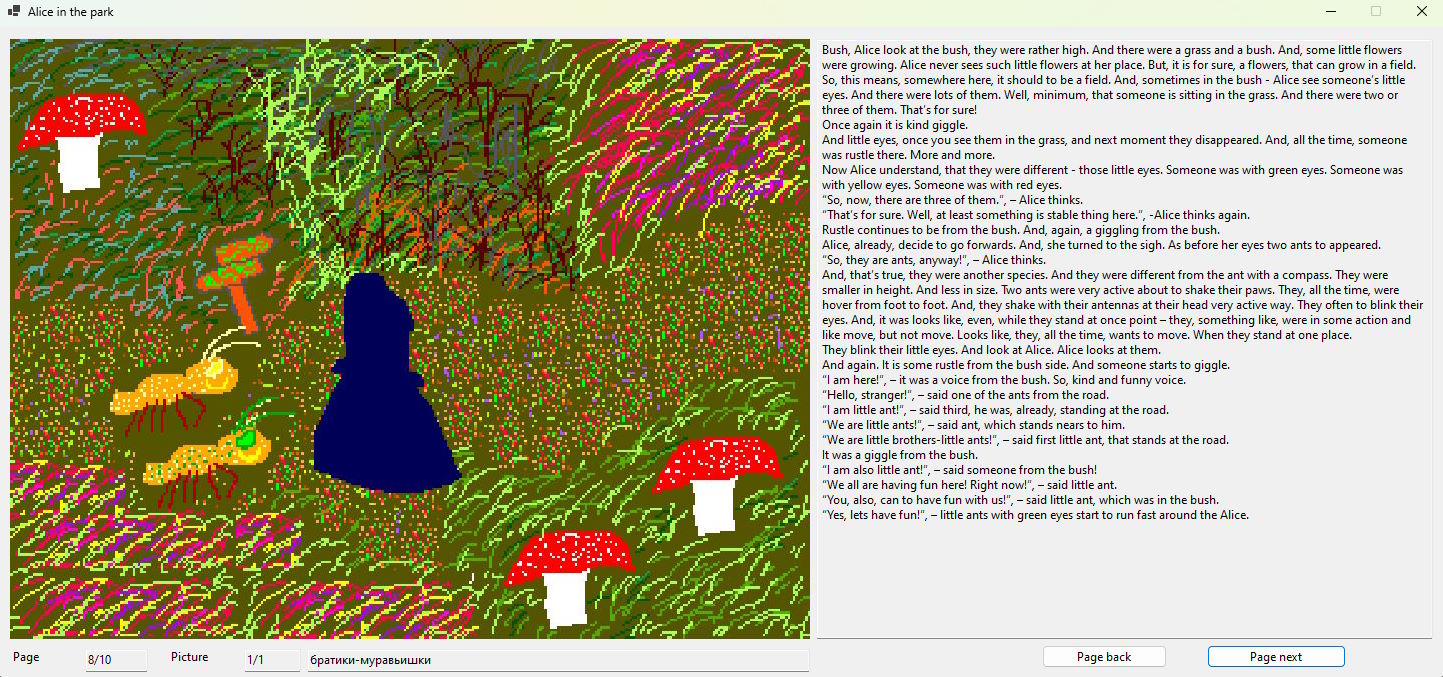
The story itself is organized into modules—think of them like episodes or a season of a TV series. Each module contains several pages, typically featuring one image per page (though this can vary). You view the image and read the accompanying text.
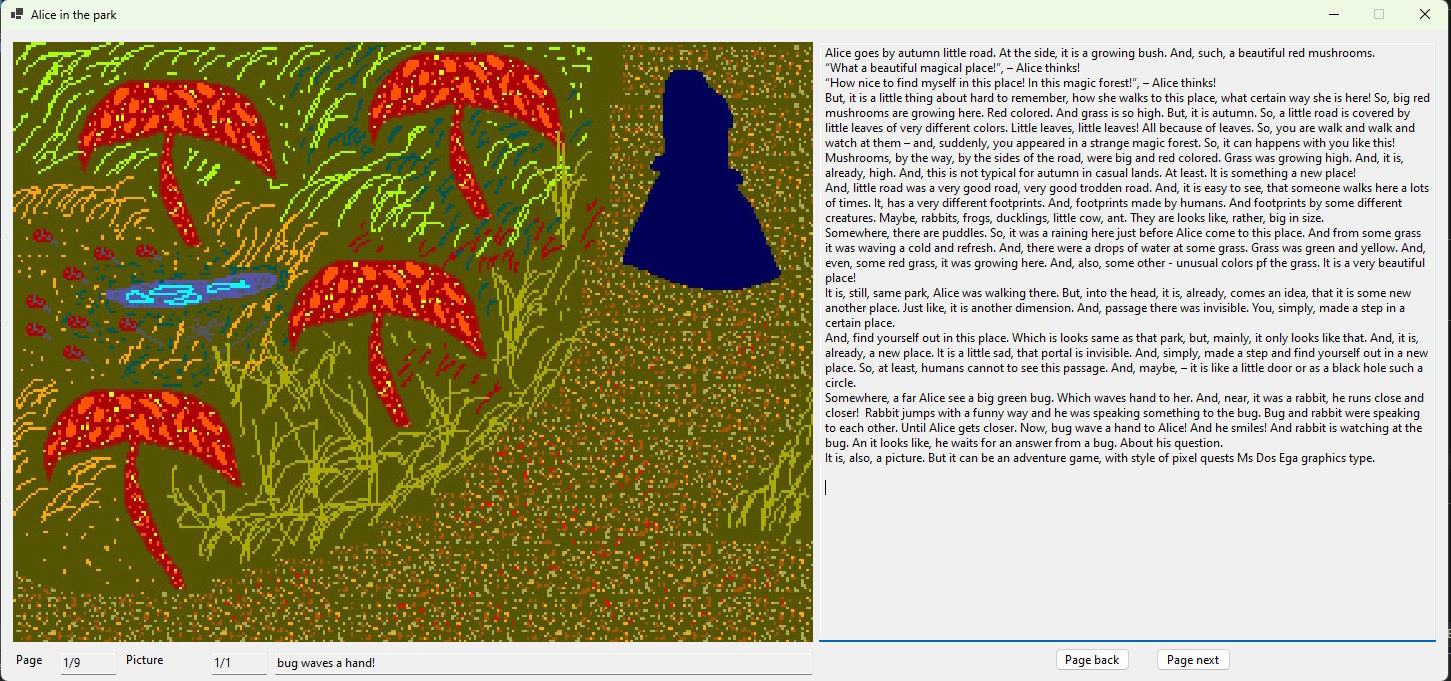

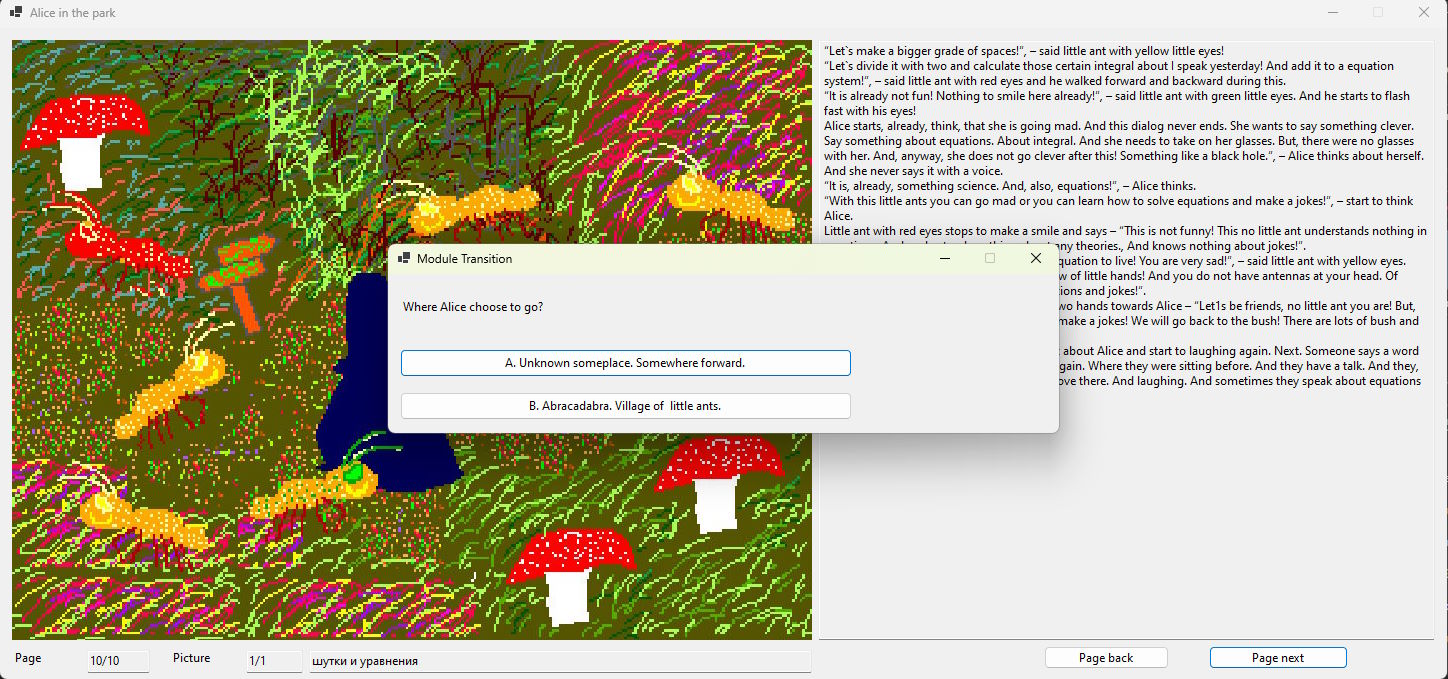
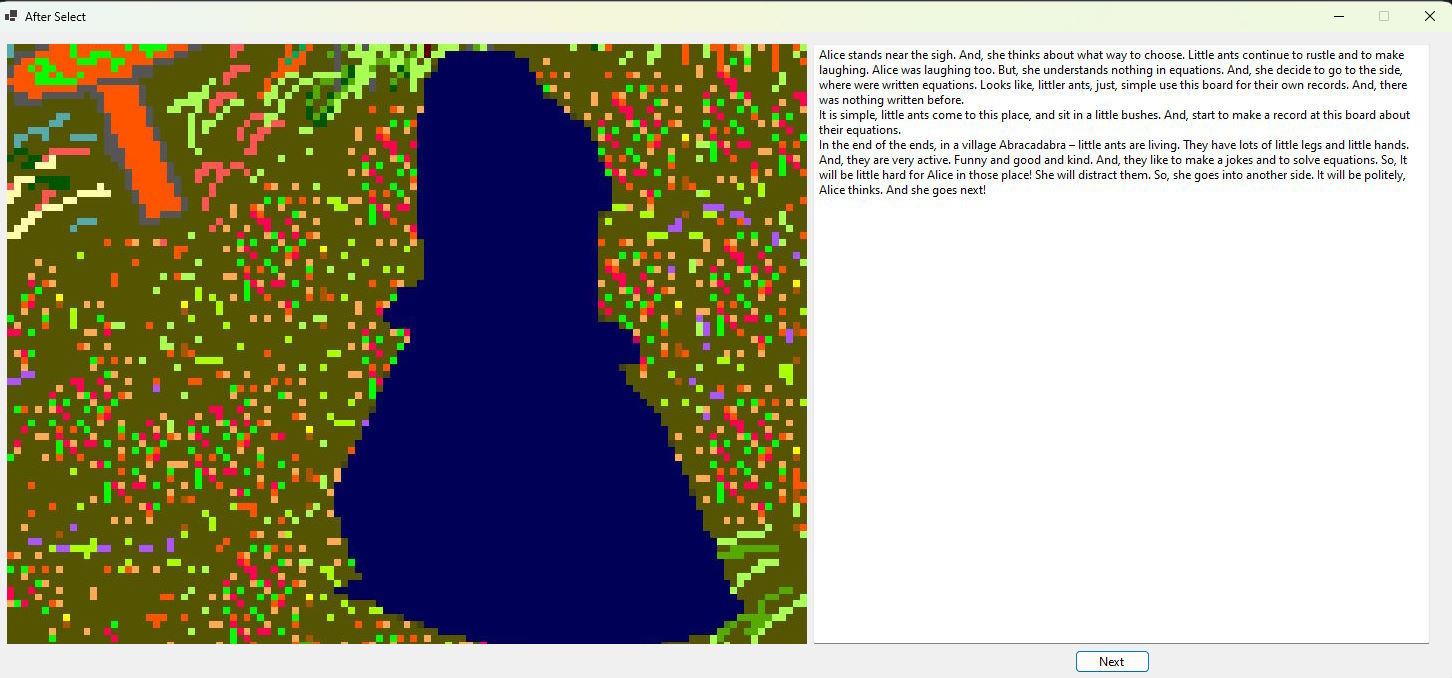
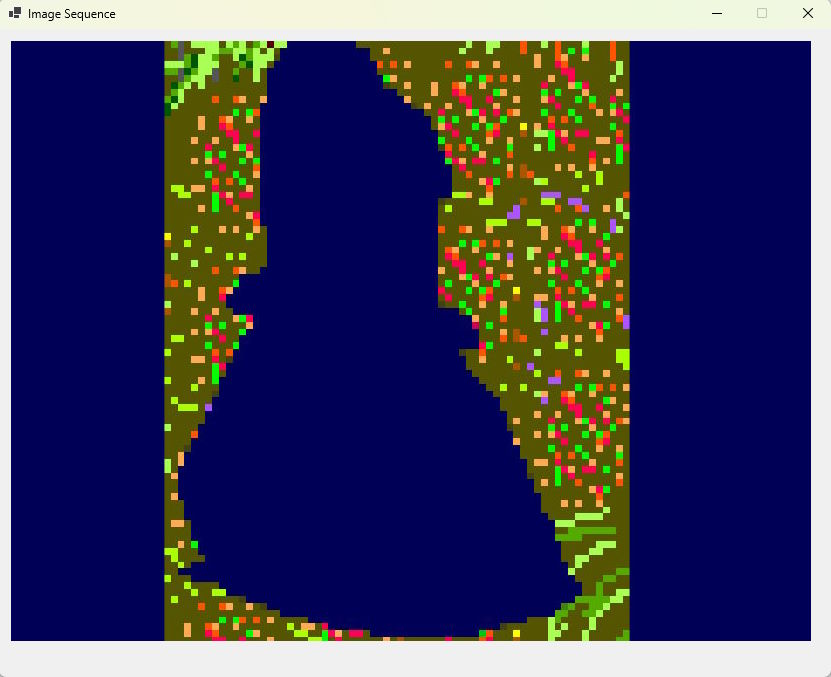
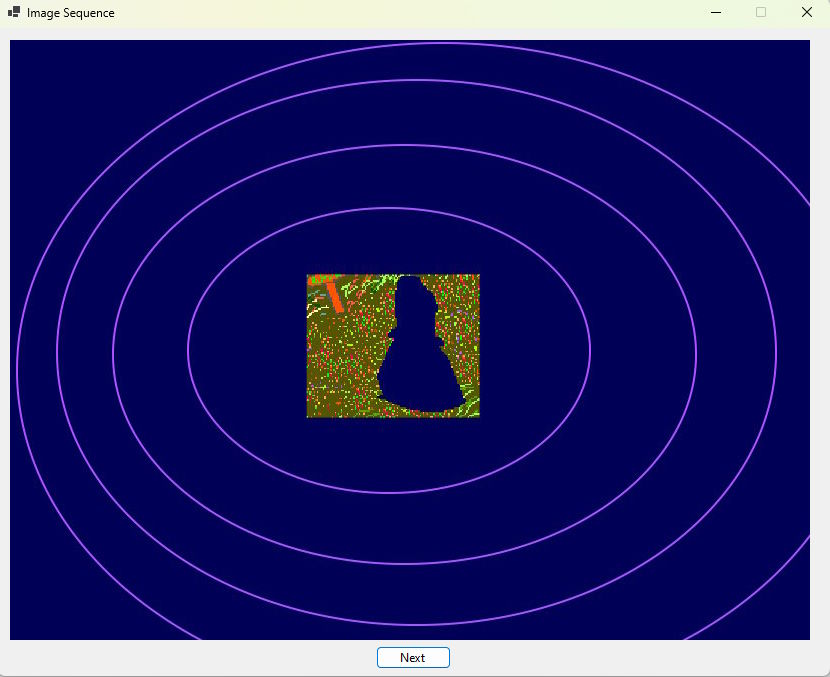
The information provided is minimal: just the page number and the title of the image. Then there are "transition" modules. When a story module ends, you reach a fork in the road—a choice of where to go next. Will you head right or left? Into the woods or across a field? The choice is yours. These modules also include narrative text that sets up the decision, along with images—perhaps an animation—to mark the conclusion of that segment.

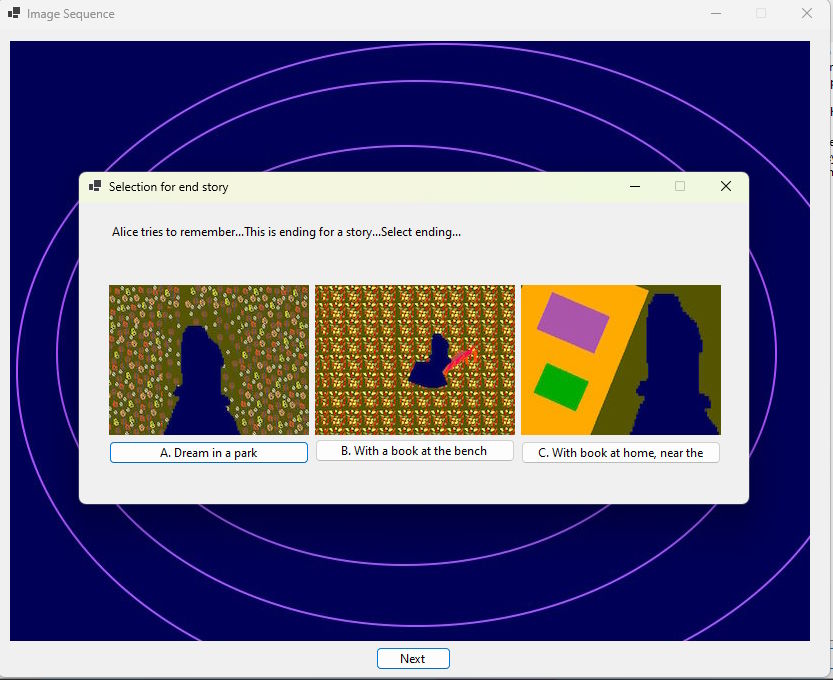
There is also a final module for the end of the entire story, which features three possible endings for you to choose from. That’s the core concept for now. The primary building blocks are the story modules and the transition modules; the transitions determine which story module follows next. Currently, there is one story module and one transition module.
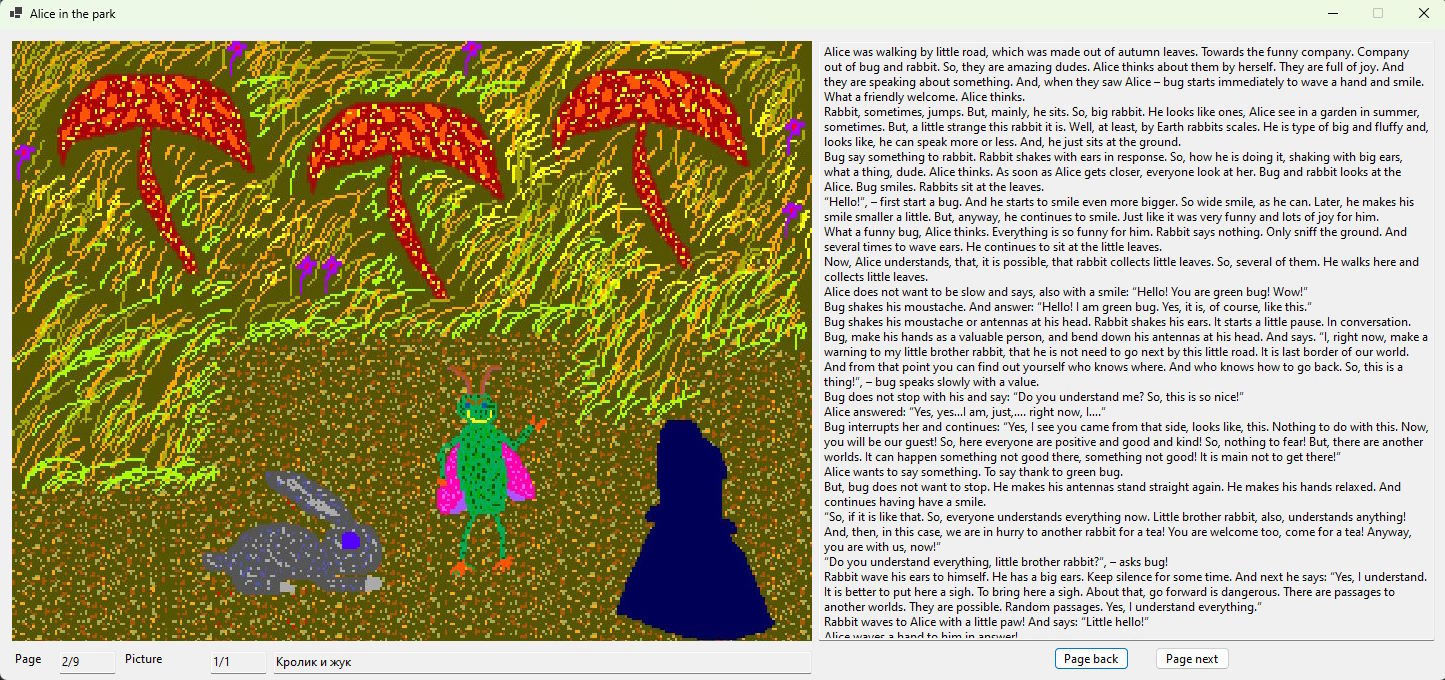

It uses a simple, custom data format: an image paired with text, available in both Russian and English. It includes the names of the images in both Russian and English. From an outside perspective, it’s essentially a collection of text files. The files that handle the transitions between story segments are slightly different, but, by and large, it’s all just a bunch of text files. Within a transition module, there’s an additional folder containing more text files and images—that’s the key distinction; there’s a nested structure. The design assumes that a single page might contain multiple images, which you can flip through as you read the text. There are "forward" and "back" buttons for navigation. That covers the technical side of things.
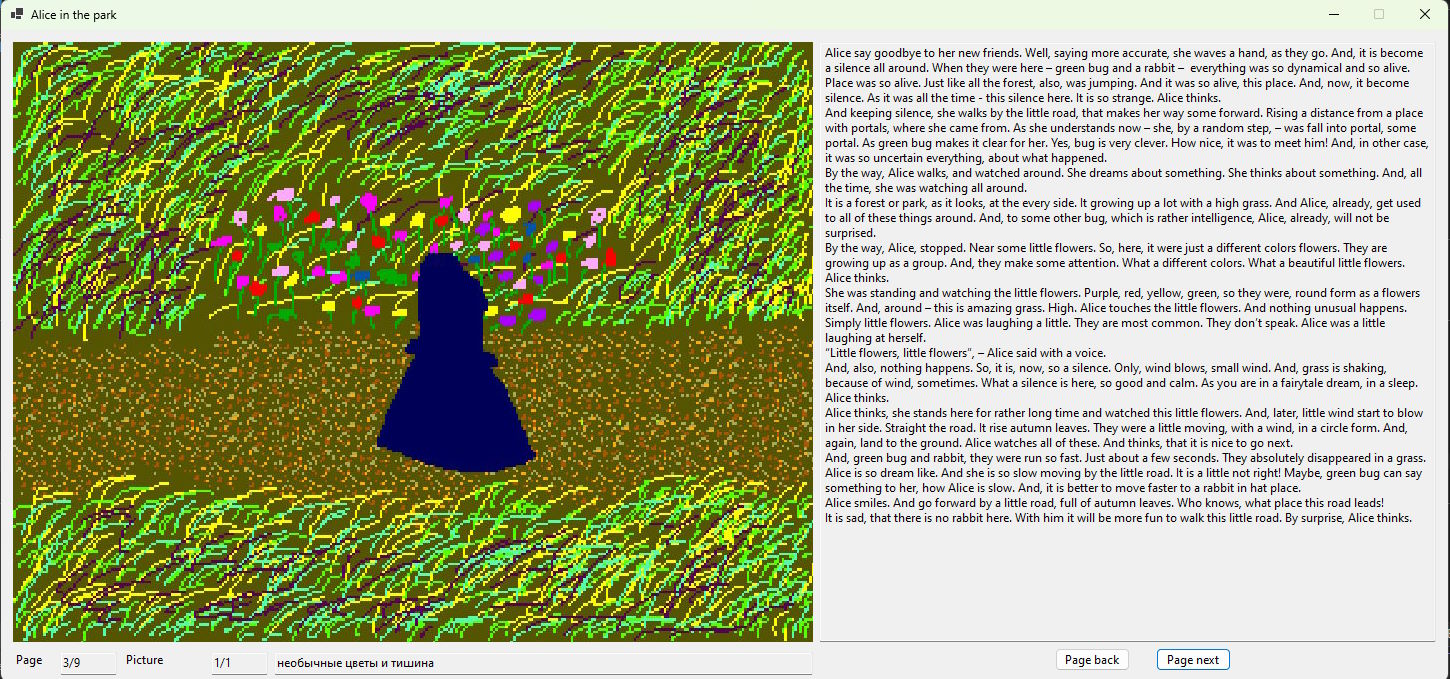

"Alice in the Park" is Alice’s dream. She travels through various locations—starting in a forest. As you flip through the pages, you follow Alice on her journey. She encounters whimsical creatures—a caterpillar, an ant—and engages in conversation with them. You’re essentially reading a fairy tale, much like a short book, but in a digital format—built as a program in Visual Basic. It centers on the combination of text and imagery.

After reading a section of the story—a complete module—you reach a transition point. Where will you go next? You’re presented with a fork in the path: either toward the Mushroom Valley or the Ant Village—the choice is yours. Each story module is a separate form—a distinct window—as is each transition point. Everything functions automatically; you simply read the story and use the forward or back buttons to navigate the pages. It’s a narrative—not a text-based adventure game—presented in the form of a computer program.
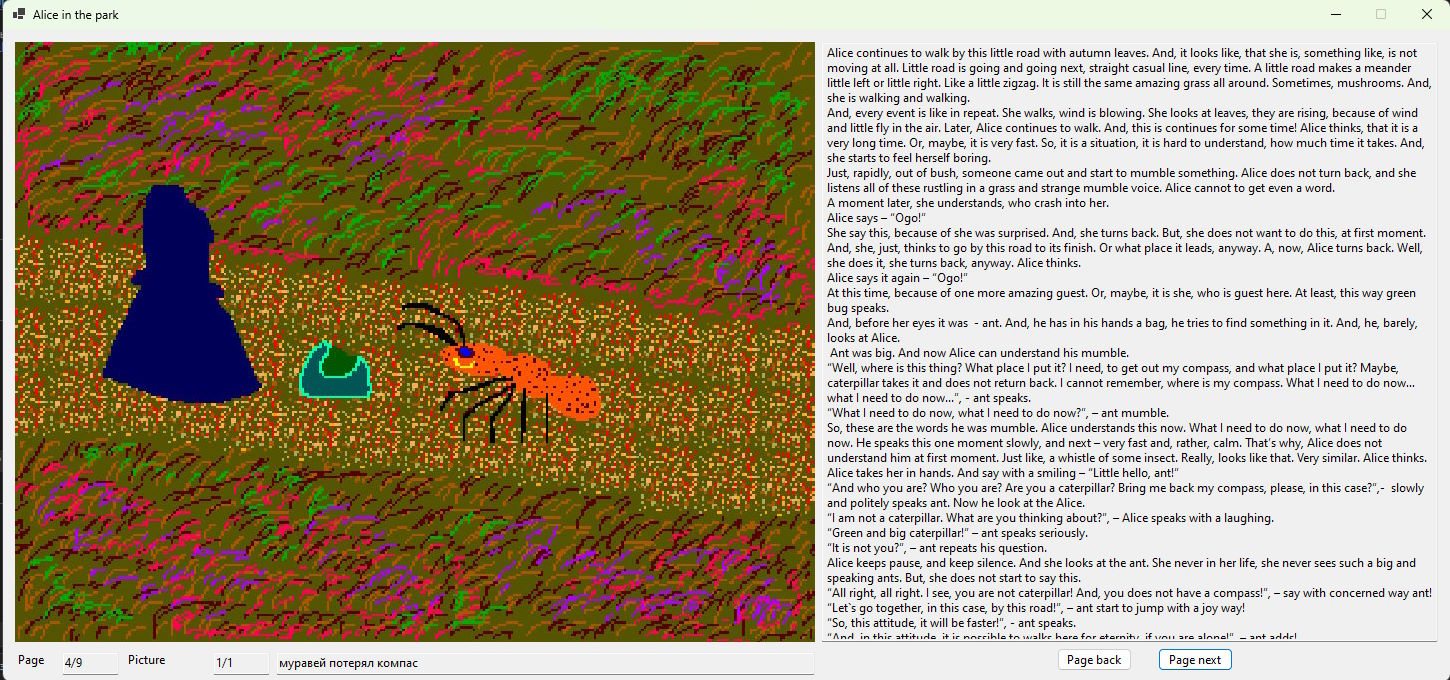

At this stage, the beginning of the story is available, along with the overall program structure and one transition point, which currently leads to the story’s conclusion. There are three possible endings. Alice has entered a dream world, where she wanders through a forest, meets various creatures, and experiences all sorts of things. You are invited to embark on this journey with Alice—a fairy tale brought to life in Visual Basic.
Dima Link is making retro videogames, apps, a little of music, write stories, and some retro more.

WEBSITE: http://www.dimalink.tv-games.ru/home_eng.html

ITCHIO: https://dimalink.itch.io/

TUMBLR: https://dimalink.tumblr.com/

BLOGGER: https://dimalinkeng.blogspot.com/

MASTODON: https://mastodon.social/@DimaLink


Alice in the Park – Fairytale program

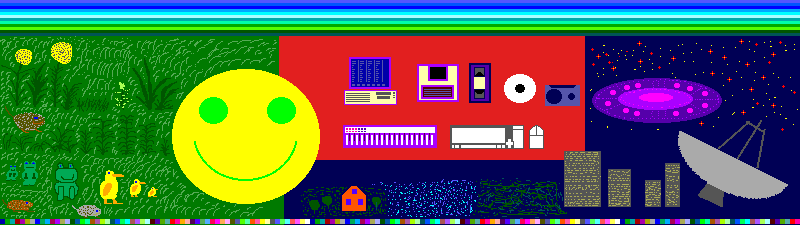
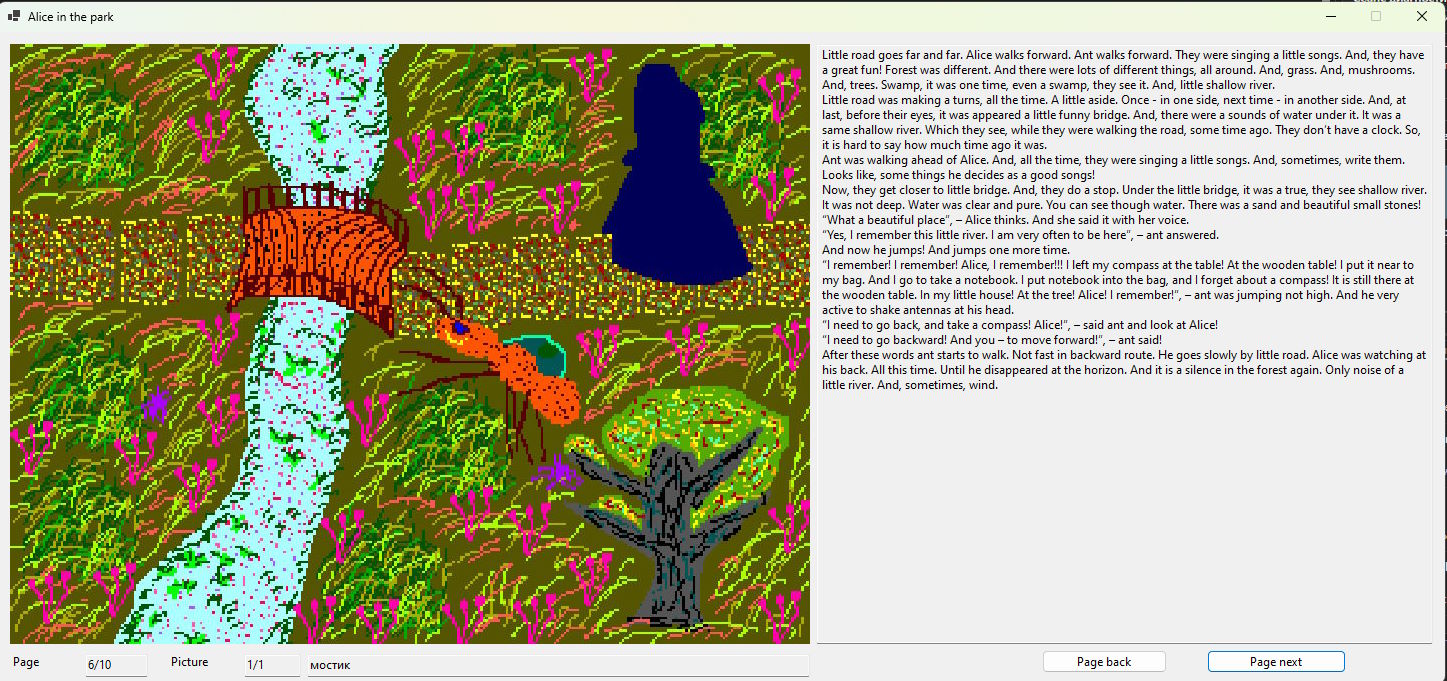
This is a story-based program—a fairy tale, of sorts. It’s about Alice—much like Alice in Wonderland, but in this version, she’s in a park. It’s not a book, but a computer program built using Visual Basic (specifically, the modern version, VB.NET). It features beautiful, retro-style illustrations reminiscent of the classic Sierra adventure games for the IBM PC, accompanied by a narrative that follows Alice’s journey.

And her journey takes her quite far. What’s presented here is the beginning of the story—a complete cycle, if you will. It starts with "Alice in the Park," which serves as the entry point. From there, you reach a crossroads: Alice can choose to head toward an ant village or a valley of mushrooms. These would be new, distinct story modules—though they haven’t been created yet. The transition leads to the story’s conclusion—another separate module—where you can choose one of three possible endings.

The experience involves reading the narrative and viewing the accompanying illustrations. It uses a window-based interface, where each module appears as an individual window, appearing one after another. Currently, all paths lead to the story’s conclusion. Within a given module, there may be multiple windows—for instance, a prompt asking where to go next, followed by a window revealing the outcome of that choice.

At its core, it’s simply a story—ideally, an endless one, with Alice constantly on the move. In theory, there should be various points where the story could conclude, but for now, the narrative is quite short: it begins with the "Alice in the Park" module, includes one transitional module, and ends with the story’s conclusion.

Alice in Wonderland is my favorite fairy tale; it’s so unusual, and so many fascinating things happen within it. Naturally, I wanted to create my own take on it—my own version, Alice in the Park. Perhaps she simply fell asleep and drifted into a world of dreams. It’s like a forest. Or a park. And that’s where the story begins—an entry point into a dream, into a narrative.

I’m continuing to write the story as I go. It’s a simple tale, with various branching paths—all of which, in theory, need to be fleshed out. Let’s say there are two main branches; for the sake of simplicity, they eventually converge back into a single point. Right now, I’m focusing on the "mushroom valley" path—though it’s actually an autumn field that Alice walks through for a long time, before eventually reaching the mushrooms. Then comes the choice: do you head toward the ants, or toward the mushroom valley?

The project consists of images and text—that’s the core of it—all structured as a computer program. The program has a general framework, designed to be expandable later on. I’ve already written the section where Alice is in the field, so I need to build that module, as well as a transition module that leads from the field to the next location.

Everything here has a fairy-tale quality; it’s like a dream. Alice walks through an autumn forest, observing her surroundings, while you read the story—which is now presented in the form of a program. It’s a modular structure, with all the parts interconnected to form the narrative.

For now, the story begins with Alice suddenly finding herself in this autumn forest, walking along a path—because there’s nothing else here, just a well-laid path surrounded by autumn leaves. Further on, she encounters ants and interacts with them, along with various other creatures.

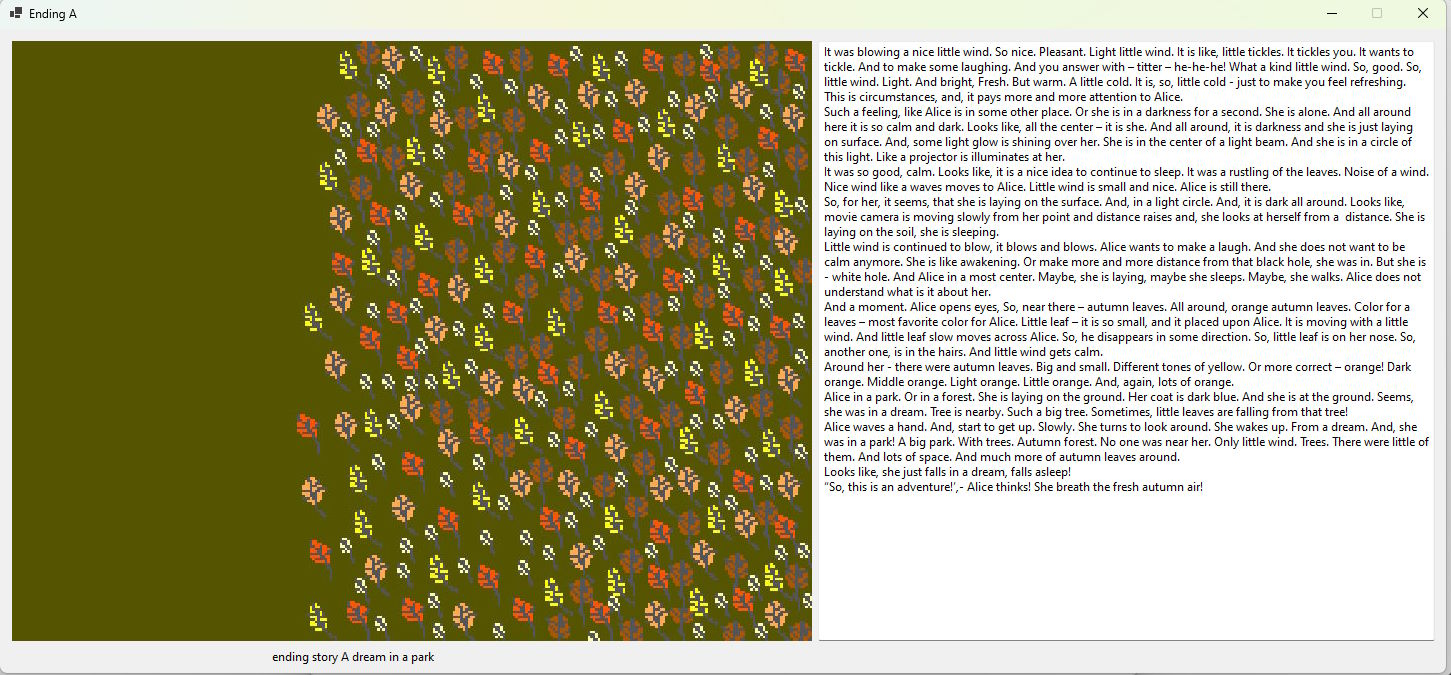
Eventually, she reaches a signpost, which marks the end of the story. While it might seem like you have a choice of where to go, the current version leads directly to one of three possible conclusions—each a little story in itself. For instance, Alice might wake up in a park, with a book in her hands.

Dima Link is making retro videogames, apps, a little of music, write stories, and some retro more.

WEBSITE: http://www.dimalink.tv-games.ru/home_eng.html

ITCHIO: https://dimalink.itch.io/

TUMBLR: https://dimalink.tumblr.com/

BLOGGER: https://dimalinkeng.blogspot.com/

MASTODON: https://mastodon.social/@DimaLink