


i am getting 70 steps per second my whole project is slow i only have 256 bytes of memory with a couple of 1 bytes here and there so what is the most effecient way to make memory/ram
(i think the simulation could have some multithreading but idk)
I found another way to make 8 bit memory unit. It can be stacked to get more RAM and it can be faster than regular gate based memory (depends on how optimized your memory units are).
Here's a picture of the memory: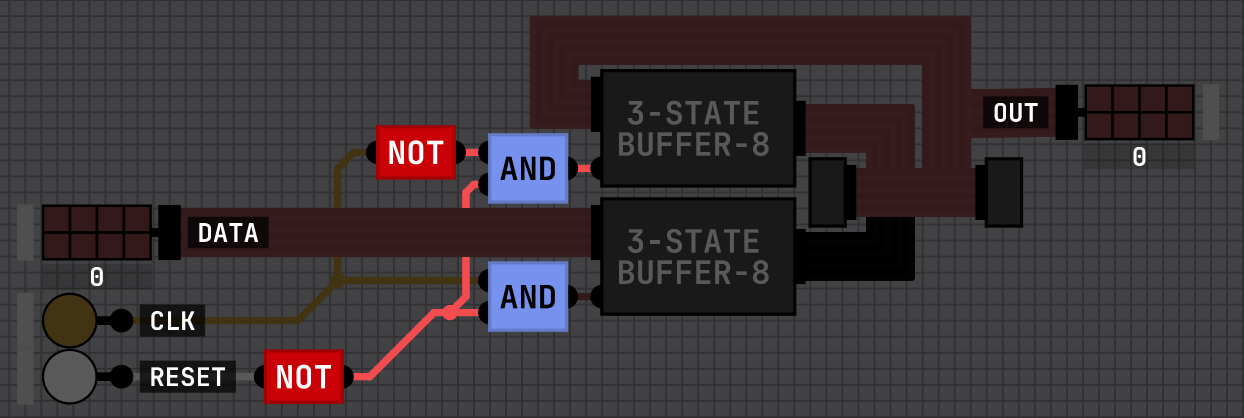 It stores the byte by feeding the current value back into the 3-state buffer. The bus acts like a small buffer and a way to merge the outputs of the two 3-state buffers. Writing to the memory will first put the value into the bottom 3-state buffer and when the clock signal goes low, then the active 3-state buffer will switch. The bus needs a tick to clear, so switching the active 3-state buffer will preserve the data in the bus, until the upper 3-state buffer takes over.
For a reference on how fast this chip is: I modded the game myself to get an incredibly fast D-Latch chip, which I wired 8 together to make a byte. This version is 40% faster than the one with the built-in chips. For me it executes at a speed of ~2'500'000 tick per second and the regular one from the gates executes about 800'000 times each second. That is 3.125x faster.
It's not as fast as using displays, but if you feel like displays are cheating, then this is a little less cheating. Although, for 1 byte registers, latches, etc., this is really good.
But if you want to get even more speed, like the whole CPU running at 100'00+ ticks per second, then you have to either find a mod, or mod the game yourself. The source code is in GitHub and you could use AI for help with coding.