

Play game
Mālama Hawaiʻi: Restorative Tourism's itch.io pageArtistic Statement / Use of Theme
We explore how volunteers can "give back" to Indigenous Hawaiian lands through restorative tourism. This game specifically focuses on fishpond restoration, although we hope that the takeaways will extend further!
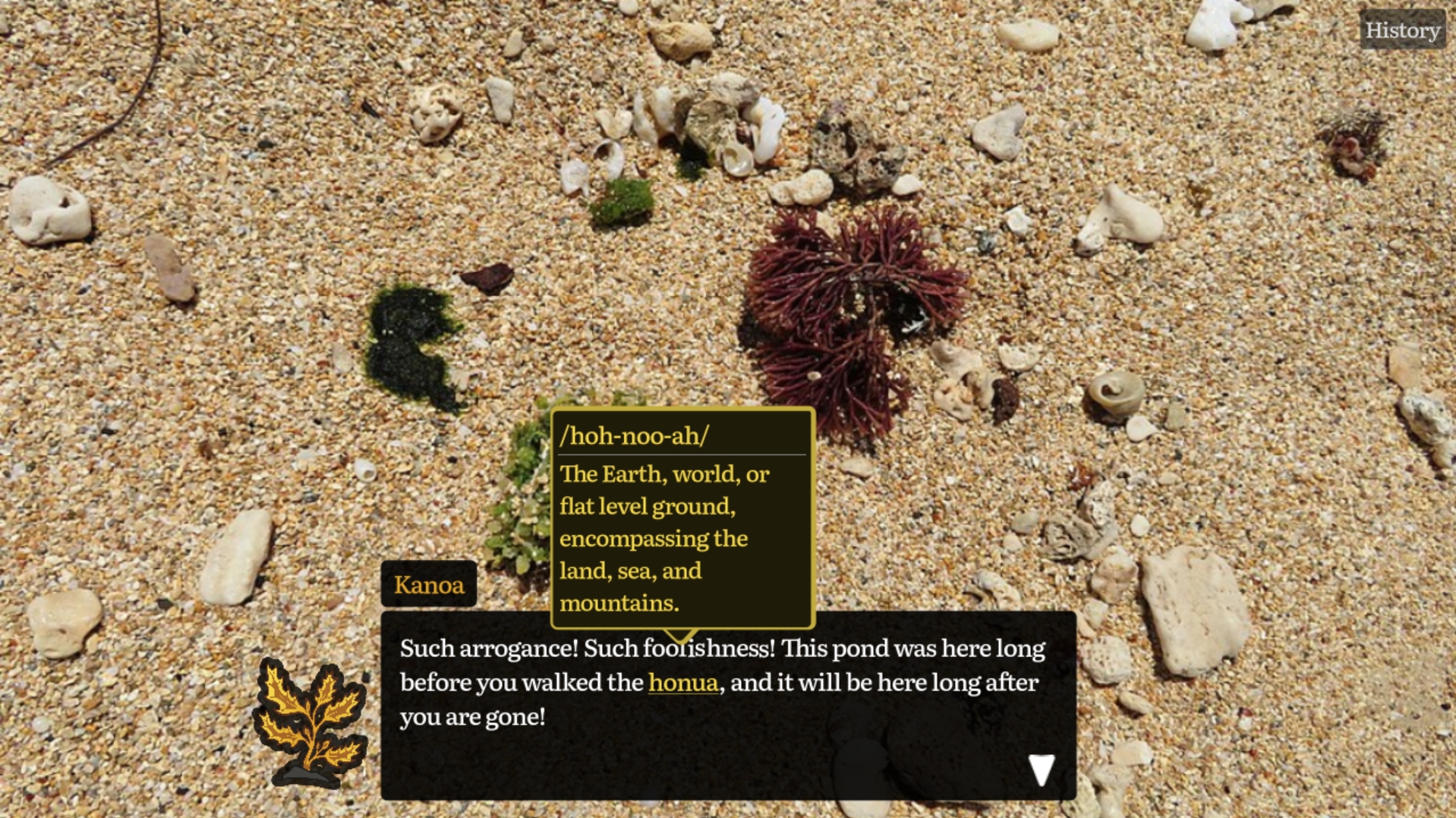
We are hoping to "plant a seed" and encourage players to explore how they can help maintain their local communities! And, of course, there are actual literal plants/algae in our game as well. One of them even talks to you!
Development Summary
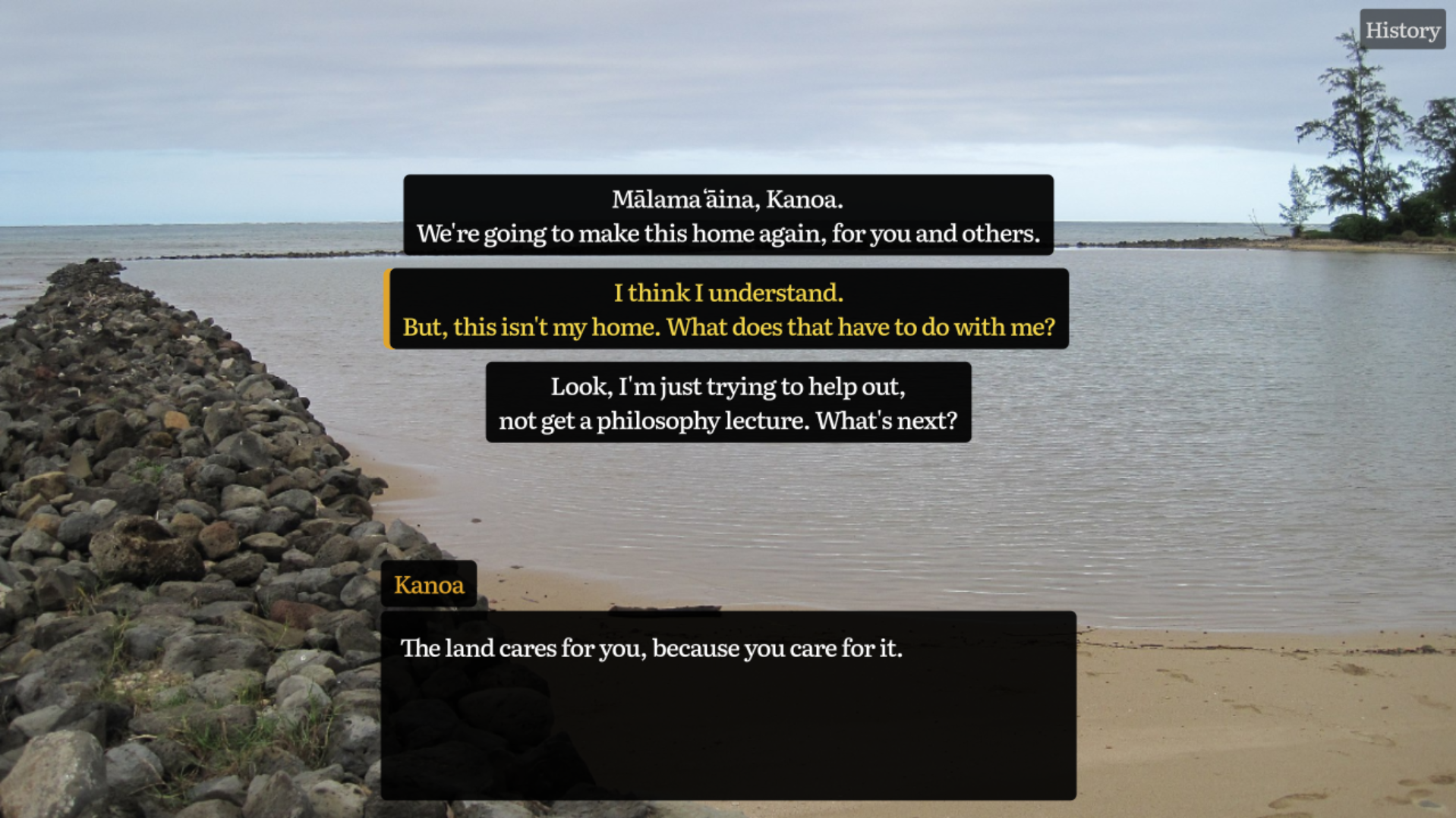
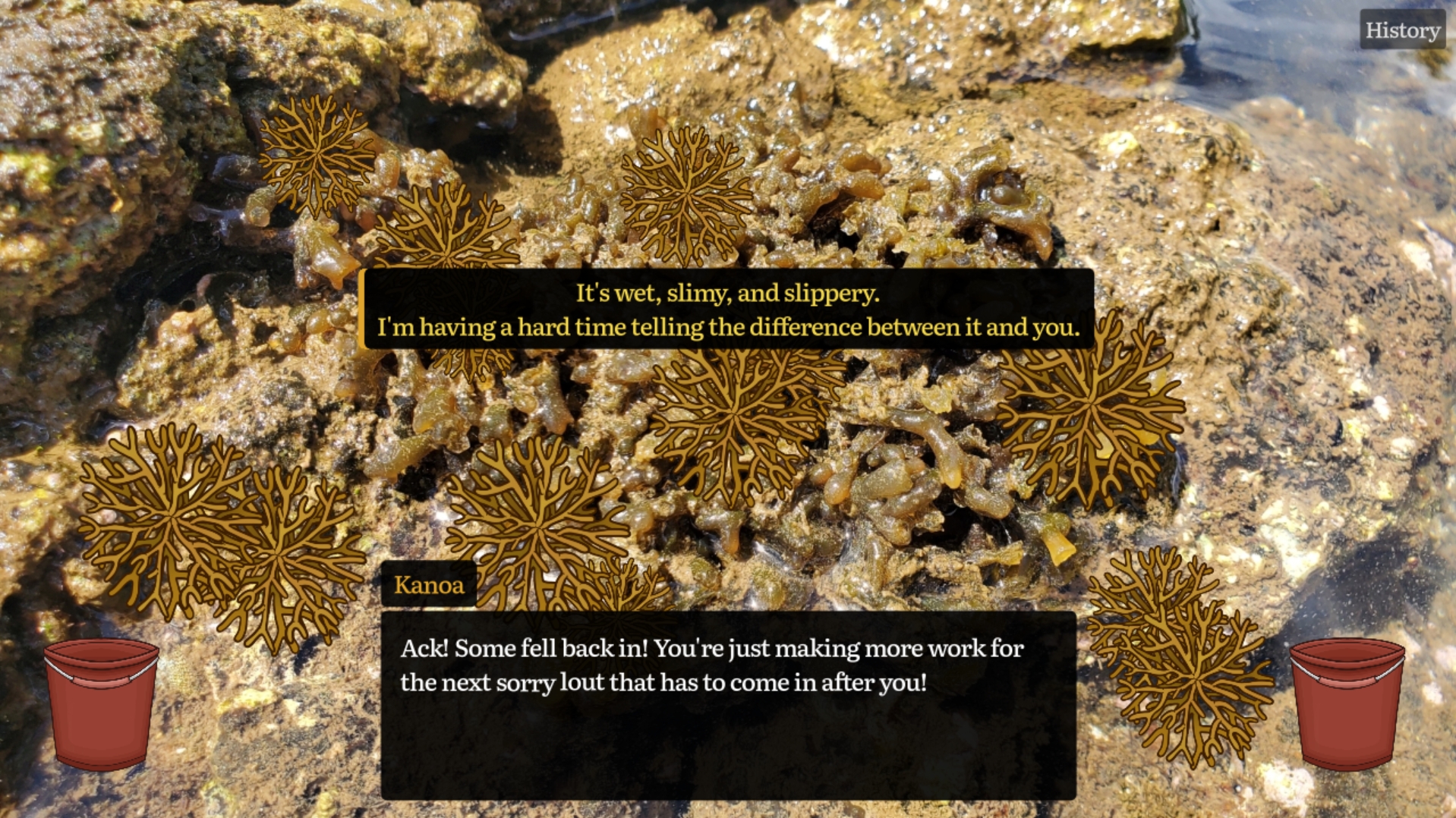
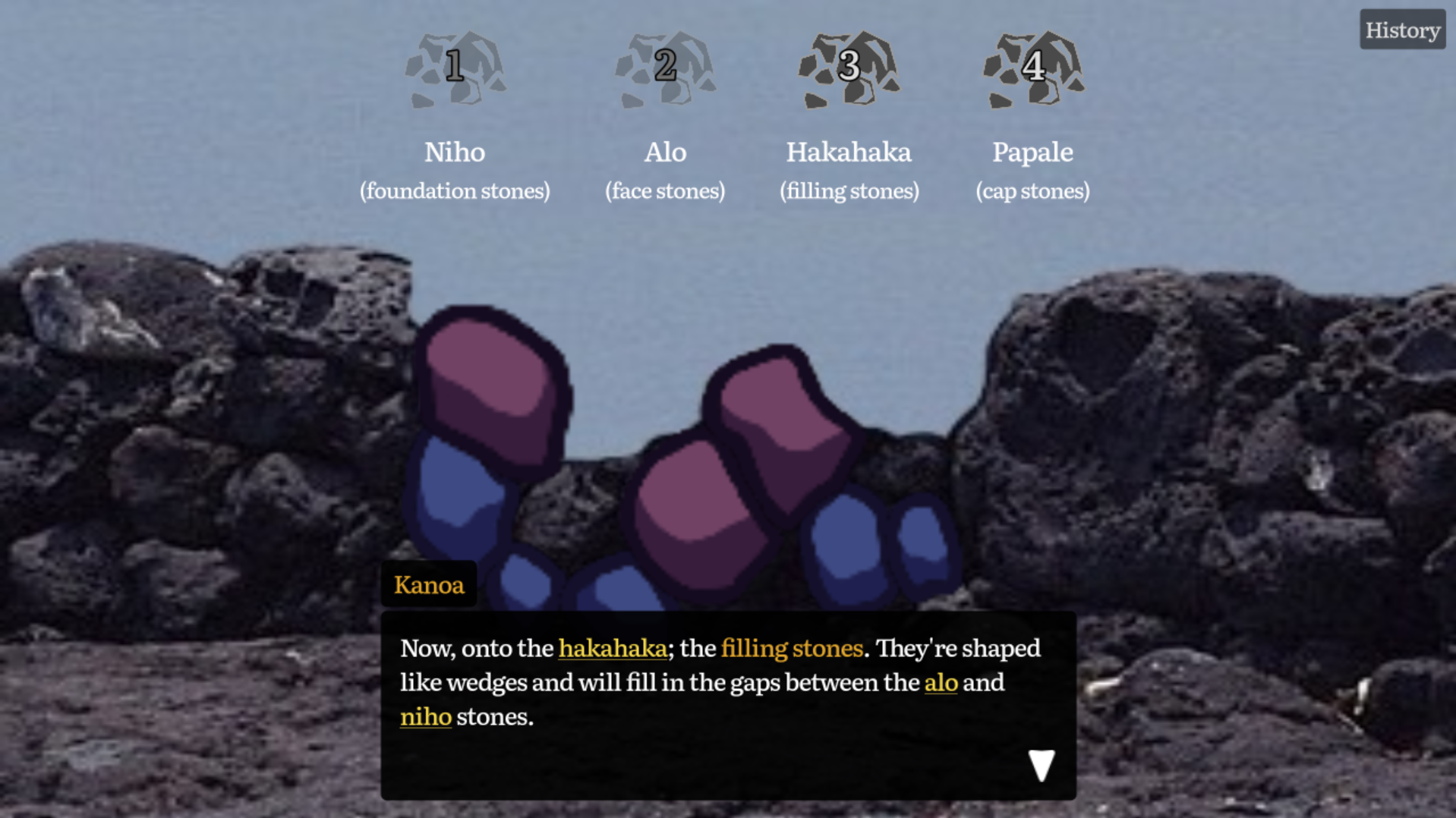
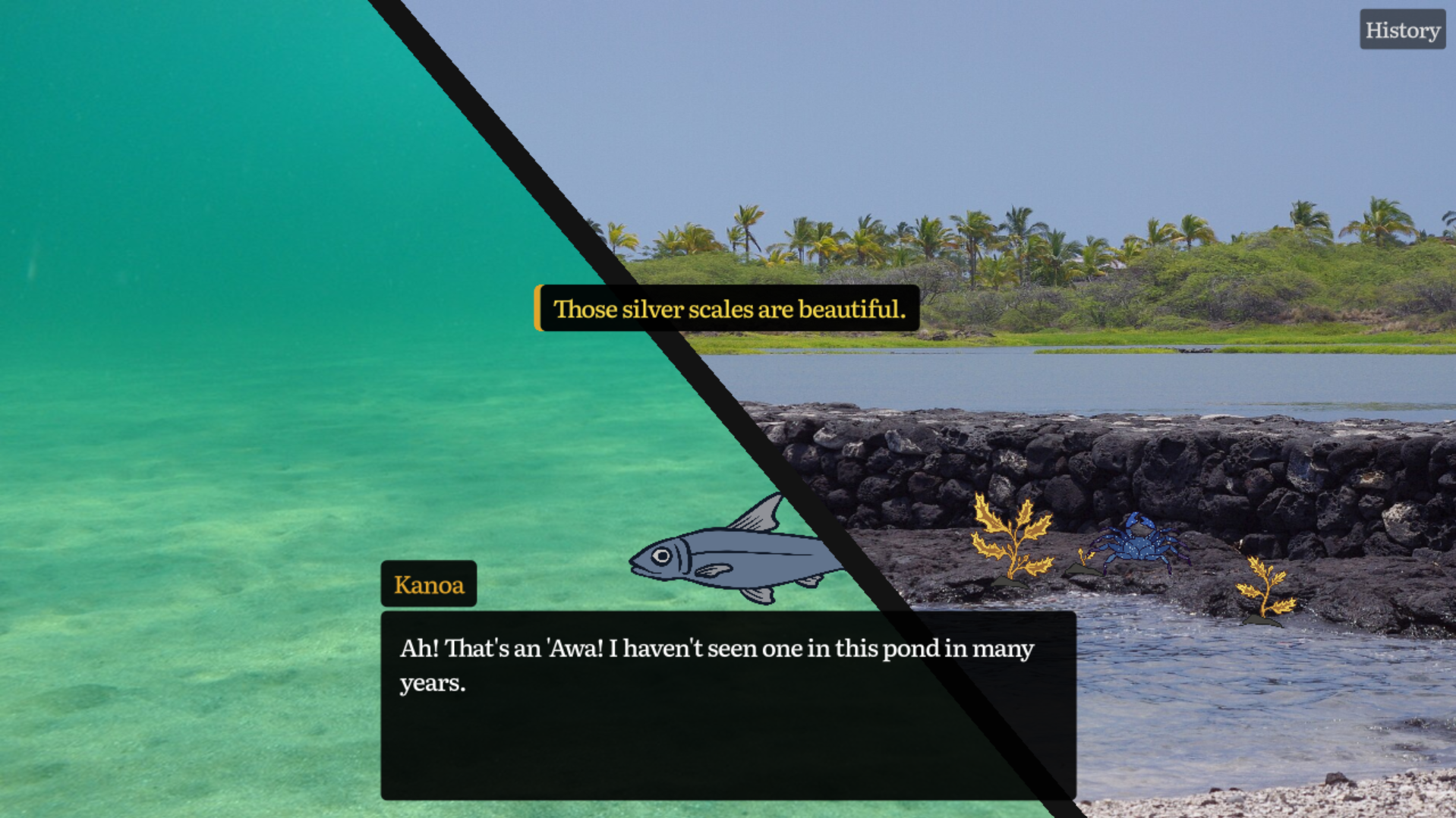
We are Studio Blue Jay, an indie game studio based in Boston that makes cozy games! As an established studio, we are used to working together for both long-term projects and shorter game jams. Going into the jam, we were aware that many of our artists and sound designers had limited availability, which is why we chose a writing-heavy genre (visual novel). We didn’t have the capacity to create backgrounds for this jam, which is why we chose to use real photographs for the backgrounds. I think it worked out, since players can see what these things in a fishpond actually look like! Luckily, we had the capacity to create assets for all of the things that the player interacts with, and I really like the resulting contrast between the real photos and the assets we drew that were inspired by Hawaiian wood engravings. The programming was designed to be as light as possible as well. Dialogic 2 for Godot did most of the heavy lifting for the visual novel aspects of the game, and the mini-games were designed to be quick to program by reusing the most amount of code possible (which is why they all pretty much just have one mechanic).
We were really lucky to be able to work with a Hawaiian mentor who has lots of experience with educational game design relating to Hawaiian culture. We had calls at various stages of the project to ensure that the game was accurate, educational, and respectful. None of our studio members are Hawaiian, so it was really important to work alongside the mentor to achieve our vision. We learned a lot from chatting with our mentor, and he really helped speed up our research for this game.
We actually didn’t make many major changes between sprints, but that was because the majority of things really started coming together during the last two weeks. We got the dialogue system up and running quite quickly alongside some really great writing, but the minigames took a bit longer to fully conceptualize. Once each minigame was planned enough to implement, writers and artists were notified of what assets were needed and we were able to get our minimum viable product implemented by the deadline.
We did “cut” a few minigame ideas that weren’t fully-fleshed out, which I outlined in the further development plan. The final product was what we were hoping to put out for this game jam, so we’re happy that we didn’t overscope!
(optional) Further Development Plan
We would love to add more narrative content to the game alongside the two minigames that were brainstormed but not included due to time. The first minigame would be the removal of ʻōpala (debris/litter), which would include things such as fallen leaves rather than man-made debris. This would fit in right after the invasive species removal minigame. The second minigame would be a restoration and explanation of a fishpond mākāhā, the sluice gates that allow for nutrient-rich water and small fish to enter, but trap larger fish inside. This would happen after the fishpond wall restoration minigame.
Topic Tags
Restorative Tourism, Fishpond Restoration, Mālama Hawaiʻi
Sprint Participation
Yes
Game Engine, Platform, Format
Godot 4.6 using Dialogic 2. Built for web with a Windows executable.
Generative AI Disclosure
No.
Leave a comment
Log in with itch.io to leave a comment.
Comments
This was a great example of a Climate Jam game. Very well scoped, and based in good background information and knowledge. Also the "theory of change" was extremely clear which I love, and even works on multiple levels including overall reference to ecological care, and engagement with native Hawaiian traditions and even the language. Well done.
Incredible writing with strong messages attached to the minigames. I heavily appreciated the use of Hawaiian language WITH definitions through hovering over them. Extremely nice touch and really shows the care and love put into this game. Though not entirely engaging in its minigames, the messages definitely gets through. Good work!
i do think that this game would've benefited from more minigames to really emphasize the theme, and it was a bit odd when the first minigame was as difficult and tedious as it was (and, to be clear, the tediousness is the point and that's very respectable), and then the second minigame with the stones was extremely easy to do by comparison. with the message that care takes time, i do think that simply more of these minigames, and even leaning into the difficulty and patience required with the first should be emphasized. overall i really enjoyed it though, particularly the highlighted text with definitions, that was really cool to engage further with the information. nice game!
While I think this game’s greatest strengths are in its narrative’s efforts to reflect reality and to convey its core message earnestly and directly, there is something to be said for the ludonarrative consonance of the first minigame’s mechanics with its intended meaning. In particular, I just wanted to highlight the mechanic where removing the invasive algae too carelessly only allows it to spread further, because my first instinct when engaging with it was one rooted in frustration — it wasn’t until I actually slowed down in an effort to avoid constantly dealing with new growths that I really noticed the game was asking me to not engage with it as an exercise in entertainment but as an exercise in care (an ask not dissimilar to what is asked of tourists engaging in restorative, rather than strictly recreational, tourism). So good job on that!
Thank you so much for this comment!! I'm really happy to hear that you were able to have this experience while playing the first minigame. An exercise in care is a great way to put it, and is what we were aiming to achieve!
I can imagine this game within a museum as a sort of educational interactive display. I thought your use of the native language was great, and quite informational. I did not find the mechanics entirely engaging. I thought they might all cohere towards an assumed greater message of "care takes time," but I did not feel that way on completion. That may just be due to the experience's brevity, and thinking I might have more minigame's to play than I did. Thanks for making!
Thanks for playing! I can definitely see where you're coming from with your feedback and I appreciate you sharing your thoughts.