


Play game
Storm Cell's itch.io pageResults
| Criteria | Rank | Score* | Raw Score |
| Theme | #6 | 4.222 | 4.222 |
| AI Usage | #82 | 3.222 | 3.222 |
| Overall | #89 | 2.667 | 2.667 |
| Audio | #92 | 2.111 | 2.111 |
| Fun | #101 | 2.222 | 2.222 |
| Graphics | #106 | 2.222 | 2.222 |
Ranked from 9 ratings. Score is adjusted from raw score by the median number of ratings per game in the jam.
AI Tools Used
Built with Claude Code in Godot 4.7, end to end: the code was written by Claude agents; the human directed, played the builds, and made the calls.
- Multi-agent runs: a custom /ship skill splits a goal into task branches, each worked by implementer, reviewer, tester, and maintainer agents in separate git worktrees, then squash-merged behind human-approval gates. Several overnight batches of pre-planned features landed unattended while the designer slept.
- The feedback loop: the designer plays each build and files verdicts into a structured verification form plus a free-form feedback file; the next run treats those as directives. Several shipped features exist only because a playtest sentence demanded them.
- Agents test their own work: 52 headless regression tests assert on simulation state, and 25 scripted playtest scenarios replay inputs and capture frames so agents can look at the game they changed.
- Sound: there are no audio files. Every effect is synthesized at runtime by AI-written code — a tone sweep plus filtered noise through one envelope, described as a handful of knobs in a small text resource (one per sound). Held sounds like the charge meter are a looping tone whose pitch and volume bend with the level, so you can hear where the charge is without looking. The noise is seeded, so a given sound renders identically every time.
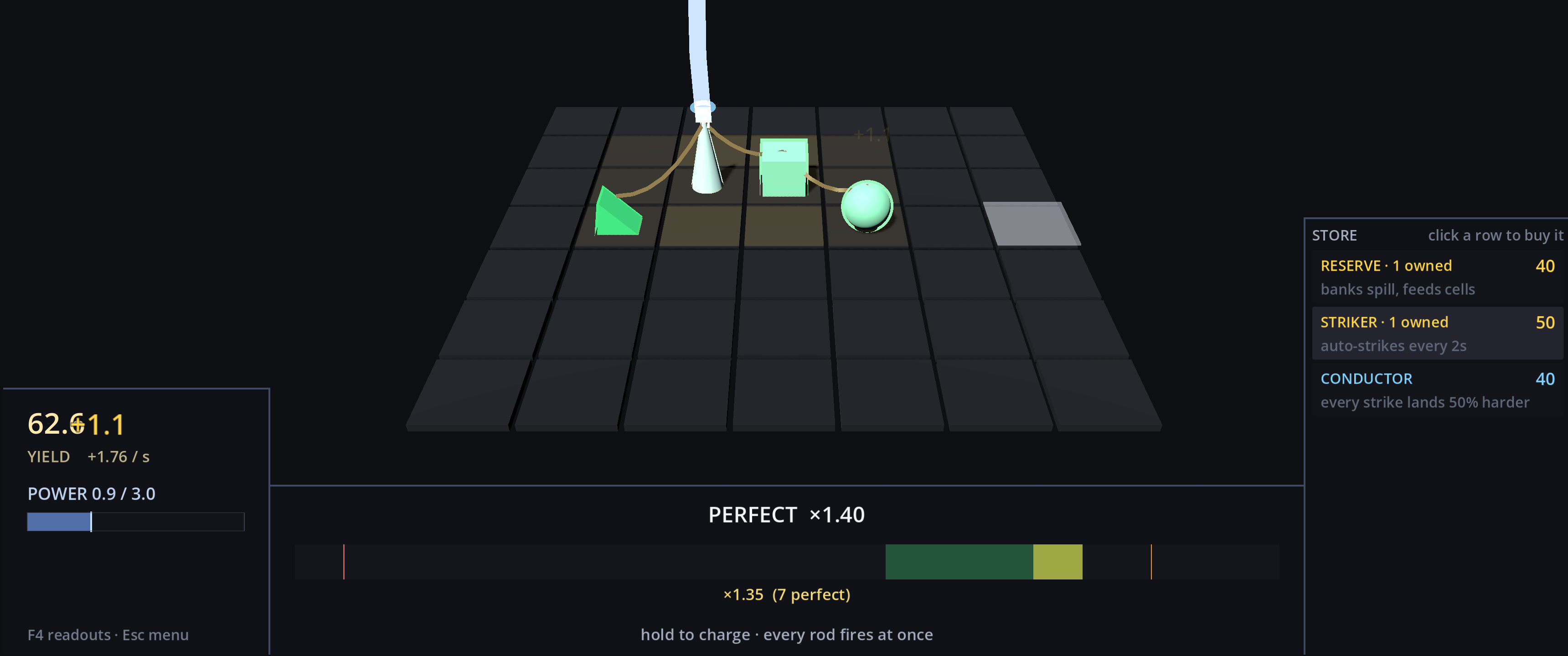
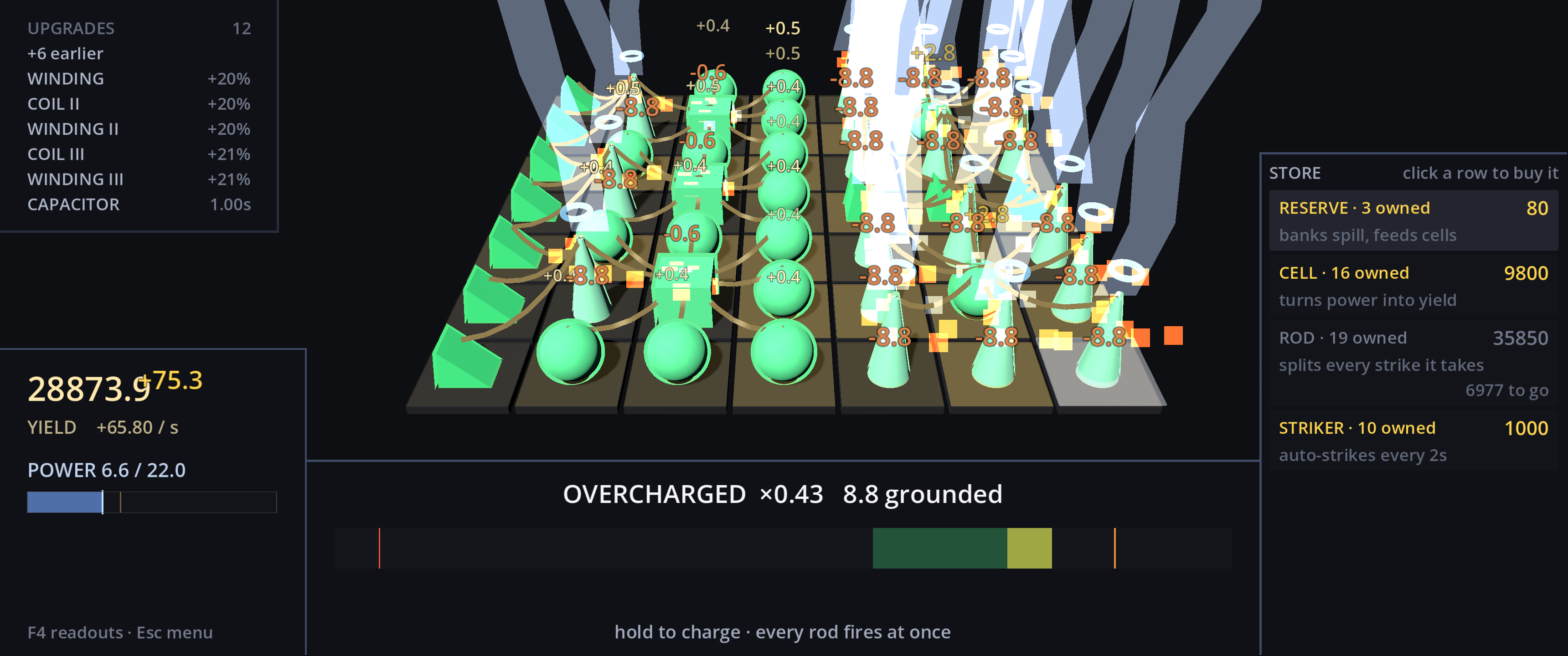
- Art: there are no image, mesh, or font files either. The buildings are Godot primitives — boxes, cylinders, a prism, a torus — with flat materials; the lightning bolt is a seven-segment jittered line rebuilt on every strike; the cables are drawn geometry with a one-shader crawl that only animates while power is actually flowing; the sky is the engine's procedural sky. Agents wrote all of it by describing what each thing should read as, then iterating against captured playtest frames. No image generator was involved, and it looks exactly like that.
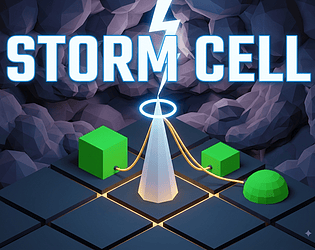
- Promo images: the thumbnail and banner images were generated with Gemini.
Leave a comment
Log in with itch.io to leave a comment.
Comments
I like it, +50/s yield for now haha
The concept is solid, and the charging + rhythm is an interesting idea. but not being able to turn off screen shake (or decrease it via percentage slider) makes it harsh on the eyes, where the player needs attention (the bar yellow slit), it creates harsh tiring effect. The progression fun curve could also use some more dopamine. Also changing the angle the player sees the board would give it more character.
I like the concept, and it fits the theme really well. I think the main thing holding it back for me right now is that the gameplay doesn’t feel very rewarding yet. The audio is a little abrasive, and without rewards, progression, or much of a narrative hook, I didn’t feel a strong drive to keep clicking and see what came next.
I also think the early levels ask a bit too much of the player before giving much back. It might feel better if the game eased you in and gave you more frequent little rewards early on, something that creates that “oh, look what I unlocked, I want to see what else I can get” feeling.
There’s definitely something here, though. With a little more polish around progression, sound, and player motivation, I could see this becoming a really nice leisurely game.
clean visuals, potential is there with some more game depth
Really nice presentation for a jam — the low-poly isometric field with the lightning rod, reserves and glowing arcs looks great, and "hold to charge, release to strike, feed the machine" is a clean, on-theme hook. I liked watching YIELD tick up and the store/placement layer giving the timing a puzzle to serve. One honest bit of first-run friction: I kept landing "PARTIAL x0.54" and couldn't quite tell where my charge sat relative to the green/yellow sweet-spot band, so a more legible charge marker (or a snappier hit-cue on a perfect) would help the timing skill click sooner. The first building at 30 also took a lot of strikes to afford — a slightly cheaper first purchase would pull new players into the build/expand loop faster. Solid entry, enjoyed it!