



Play game
GameBoy: Second Brain - Game Boy Style Cozy Game's itch.io pageTeam Name
Secondbrain
Game Name
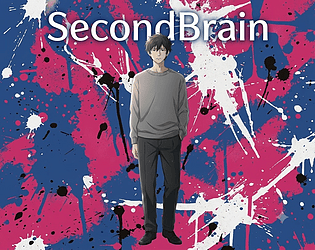
SecondBrain
Gameplay instructions
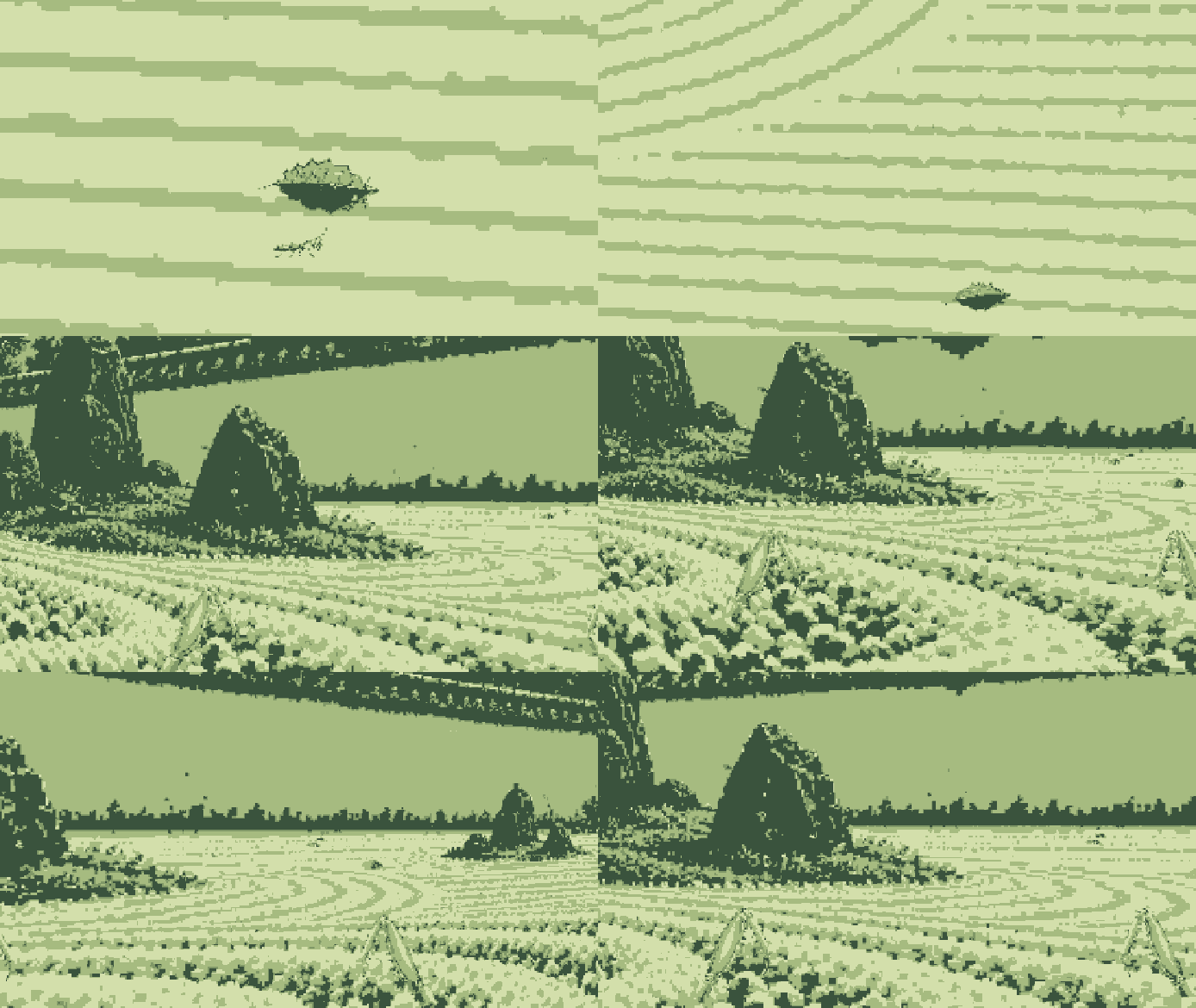
SecondBrain is a Game Boy-style narrative game that runs in the browser. No installation or account is needed.
HOW TO PLAY
1. Open the game page and start the game. Choose your language: English, 日本語 or 中文.
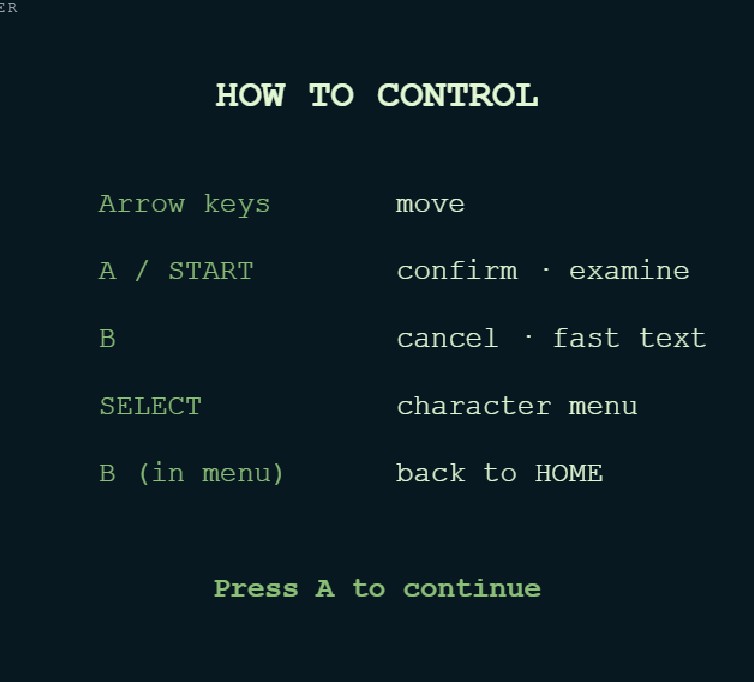
2. Move Yuki with the arrow keys (or the on-screen D-pad). Walk up to people and objects and press [CONFIRM KEY] to talk or interact.
3. Read the dialogue and press [CONFIRM KEY] to advance. When a choice appears, pick an answer with the arrow keys. Your choices shape which memories, emotions and Zen sayings you collect.
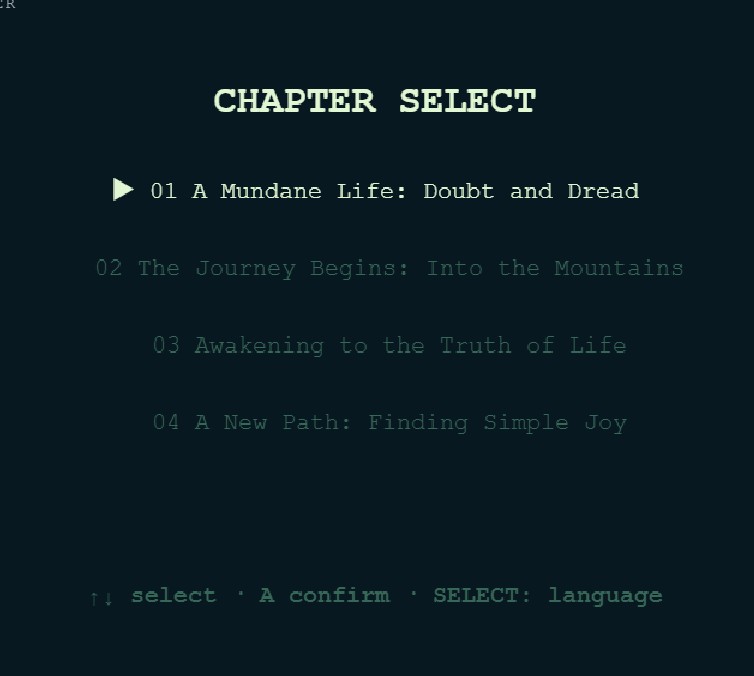
4. Play through the chapters in order: an ordinary life, the mountains through four seasons, the Zen room, and meditation on the grassland.
THERE IS NO WAY TO FAIL
There is no timer, no combat and no game over. Take the game at your own pace.
OPTIONAL MODES
- Read-aloud mode: the game narrates the story by voice, so it can be played without looking at the screen.
- Emotion encyclopedia: review the emotions you have collected (75 in total) and 30 Zen sayings.
- Daily sudoku: a new puzzle every day, played with the same controls.
AFTER CHAPTER 5: CREATE YOUR OWN CHAPTER
The game does not end at Chapter 5. After finishing it, players can build their own content with the same method used to make SecondBrain.
The method is packaged as an AI skill: a methodology for building Game Boy-style (160×144, four-tone green) narrative games that ship entirely in a single offline HTML file. Art, chiptune audio, story, maps and the save system are all included, with no engine and no external dependencies. It gives creators a tested path from a reference image to an itch.io release, covering architecture principles, the art-to-pixel pipeline, procedural chiptune audio, a three-layer testing workflow, and publishing.
How to try it:
Step 1. Read how to use the skill:
https://note.com/evernotebot/n/n9b495e4b5204?app_launch=false
Step 2. Send the prompt to your AI to install the skills:
https://evernotebot.itch.io/secondbrain-chapter5
What platform is your game built for?
Leave a comment
Log in with itch.io to leave a comment.
Comments
When Chapter 5 ends, the game does not let you finish. Becasue....
When Chapter 5 ends, the game does not let you finish.
The screen fades, and then — you are back in the late-night room from Chapter 1. The same stack of old workbooks on the desk. The same film re-release trailer on the television. The clock still reads 23:47.
The first time, you'll assume it's a bug. Or some kind of easter egg.
By the second time, the third time, you understand: Yuki is repeating.
This mirrors one of the most characteristic signs of Alzheimer's — repeated questions and statements: unable to retain what they have just said or asked, a person will repeat the same words again and again, entirely unaware that they are doing so.
And that is the heart of the design:
He doesn't know he's repeating. You're the one who notices.
At seventy, Yuki can't return to the present. Recent memory is going; distant memory remains — so he goes back, over and over, to those nights between 1989 and 2019. To him it isn't repetition. It's the part he can still reach.
You stand outside the screen and watch him pick up that photo frame for the fourth time, and say the same line for the fourth time: "He poured so much into writing these — and so much regret."
That gap in awareness — he has none, you have all of it — is where the whole design gets its weight.
The Future Landscape of the IP Business
The strongest IP of the future may no longer be a character loved by many, but a world that many are eager to enter. This isn’t to say that stories need to be written on a larger scale or that world-building needs to become more grand. What I mean is that the fundamental unit of IP is shifting from the character to the world, and your relationship with it is changing from liking and consuming it to entering it, living inside it, and leaving your own trace. Today, I want to unpack this shift.
read more:https://evernotebot.itch.io/secondbrain/devlog/1661194/the-future-landscape-of-t...