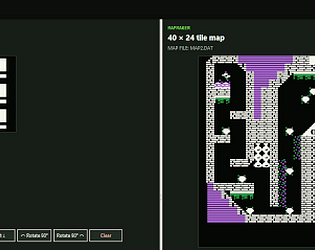
Almost ready to release LoomBASIC. Before I do, here’s a quick comparison. This isn’t meant to knock FastBasic in any way—FastBasic is an excellent, well‑designed language that’s been a huge inspiration. LoomBASIC simply takes a different approach in a few areas, and I want to highlight those differences for anyone deciding which tool fits their workflow.
Atari 8-Bit BASIC Speed Comparison
A performance comparison between FastBasic and LoomBASIC, using equivalent benchmark programs with no embedded assembly code.
Benchmark Results
Compiler
Arithmetic
Branching
Array
Total Ticks
FastBasic (INT)
1,228
1,126
858
3,212
FastBasic (FP)
1,228
1,116
858
3,202
FastBasic via ByteLoom
1,228
1,126
858
3,212
Native LoomBASIC
352
326
263
941
Lower tick counts indicate faster execution.
What Was Tested?
Arithmetic: 30,000 iterations of integer arithmetic.
Branching: 30,000 iterations involving conditional IF statements.
Arrays: 20,480 byte-array updates.
Correctness: All four programs produced identical expected checksums (30007, 61, 20480).
LoomBASIC Performance Improvement
Test
Speedup vs FastBasic INT
Arithmetic
3.49× faster
IF branching
3.45× faster
Array operations
3.26× faster
Overall
3.41× faster
Conclusion
In this benchmark, LoomBASIC completed the same workload approximately 3.4 times faster than compiled FastBasic, requiring about 71% fewer clock ticks.
FastBasic compiled directly and through ByteLoom Werx produced identical results. The FastBasic FP build performed nearly identically to the INT build; this test did not benchmark floating-point arithmetic.
All programs completed the same workloads and returned the same expected results.
These are preliminary synthetic benchmark results, not a claim that LoomBASIC is 3.4× faster in every application. Real-world performance will depend on program structure, graphics, I/O, and other operations.
And the code used to test in speedtest.lbas:
' Test 3 of 3: ByteLoom Werx v4.19 native LoomBASIC ' 100% BASIC source, no ASM blocks and no native engine calls.
DIM BUF(127) BYTE WORD I,J,A,SUM,T0,T1,E1,E2,E3,TOTAL
' Test 1: 30000 iterations, two 16-bit arithmetic operations. A=7 T0=PEEK(19)*256+PEEK(20) FOR I=1 TO 30000 A=A+3 A=A-2 NEXT I T1=PEEK(19)*256+PEEK(20) E1=T1-T0 PRINT "ARITH TICKS ";E1 PRINT "CHECK A=";A
' Test 2: 30000 conditional paths. A=1 T0=PEEK(19)*256+PEEK(20) FOR I=1 TO 30000 IF A>80 A=A-79 ELSE A=A+5 ENDIF NEXT I T1=PEEK(19)*256+PEEK(20) E2=T1-T0 PRINT "BRANCH TICKS ";E2 PRINT "CHECK B=";A
' Test 3: 160 x 128 = 20480 byte-array updates. FOR I=0 TO 127 BUF(I)=0 NEXT I T0=PEEK(19)*256+PEEK(20) FOR J=1 TO 160 FOR I=0 TO 127 BUF(I)=BUF(I)+1 NEXT I NEXT J T1=PEEK(19)*256+PEEK(20) E3=T1-T0 SUM=0 FOR I=0 TO 127 SUM=SUM+BUF(I) NEXT I PRINT "ARRAY TICKS ";E3 PRINT "CHECK C=";SUM
TOTAL=E1+E2+E3 PRINT "TOTAL TICKS ";TOTAL PRINT "EXPECTED 30007,61,20480" PRINT "RESET TO EXIT" DO PAUSE LOOP
Check the devlog, added an IDE. Anyone who wants to help beta-test parts - let me know if you want to be added to credits as a beta tester, and/or what you tested and what worked or bugs you discovered.
Since I started with the word 'Loom' I decided to call a project file a 'Mill'. Also added a snippets section, hopefully making it easy to keep things organized.
I get what you’re saying, and I didn’t mean for my comment to come off like I was knocking your workflow or the tools you used. You definitely built it in legit 8‑bit software — I’m not questioning that at all. What I was trying to get at is just the vibe of the final track. Even stuff made with true 8‑bit tools can land in different stylistic pockets, and this one just doesn’t quite match the tone I’m aiming for in the game. Think I'll end up submitting a buggy and unfinished game if anything at all, never enough time anymore.
Very cool, thanks. Dont know enough about +REU but am getting quite a few 'Multiplcation could lose precision(Ttmp7,Ttmp17)' when trying out samples like the drawing circles and randomchars.bas
windows export, when i try to launch an 'installer' it gives me option to keep or remove as a security risk. is there a way around this build process to allow other users not to encounter this? Also would like a standalone style exe, is that possible?
Sorry I tried that with 4.3, doesn't work for some reason. Shows up as a black screen with the completed loading bar and godot icon on itch and I've tried different things, even building it with 4.2
Ugh have it tweaked out a bit with Godot but when I try to upload the html5, install and run it just sits there with a full loading bar like it is stuck. Could someone help? I used this website but did not help at all. How to export a Godot 4 game to run on the web on itch.io | foosel.net Also, when i select 'type of game as html' i lose my graphics, font, backcolor etc for the project page.
what engines are recommended? I know godot can export to HTML5 but maybe there are better alternatives? PhaserIO but the editor must be paid for by subscription.
does anyone else have this problem? Some games I try to download and I get a blank Install box, had this problem seemingly forever. I'm on Windows 11, latest. My To Location: is filled out, but the Install: is blank. Can't download or install it.
character set, but i can see to get around it can use the get image.. when i tried the MOB sample I get this message from the compiler: Datatype mismatch: BYTE,MOB