Indie game storeFree gamesFun gamesHorror games
Game developmentAssetsComics
SalesBundles
Jobs
TagsGame Engines

Zachi Mann

5
Posts
1
Topics
A member registered 14 days ago

Creator of

Recent community posts

Closed group beta testing started yesterday for Where the Arc Falls.

This is the first time the current build is being played by a small group outside the development process, so I am now starting to get the kind of feedback that is difficult to get while knowing exactly how every puzzle and interaction is supposed to work.

At this stage I am mainly looking for places where players get stuck, misunderstand what the game is asking from them, miss important clues, or find solutions that are technically possible but not satisfying. I am also watching for the less interesting problems: bugs, broken state, unclear interactions and anything else that only becomes obvious when someone plays without me sitting next to them.

I also published Episode 2 of the development journal: Adventure Game Puzzles Shouldn't Feel Like Escape Rooms.

It goes into how I am approaching puzzle design, why I want problems to feel like they belong naturally in the world, puzzle dependency charts, and where AI has actually been useful in the process.

The next few weeks will probably involve a lot less adding and a lot more fixing, simplifying and rethinking things based on what the testers actually do.
(2 edits)

Nostalgicbearthanks for your reply and interest in downloading and trying the game! Right now I haven't yet set up a sign-up page for the beta as we are doing play-testing with "friends and well-wishers". We believe chapter I is now beta ready, and will soon (1-3 weeks) open it for additional players. I will offcourse post about it here on itch.io.

The part about having around 250 people join the playtest but receiving only two public feedback posts stood out to me. I suspect this is not necessarily a sign that people were uninterested. Playing something is relatively easy, but writing useful criticism publicly requires much more effort and can also feel uncomfortable.

I am currently preparing a much smaller closed test for a narrative adventure, and this makes me think that relying on voluntary public feedback is probably not enough. My current plan is to combine direct observation with a short private questionnaire and a few follow-up conversations. Were you able to see where players stopped or how far they progressed? If the average session was around twenty minutes for a one-hour build, there may be a specific early point where people lost direction or motivation.

@dropkickgames - Looks really thoughtfull with its unique style. Will give it a try. 

I would be interested to see how you prevent the player from simply trying every possible option. Do incorrect or poorly timed questions affect trust, consume meaningful time, or close certain lines of inquiry? That seems central to whether the system feels like actual deduction rather than systematic trial and error.

Hello,

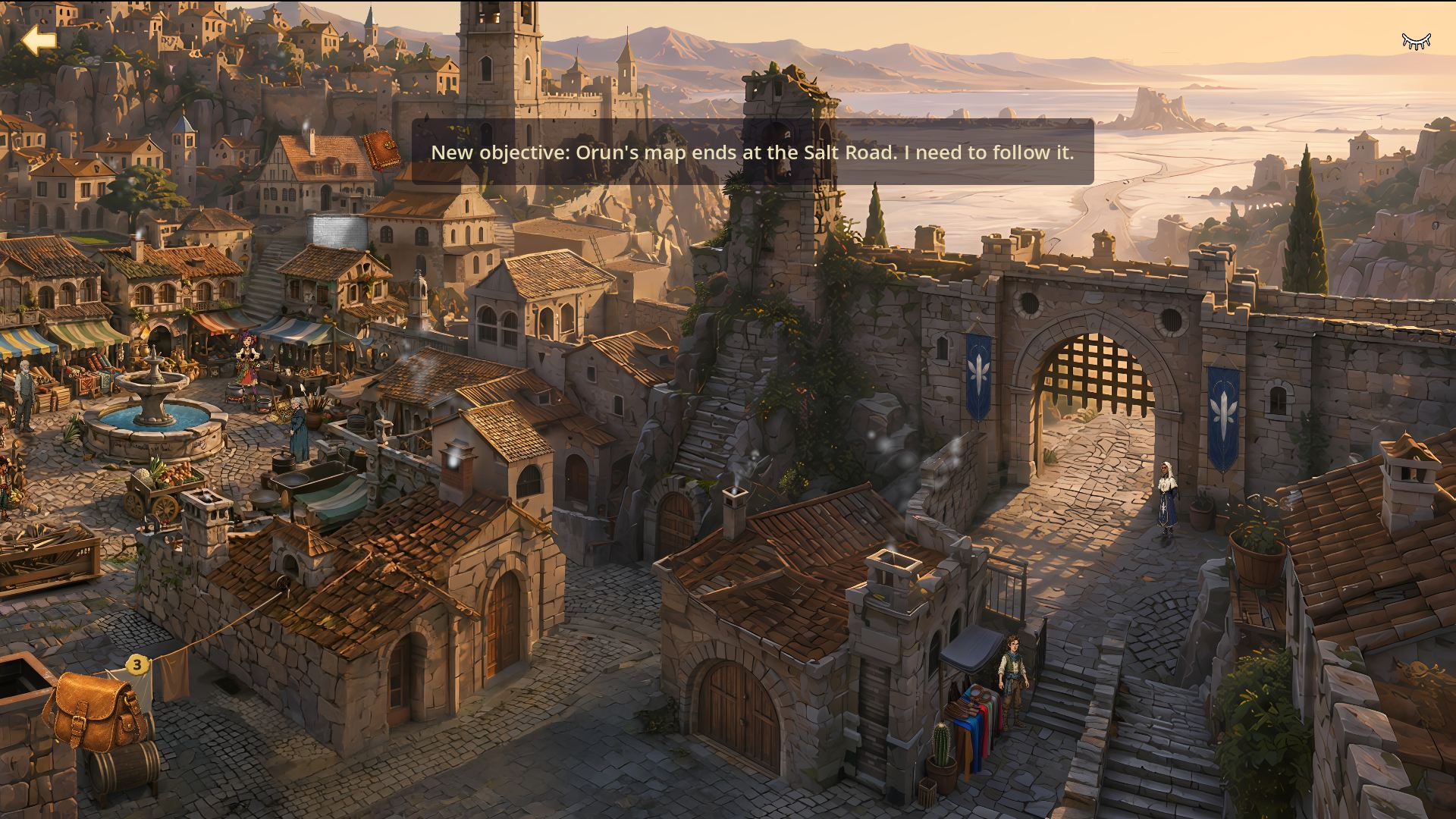
I am developing Where the Arc Falls, a story-rich point-and-click adventure built around exploration, dialogue, observation, and puzzles that belong naturally to the world around them.

The project began as something I had wanted to make for a long time but did not initially believe I could produce alone. I have a professional software-engineering background, but my previous experience in game development was mostly experimental and small-scale. Over time, improvements in tools, production workflows, and my own understanding of the problem made the project feel less hypothetical and more achievable.

The first chapter is now playable from beginning to end. I am currently stabilizing it for a small closed testing group, with particular attention to save and load behavior, player guidance, pacing, animation, and whether the puzzles communicate their logic without excessive explanation.

I am intentionally keeping most of the story and specific puzzle solutions private at this stage. What I plan to share here is the development process: the design principles behind the game, the systems that support it, the problems that do not work on the first attempt, and what changes once people other than the developer finally play it.


I recently published the first longer article about why I started building the game:

Episode 1: Why I Started Building an Adventure Game

The project page is here:

Where The Arc Falls

One issue I am currently thinking about is how much information an adventure game should give the player before helpful guidance begins to weaken the satisfaction of discovery.

For people who play point-and-click adventures: when you become stuck, what usually makes you continue experimenting, and what makes you decide that the game has simply failed to communicate?

I will continue updating this thread as Chapter 1 moves through testing.
Would really appreciate this community's feedback, thoughts and hoping I could recruit some beta testers with true passion for old-school advneture gaming and great story-telling.