


Did I forget to drop a link?
Play game
Maestyria: The Amulet Below's itch.io pageResults
| Criteria | Rank | Score* | Raw Score |
| Innovation | #61 | 3.500 | 3.500 |
| Polish | #71 | 3.333 | 3.333 |
| Fun | #78 | 3.167 | 3.167 |
Ranked from 6 ratings. Score is adjusted from raw score by the median number of ratings per game in the jam.
Successful or Incomplete?
Success
Did development of the game take place during the 7DRL Challenge week?
Yes
Is your game a roguelike?
Yes
Turn-based
Yes
Meta-Progression
Yes
Roguelike Elements
Roguelike elements:
- Turn-based grid movement on a 60x40 tile map with discrete player and creature actions
- Permadeath — single run, no saves
- Dungeon descent and ascent across multiple procedurally generated floors with stairs connecting them
- Field of view — shadowcasting FOV with day/night light radius cycling (100-turn night cycle)
- Skill-based combat — 16 skills across 3 trees (Arms, Guard, Lore) with use-based XP progression, misfire chances, and a passive defense chain (Dodge/Riposte/Parry/Endure)
- Creature ecosystem — 24 creature forms in 6 archetypes (Beast, Bird, Insect, Ooze, Drake, Plant) with 4 ecological roles (Producer, Consumer, Predator, Decomposer) forming a closed lifecycle loop the player disrupts or nurtures
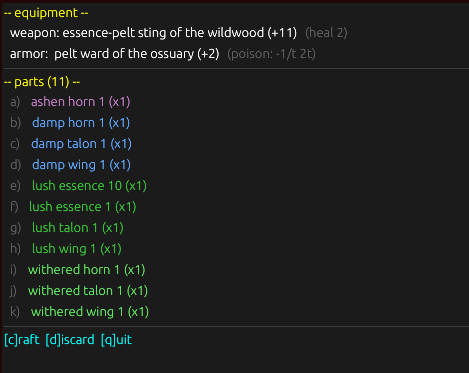
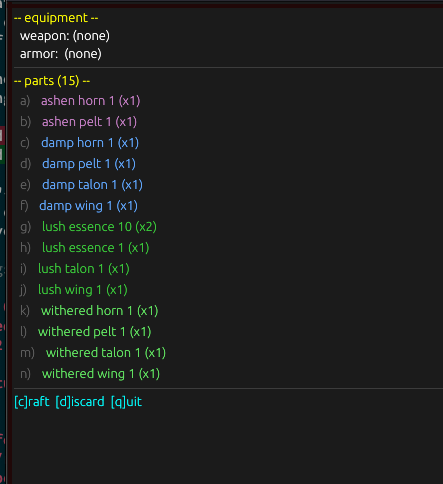
- Equipment crafting — harvest anatomical parts from creatures (fangs, chitin, scales, etc.), craft weapons, accessories, and tinctures from collected materials
- Elemental biome layers — rooms carry stacked environmental layers (Fire, Frost, Death, Storm, Verdant, Moisture, etc.) that affect gameplay and creature behavior
- Biome crafting - rooms can be purged of biomes and layered with new ones if the player discovers how
- Seasonal and day/night cycles influencing layer behavior and visibility
- Amulet endgame — 4 amulet variants selected by player behavior metrics, driving replayability
Procedural content generation:
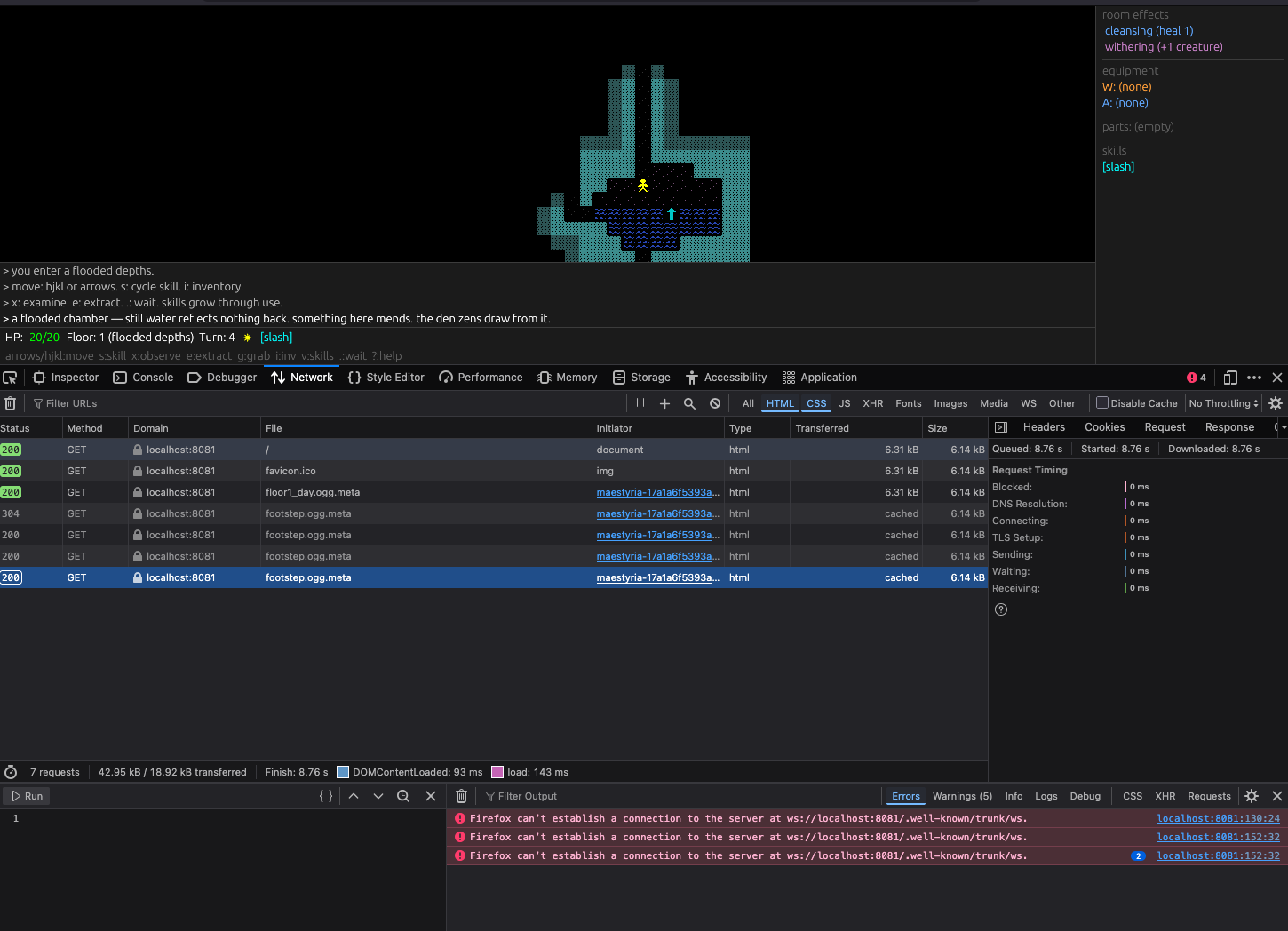
- 23 floor layout algorithms — each floor randomly selects from layouts including Traditional rooms-and-corridors, Cavern (organic carving), Labyrinth, Hive, Burrow, Ruins, Arena, Forest, Tundra, Swamp, Desert, Volcanic, Village, Underwater, Lunar, Sanctum, Flooded Depths, Crystal Caverns, Fungal Hollow, Blight, Mines, Island, Meadow, and Mountain — each with distinct tile palettes and room shapes
- Layer seeding — each room's biome layer stack is procedurally assigned based on floor depth, with probability curves controlling which layers appear deeper in the dungeon
- Creature spawning — creatures spawn dynamically based on ecosystem ratios (consumer/producer/predator/decomposer balance), room layer bindings, and player proximity; rooms repopulate when the player leaves (exit-spawn system)
- Procedural naming — creatures are compound-named from their layer and form (e.g. "fire rat", "death vine"); equipment names are generated from harvested part materials
- Layer contamination spread — layers propagate between adjacent rooms over time, making the dungeon environment evolve as the player progresses
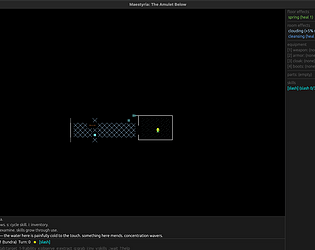
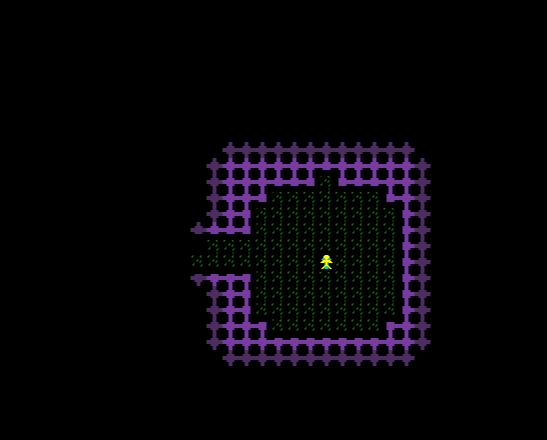
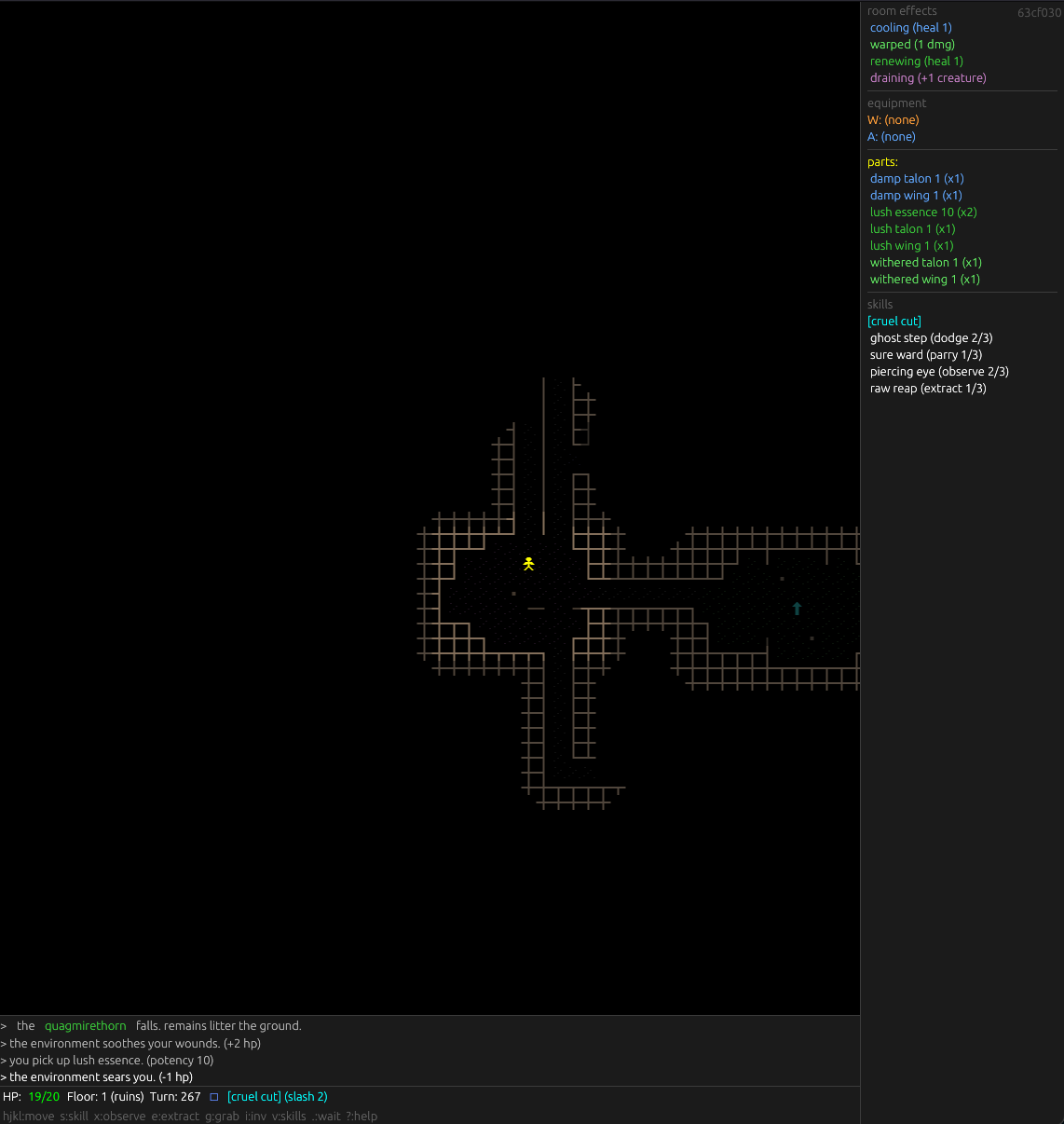
Screenshots
Yes
Leave a comment
Log in with itch.io to leave a comment.