

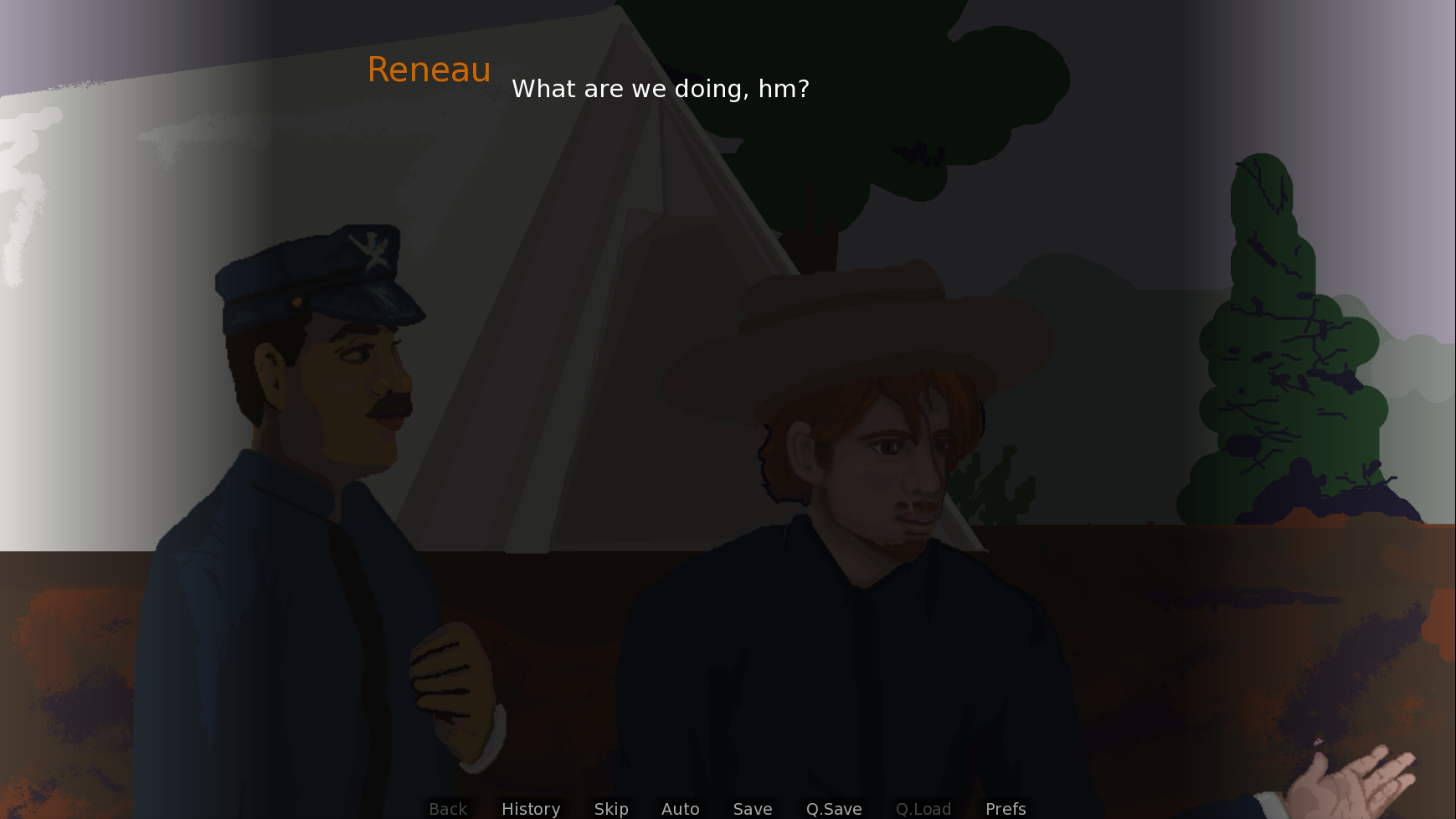
Everything in this mockup is subject to change. Some of it I already know is wrong and expect to redo later this week. The screenshot is to show that there is visible progress.
Latest developments:
- I picked a general setting, further south than what I as initially thinking, because I have photos, museum notes, and access to books from trips that would be useful.
- The blues in the uniforms and the skin tones are feeling closer to correct.
- An outline is coming together, and I’ve got ideas about how to cut it down to a manageable size.
Some thoughts from story worldbuilding research:
Relatively peaceful doesn’t mean the US military or the businesses or any property owners stop committing cruel acts with massively devastating consequences. This shouldn’t surprise me by now, and it is part of the story. The big trick is to writing in general is to use enough of the real world that the story world is believable or interesting without showing too much of its horrors.
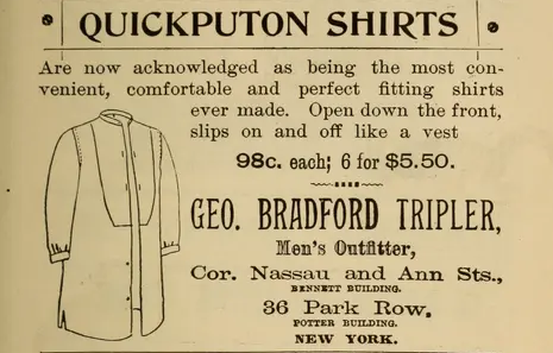 One of my favorite ads, found in Pussy: Her Language (1895)
Men’s shirts were a competitive fashion industry. Nevermind (for our purposes) the politics of fabrics or the arguments about whether or not the maiming factories were evil. The styles are different in every ad, drawing, or preserved garment from the time period. I was hoping to figure out which style to go back to use in “SotL” before its next version release, but uhhh….
Nineteenth century uniforms were far less consistent in style, materials, and colors than what museums and books tend to let on by selecting the stereotypical examples to display. Is this relevant? Yes! The US Army and its members experimented with uniform materials and styles for several decades after the Civil War officially ended. In the specific decade I’m researching, 1890s CE, the US Army was using the light tan color for cavalry and its (wait, WTF?) tropical invaders. Everything from the specific color to coat length to decorations could vary from person to person, especially among the officers, who would present themselves according to personal preferences. That means there’s freedom to mix and match and still be able to justify my decisions. I like that.