

Play game
Stage Four's itch.io pageResults
| Criteria | Rank | Score* | Raw Score |
| Overall Enjoyment | #14 | 3.100 | 3.100 |
| Theme Fidelity & Creativity | #14 | 3.600 | 3.600 |
| Production Velocity | #18 | 2.900 | 2.900 |
| AI Direction & Adaptability | #21 | 2.600 | 2.600 |
Ranked from 10 ratings. Score is adjusted from raw score by the median number of ratings per game in the jam.
The Biggest Challenge
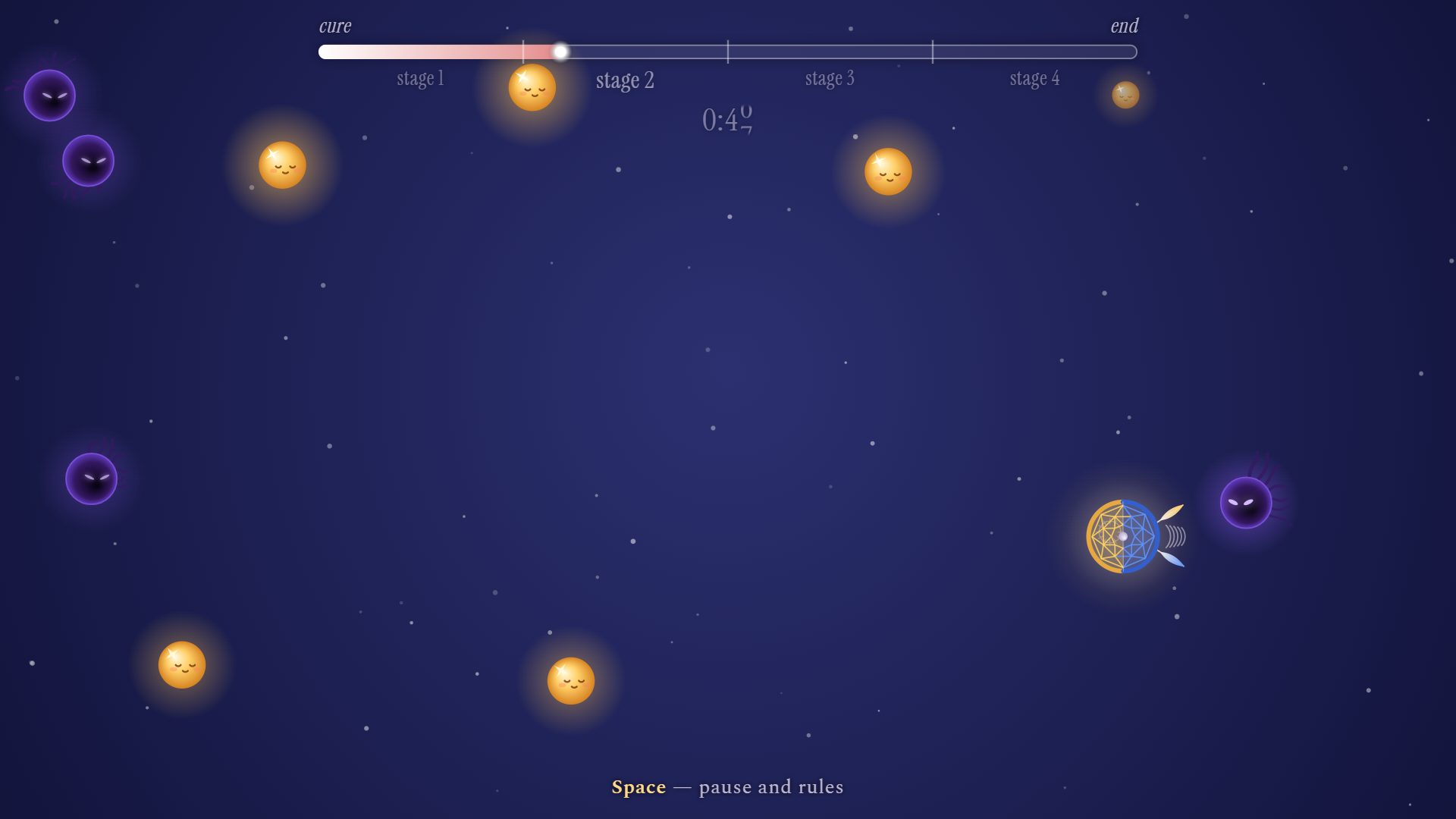
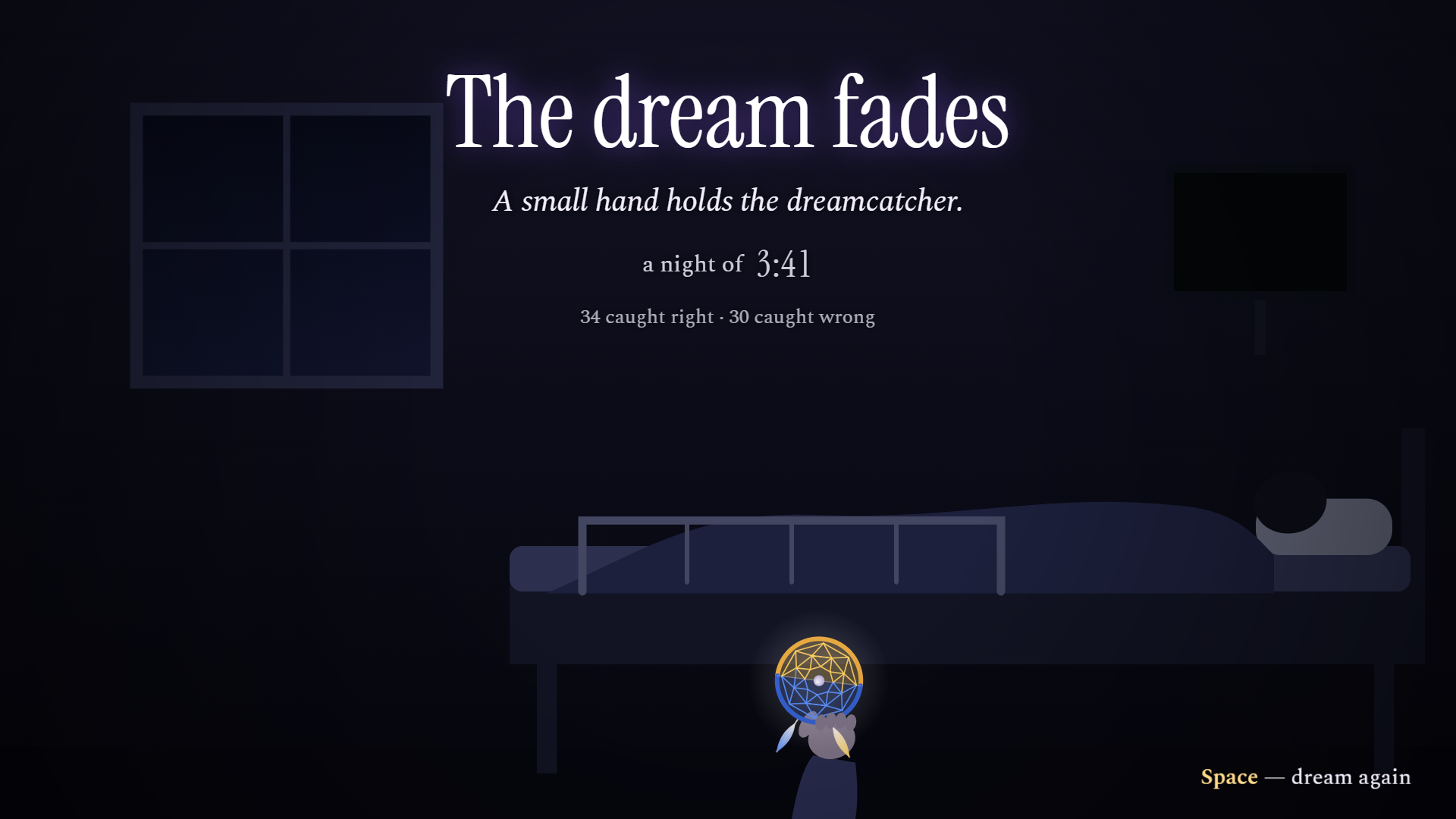
The challenge was coming up with a concept that organically combines the two themes, Dream and Stage, so that neither one feels slapped on. Mine is a patient dreaming of a cure, where every stage of the illness plays like a different game. I delegated practically all of the implementation to the AI, and it also came up with many good ideas that improved the gameplay. So I wanted a concept and core mechanic strong and original enough that I could honestly present this as my game.
AI Tools Used
Claude Code Opus 5.5
Areas Where AI Was Used
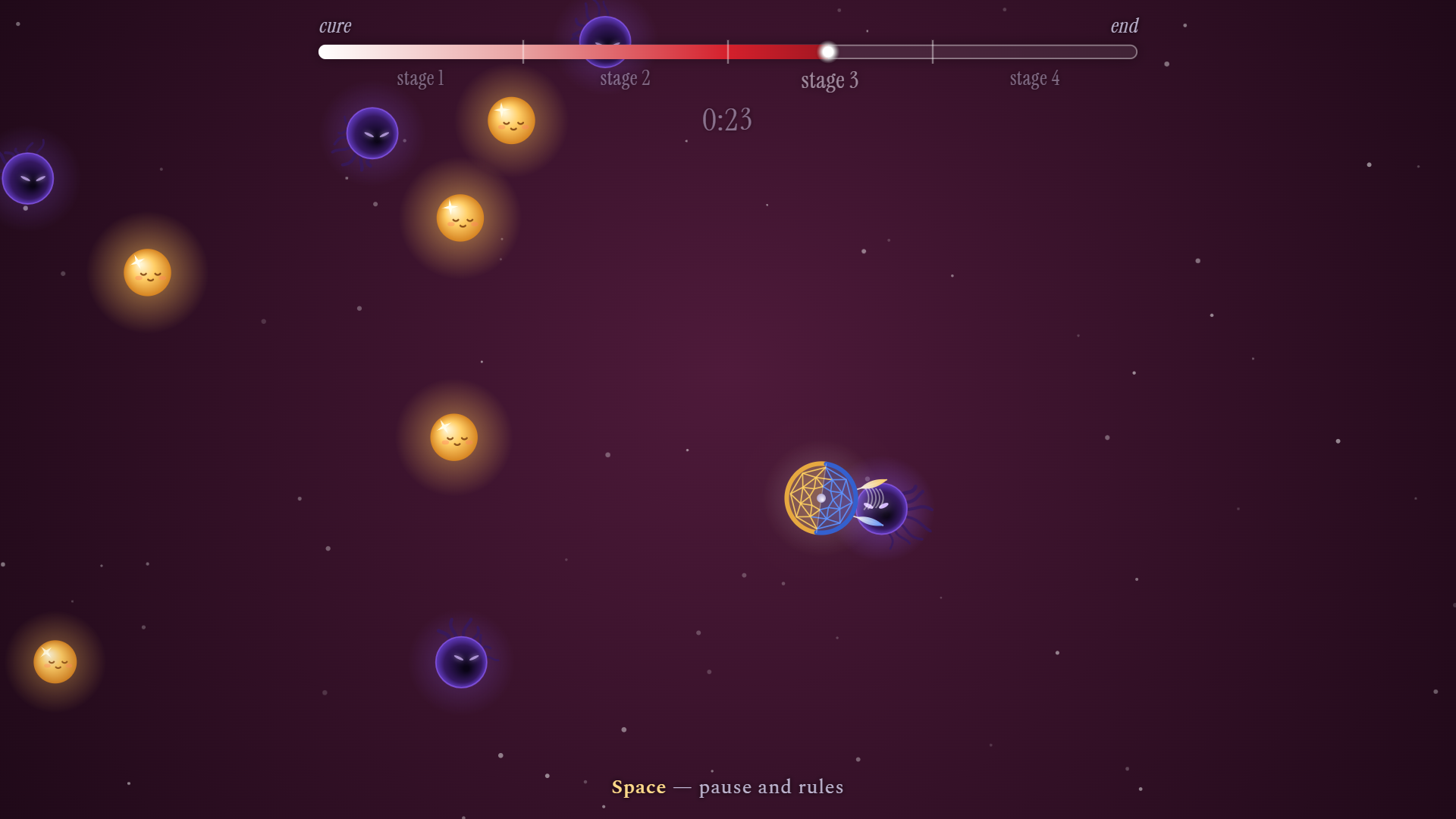
Code: all of it. Claude wrote the game: the event-driven physics engine, the four stages and their rules, the dream behavior, and the HUD.
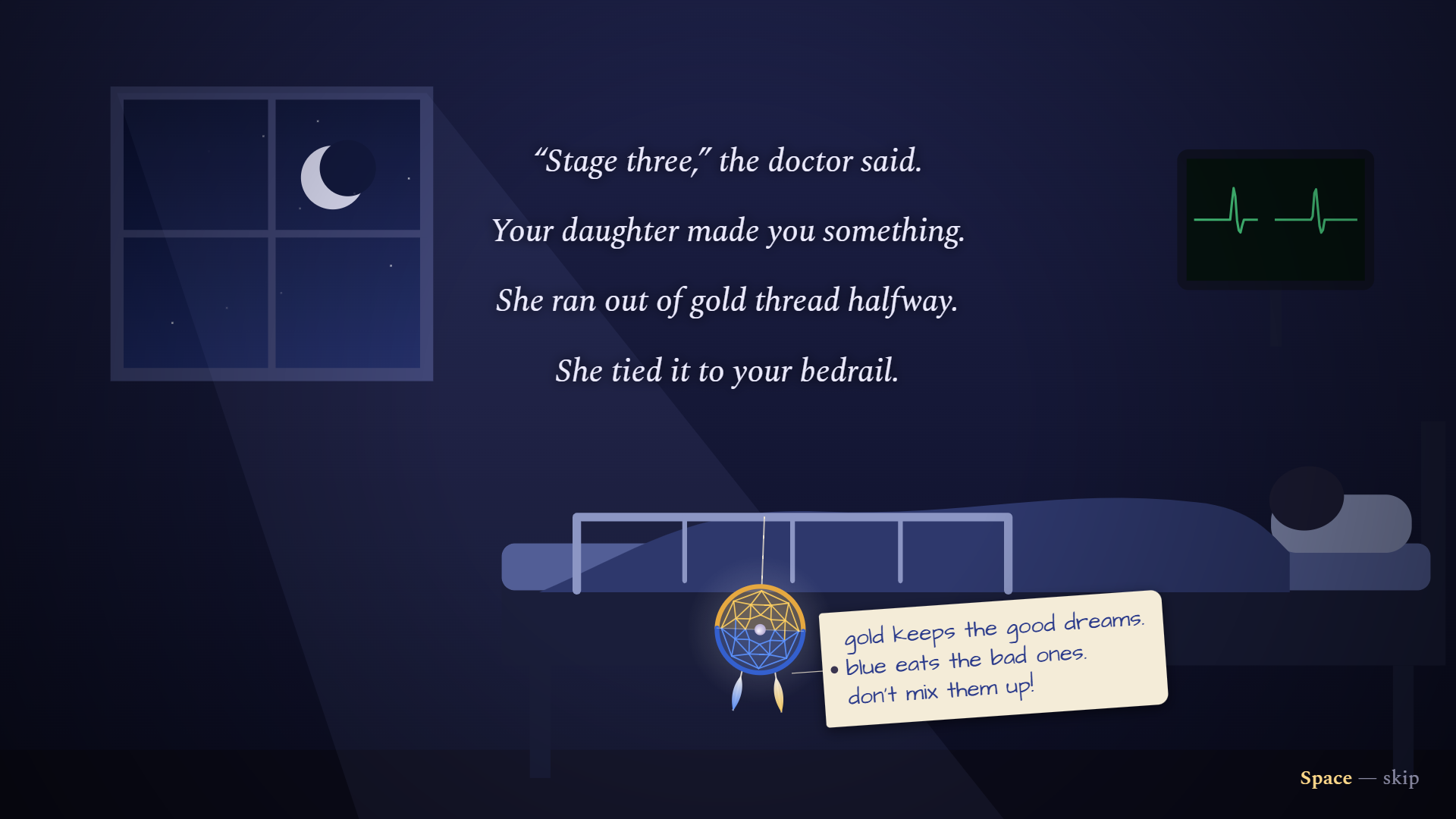
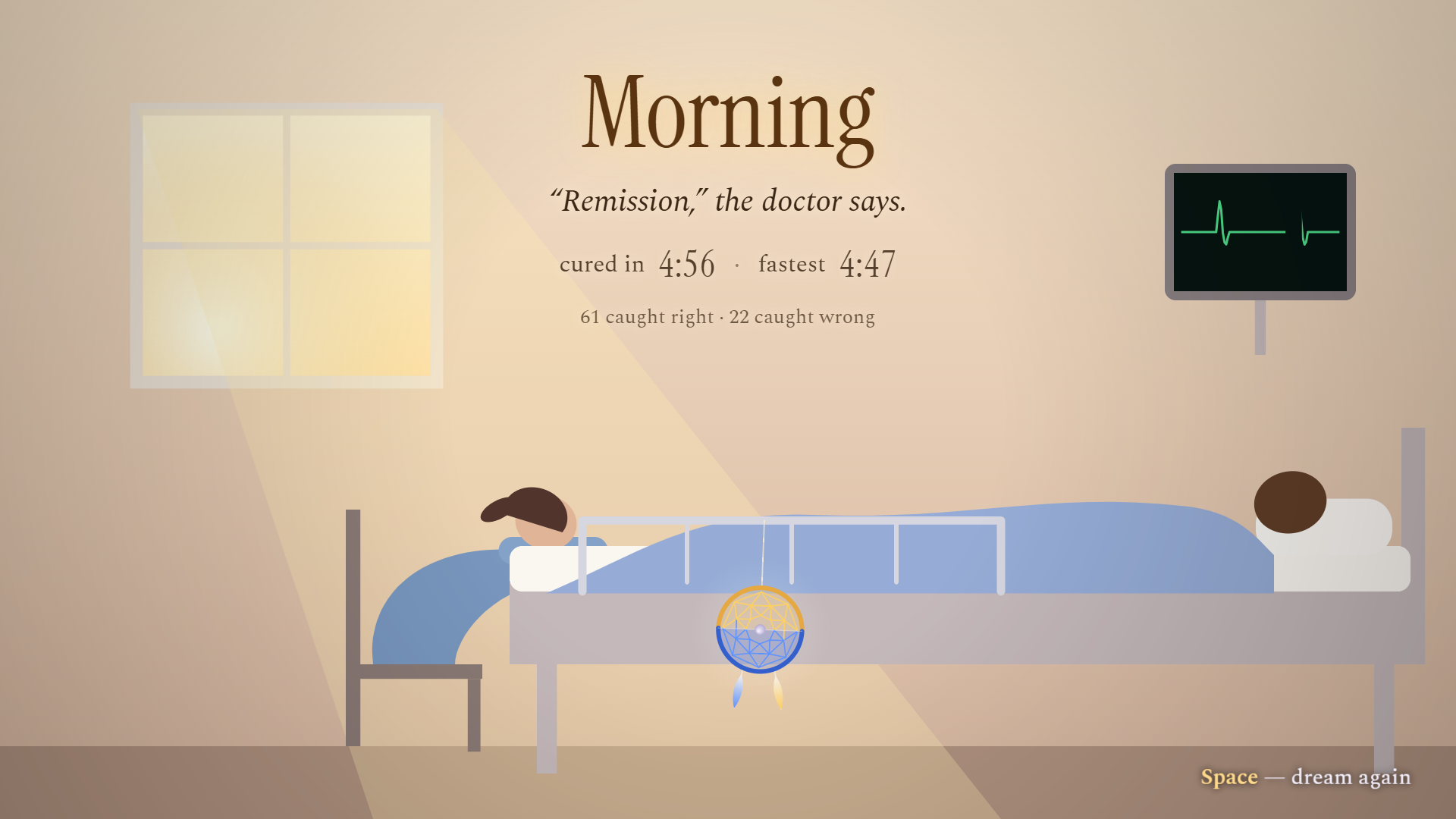
Story: written by Claude. That covers the opening, the daughter's tag on the dreamcatcher, both endings and the whispers between stages.
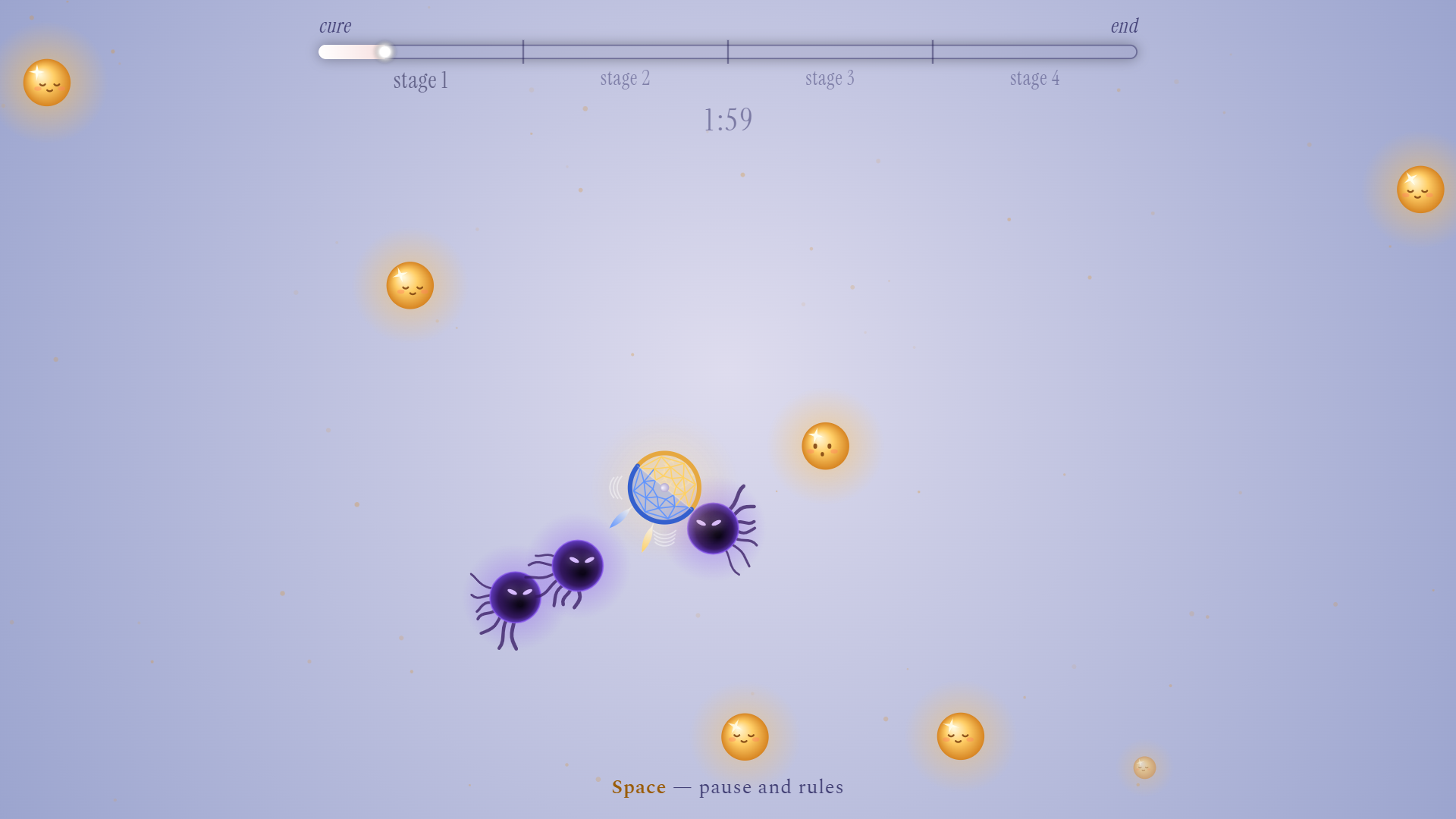
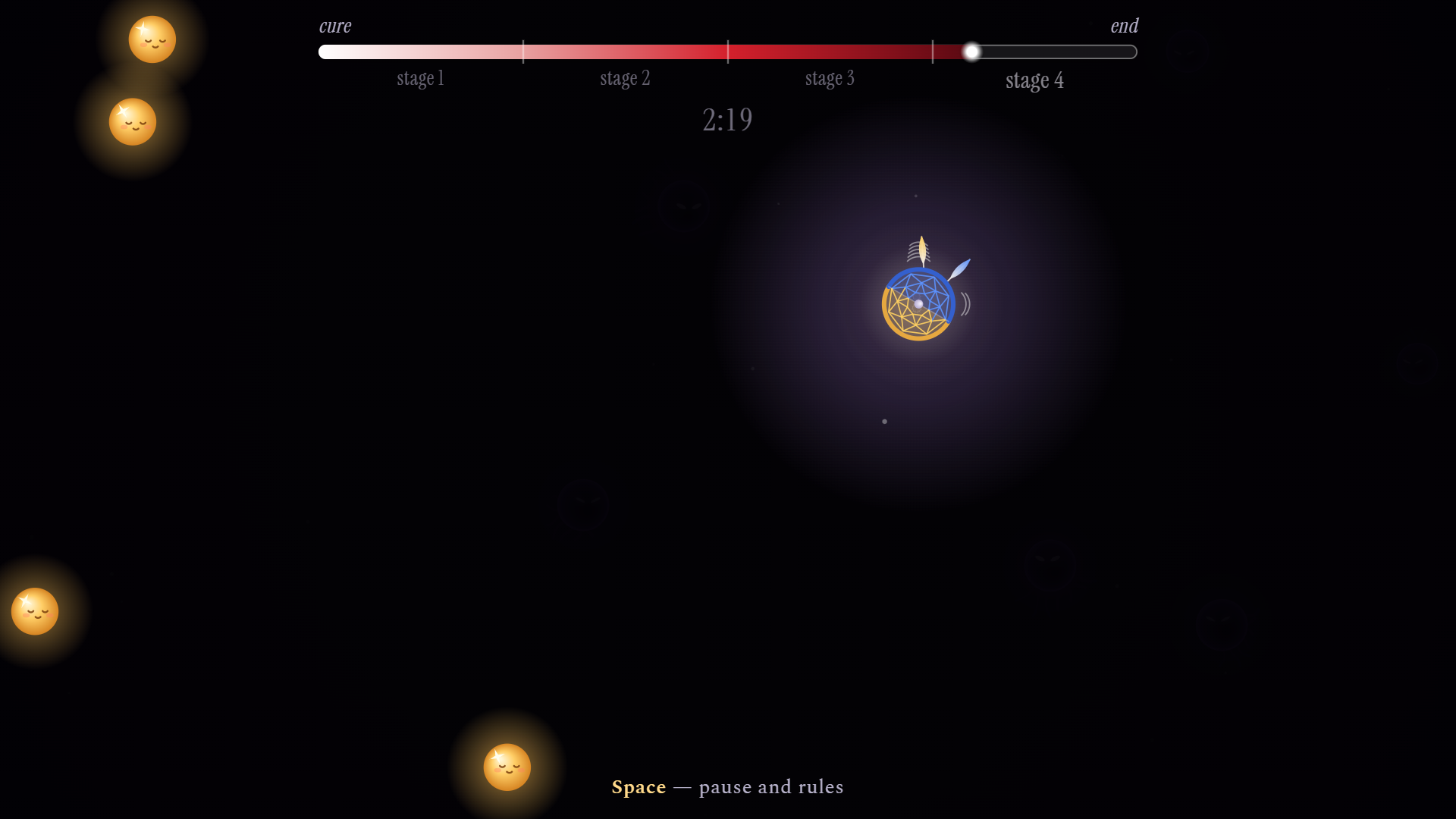
Visuals: drawn by code, so also AI-written. There are no image files in the game. Claude's canvas code draws every frame: the skies, the dreams and nightmares, the dreamcatcher with its web and feathers, the room in its three lights. The app icons, the itch.io cover, the GIFs and the screenshots come from that same drawing code, rendered by scripts Claude wrote. A bot plays the nights for the screenshots.
Sound effects: synthesized by Claude's code. Every effect is built live with Web Audio and kept in the music's key: bells, pops, glass cracking, the swells between stages, the endings.
Balance testing. Claude wrote headless bots that play whole nights, to measure how long a cure takes and where nights stall. Human playtesting made the final calls.
Not AI:
The original concept and the controls are mine. That includes the dreamcatcher with its gold and blue halves, the illness that gets better and worse through stages that each play differently, and the tap-to-change-velocity steering. I made every design call, and Claude built to them.
Leave a comment
Log in with itch.io to leave a comment.
Comments
This is really fun! I love the challenge of the complicated controls and the drifting movement, it makes what looks like a easy game very hard. This is a very good game, good job! Sorry about putting it on the game page.
On my first try, I wasn't used to the controls and kept frantically clicking, but on my second run I realized that wasn't how it worked—once I learned that just a few clicks actually move the catcher, I managed to clear it!
The movement is definitely unique, though if a "dream catcher" really existed, maybe this is actually how it would move.
I really enjoyed it!
During gameplay it reminded me that situation when you have high fever and have lucid dreams… you need to remember you can catch both of them so get them all!
Over great game even as it takes some time to get used to principle of movement and changes in directions after bounce.
Nice concept, after you undestand the controls is fun to go and catch the right stuff. But I wasa bit dissapointed on the lack of story. I think you have a very interesting way to connect the theme STAGE and DREAM but you did not use at full potential. When I start to play I was ready to get more emotional but I did not get to that.
I praise you for the concept thou
Thank you for playing and for the feedback! I envisioned this as an arcade game from the start, and the story developed as a way to connect the gameplay with the theme more organically. I can see how the premise might have set expectations for a deeper emotional journey. I’m glad you enjoyed the concept!
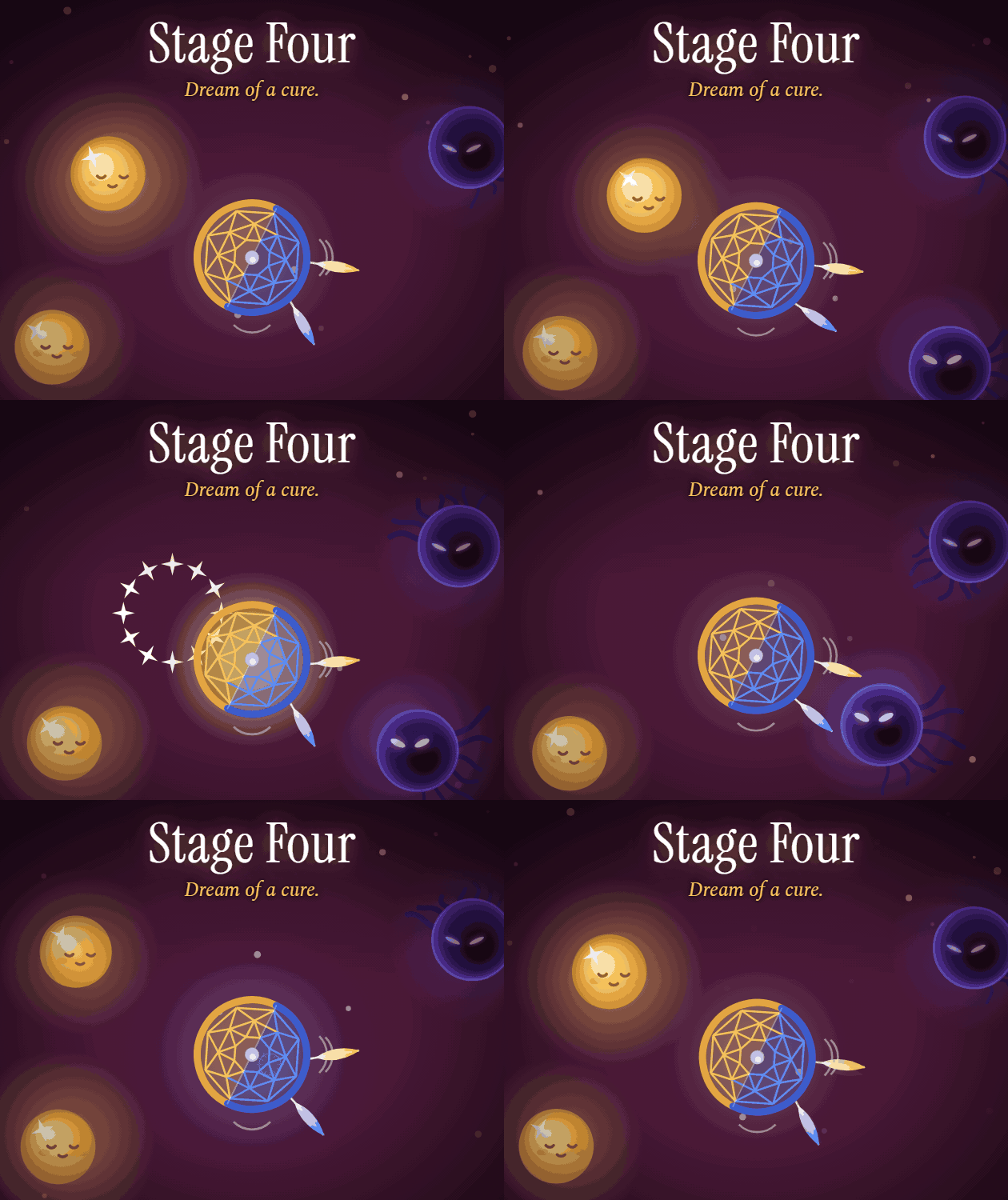
The golden dreams with their sleepy closed eyes drifting past the dreamcatcher were the image that stayed with me — I kept turning the gold half toward them and hoping they would land.
I struggled to get comfortable with the controls, and avoiding the enemies felt frustrating rather than satisfying. I wasn’t sure how much of that difficulty was intentional, but a gentler introduction might help players get a feel for the movement.
The visuals also left me confused about what I was supposed to do. Since I was playing as a dreamcatcher, I initially assumed I should catch or absorb the dark figures. That felt like a natural interpretation of the theme, especially because they were so difficult to avoid. Reading the instructions cleared that up, but I would have liked those interactions to communicate their purpose more clearly during play.
For example, a simple opening encounter could demonstrate what happens when you touch an enemy with each side. I couldn’t really tell whether the dark figures reacted differently when they hit my golden side, so I wasn’t sure whether I was doing something correctly or taking a penalty. A more noticeable reaction through animation, color, or sound would help me connect my actions to the outcome and understand what to change on the next attempt.
The gameplay may ultimately come down to personal taste for me, but clearer feedback and a little more space to learn the controls would have made it easier to understand and engage with.
Thank you for your feedback. Personal taste clearly is a factor, since some people do enjoy the gameplay, and even the controls specifically, despite them being unusual and therefore difficult at first. But I do agree with you that clearer feedback is needed to better indicate wrong catches. Making changes as we speak.
I found the emotional resonance and atmosphere deeply captivating right from the start.
It captures the duality of the dream theme brilliantly, weaving a poignant narrative around hope and healing.
The integration of AI assets feels cohesive, intentional, and well-steered to match the intended mood.