

What an intriguing interpretation. I feel like it could even be made into a multiplayer game, with each player as a piece of the puzzle.
Jiashu Liu
Creator of
Recent community posts
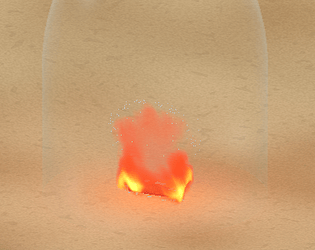
This is similar to the ancient Greek idea of reductionism—for example, fire is hot, fire emits light, and so on. I believe that any game, at its core, consists of nouns, verbs, and adjectives. In this first step, we extract the nouns, which correspond to the Mechanics in the MDA framework. The interactions between nouns then generate verbs, which correspond to the Dynamics in MDA. Finally, whether a game is interesting or not essentially comes down to the adjectives produced by these interactions—which correspond to the Aesthetics in MDA. Once you break a theme down into smaller elements, it becomes easier to see what reactions might occur between those elements, and it also becomes easier to generate ideas around each sub-theme. That’s how I understand it.Additionally, of course, other more important aspects of game design—such as feel/handling and difficulty curves—are not what this step takes into consideration
I feel like the core gameplay is like the main storyline of a novel — you start by focusing on a single point and then branch outward from there. A simple core mechanic reduces cognitive load, allowing players to instantly understand the game and enter a state of flow. After that, the extra side mechanics are like scenery along the roadside — they should only be added after the main corridor has been built. I feel like games like The Witness or Dark Souls were made with this kind of approach in mind. Of course, this is just my personal opinion.
What I'm thinking is: start by brainstorming around the theme, deconstruct it into fundamental elements based on their properties, then put them back together in new ways. Then I pick the most interesting combinations and explore them further, and finally, from those, I choose the simplest and most intuitive mechanic to actually start building.


