

I’ve been building a custom Unreal Engine plugin called RuleForge for my own projects, and I’m trying to gauge whether other developers would find it useful. Its purpose is to help keep gameplay orchestration logic out of actors and one-off Blueprint graphs.
Instead of coupling systems together, you author Events and Rules using Data Assets:
- Events trigger rules
- Conditions decide whether a rule should run
- Effects define what happens
- Rules can publish more events, allowing larger gameplay flows to be built from smaller pieces
- Custom Conditions and Effects can be created in Blueprints or C++
- A runtime debugger shows which events, rules, and effects are active, completed, still running, or failed
Here's an example from one of my projects. This rule runs when the player triggers a trap:
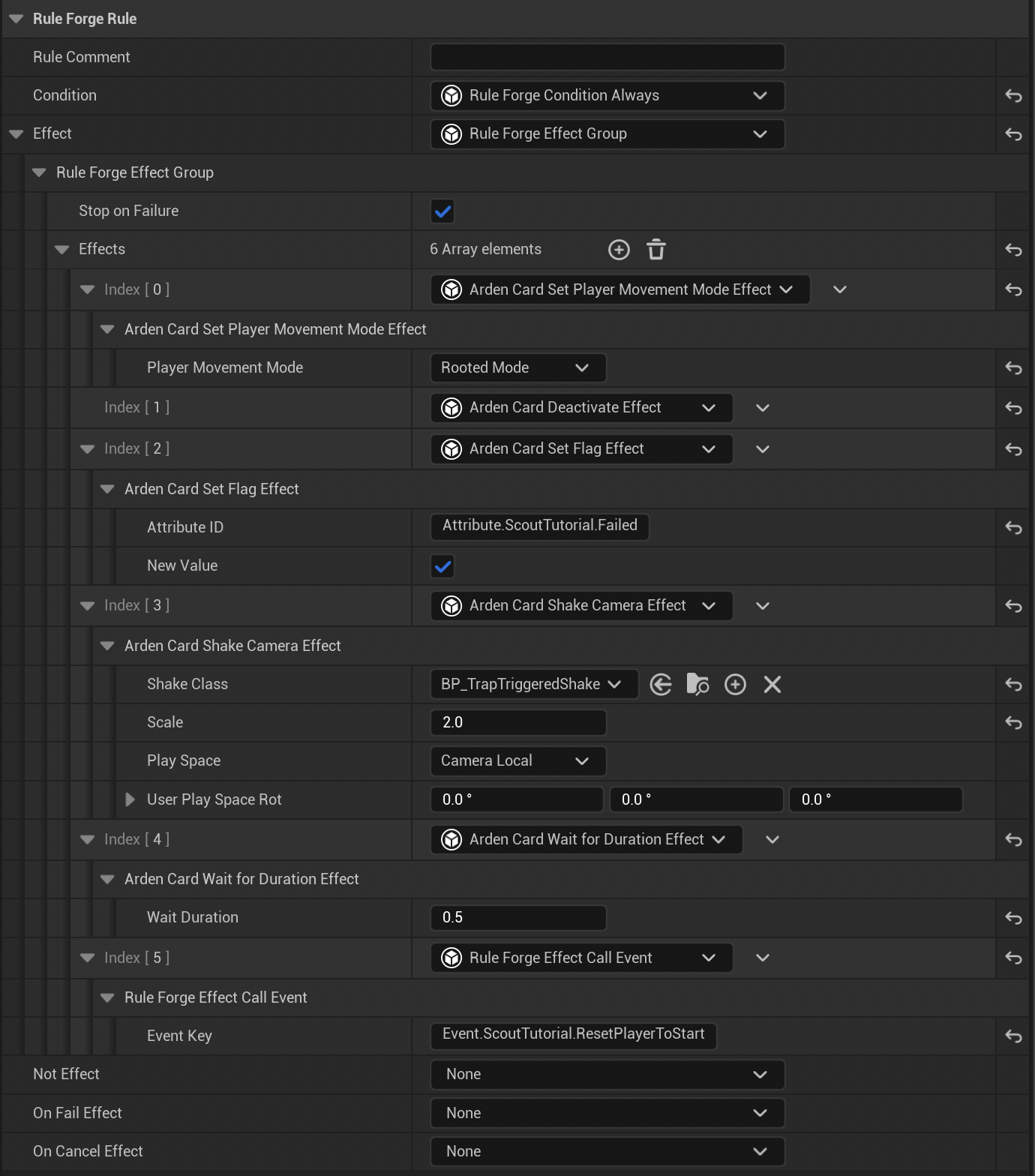
When the event fires, it roots the player, deactivates the trap, sets a failure flag, shakes the camera, waits, then publishes another event to reset the player to the beginning of the tutorial.
Here’s the same rule in the runtime debugger after triggering the trap:
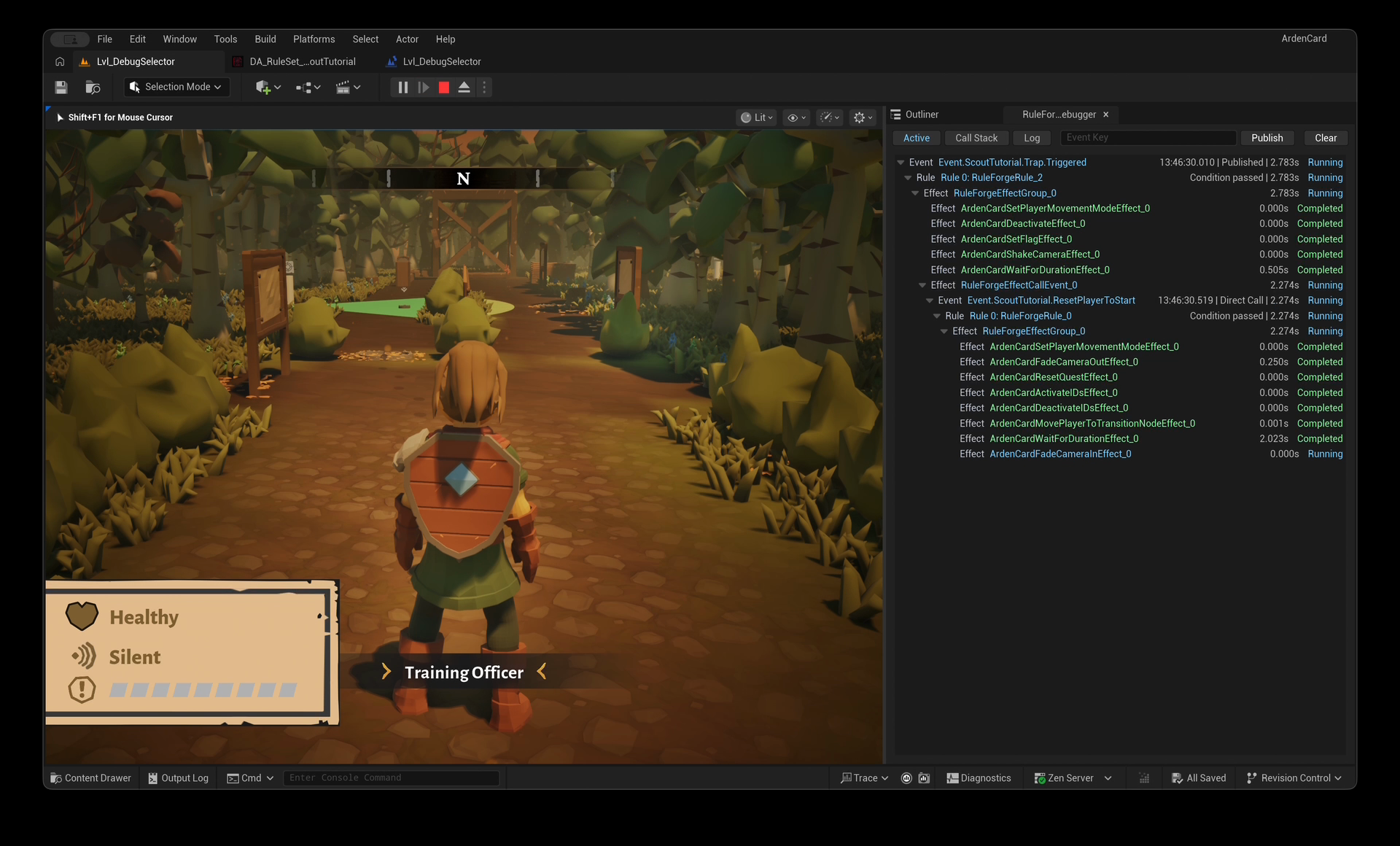
You can see the original trap event and its effects, followed by the Event.ScoutTutorial.ResetPlayerToStart event it published.
I originally built it just for my own games, but another developer suggested it might be useful as a standalone plugin. Before I commit to turning it into a polished tool, I’d like to know whether this solves a real problem for other game devs.
Questions
- Does this kind of event / rule / effect workflow seem useful for your projects?
- What would you want to see before considering using something like this?
- How are you currently handling this kind of cross-system gameplay logic in your projects?
- If you use Godot or Unity, would something like this be useful in those engines?