
Indie game storeFree gamesFun gamesHorror games
Game developmentAssetsComics
SalesBundles
Jobs
TagsGame Engines

ytrofr

3
Posts
3
Topics
1
Followers
A member registered 78 days ago · View creator page →

Creator of

Recent community posts

Three of the puzzles on my site are built the same way, and it took me longer than it should have to notice it was one idea.


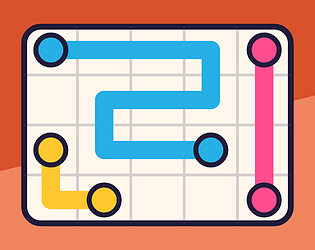
Pipe Flow deals a board by walking one path that visits every square of the grid exactly once, then cutting that walk into one segment per colour. The segments cover the board and cannot overlap, so a solution exists before the player ever sees it.


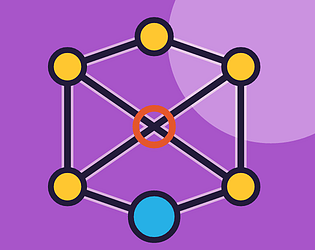
Untangle joins the dots with no crossings FIRST, shortest pair before longest, and only then scrambles where the dots sit on screen. A crossing-free drawing exists by construction; nothing has to be searched to know it.


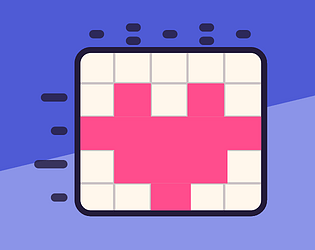
Picture Logic draws the picture, reads the run lengths off it, and hands those numbers to a line solver that may only fill a cell when every legal arrangement of that line agrees about it. If the solver cannot finish, the board is thrown away.


The shared rule is that none of them shuffles a board and hopes. They build the answer and derive the puzzle from it, which is the only way I found to promise a child that the thing in front of them is actually solvable. Shuffle first and you are left either checking solvability afterwards or apologising afterwards.


The cost is real and worth naming: the deal is slower, the generator is the hardest code in each game, and for Picture Logic a share of candidate boards get discarded. I will take all of that over a kid stuck on a board that never had an answer.


All three are here if you want to poke at them:


https://ellaz.fun


Source is MIT, so the generators are readable:


https://github.com/Sigmafier/ellaz-games


- Yatir

Just put up Catch the Bubbles - a small letters-and-numbers game for young kids. The screen asks for one character, bubbles float up carrying various characters, and the child taps the ones that match until they have caught four. That is the whole game. No timer, no lives, nothing to lose.

Catch the Bubbles

The difficulty is not speed, it is CONFUSABILITY. On easy, nothing in the round can be mistaken for the target. On hard, the game deliberately prefers the characters a child genuinely confuses with it. That turned out to be a much better dial than making the bubbles go faster, which only ever measures a thumb.

It is tap-only on purpose. A five-year-old on a phone cannot hold a sustained drag, and neither can anyone on assistive input, so nothing in it requires one.

It carries a real alphabet per language rather than one alphabet with decorations on it. The Spanish pool puts N-with-a-tilde in its own alphabetical place between N and O, because a child learning to read Spanish is learning that it is its own letter. The Hebrew pool leaves the five final forms OUT: a final form is the same letter in a different position, so floating one past a child who was asked for the ordinary form would teach a distinction that does not exist.

Play it here: https://ytrofr.itch.io/catch-the-bubbles

It is one game out of 49 on a free site I built for my own kids - no ads, no accounts, no sign-up, and it works offline once loaded: https://ellaz.fun

The game code is MIT: https://github.com/Sigmafier/ellaz-games

- Yatir
(1 edit)

I put three of my browser games on itch.io as self-contained downloads: Snake, 2048 and Sudoku.

https://ytrofr.itch.io/snake

https://ytrofr.itch.io/2048

https://ytrofr.itch.io/sudoku

They come from Ellaz - https://ellaz.fun - a free 43-game site I built for my own kids. These builds are deliberately boring in one specific way: they make no network requests at all. No ads, no accounts, no analytics, no fonts fetched from anywhere. Each one is eight to ten files that run out of a folder, so they work offline and on a school laptop with a locked-down connection.

The part that took the most care was right-to-left. The site ships in English, Hebrew, Spanish and French, and Hebrew mirrors the whole layout, which quietly inverts every direction in a grid game unless you mark the board as LTR on purpose. Snake's board is what taught me that.

Snake is the largest at about 1.9 MB because it carries Phaser. 2048 and Sudoku are about 235 KB each.

Source is MIT: https://github.com/Sigmafier/ellaz

Happy to answer anything about how they are built.

YatirSnake

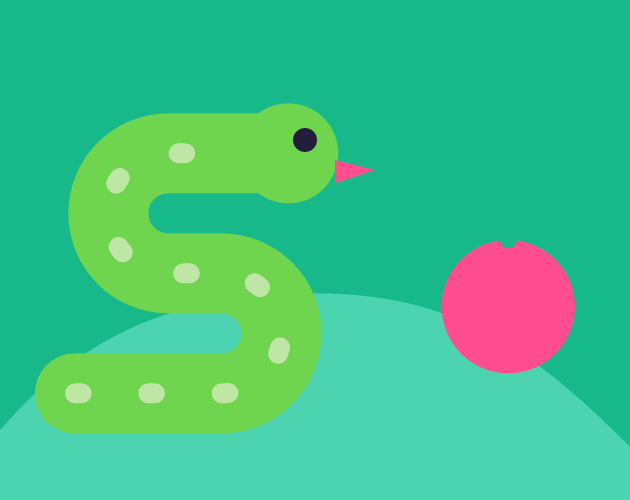
Snake, drawn in code like the rest of the art