Results
Ranked from 10 ratings. Score is adjusted from raw score by the median number of ratings per game in the jam.
The Biggest Challenge
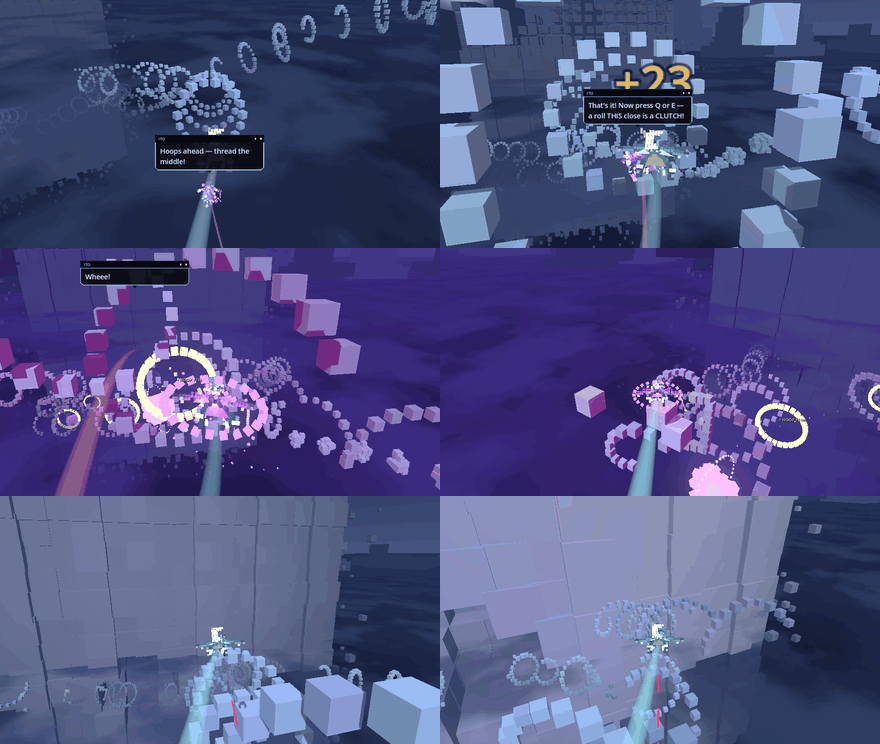
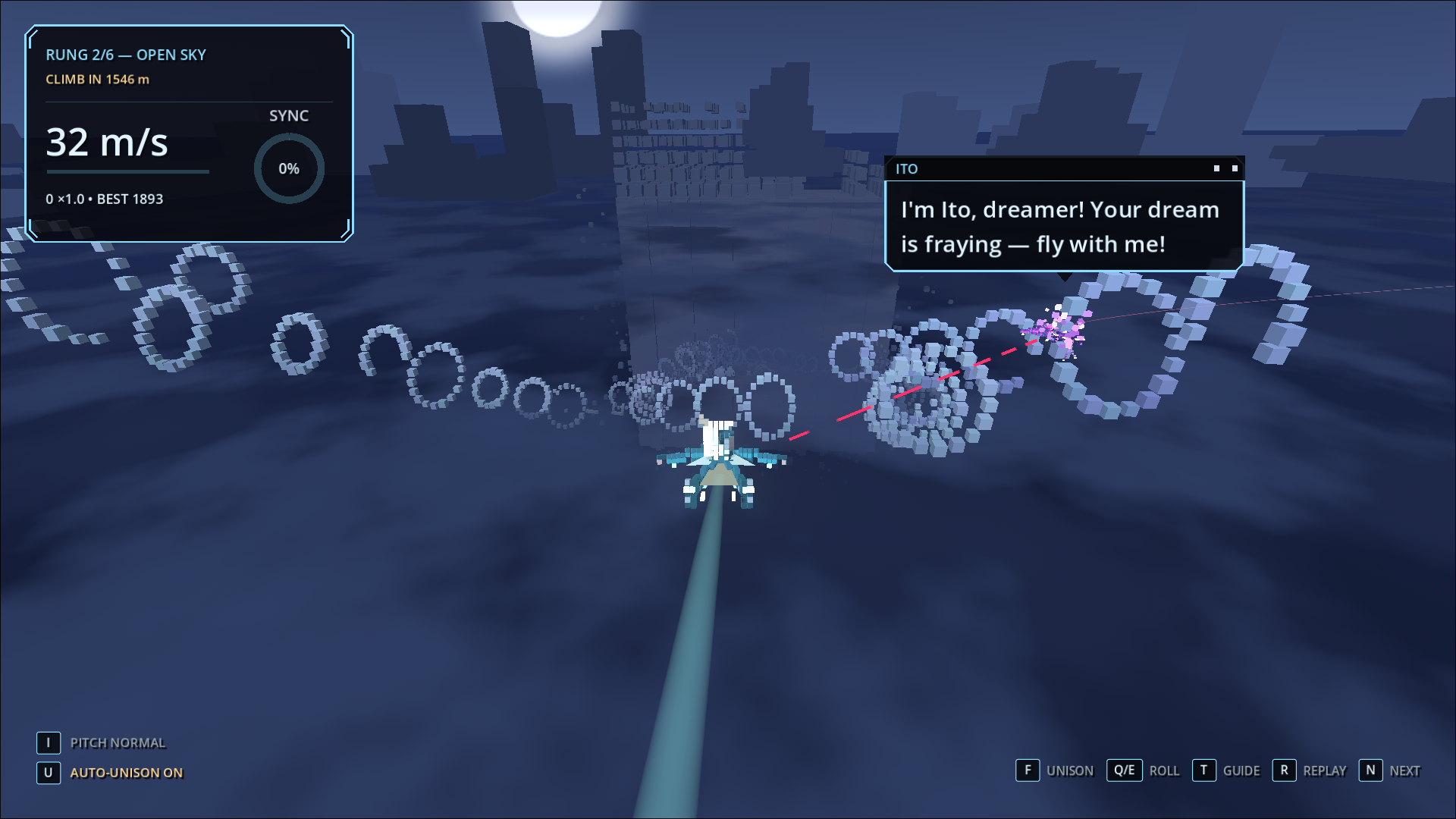
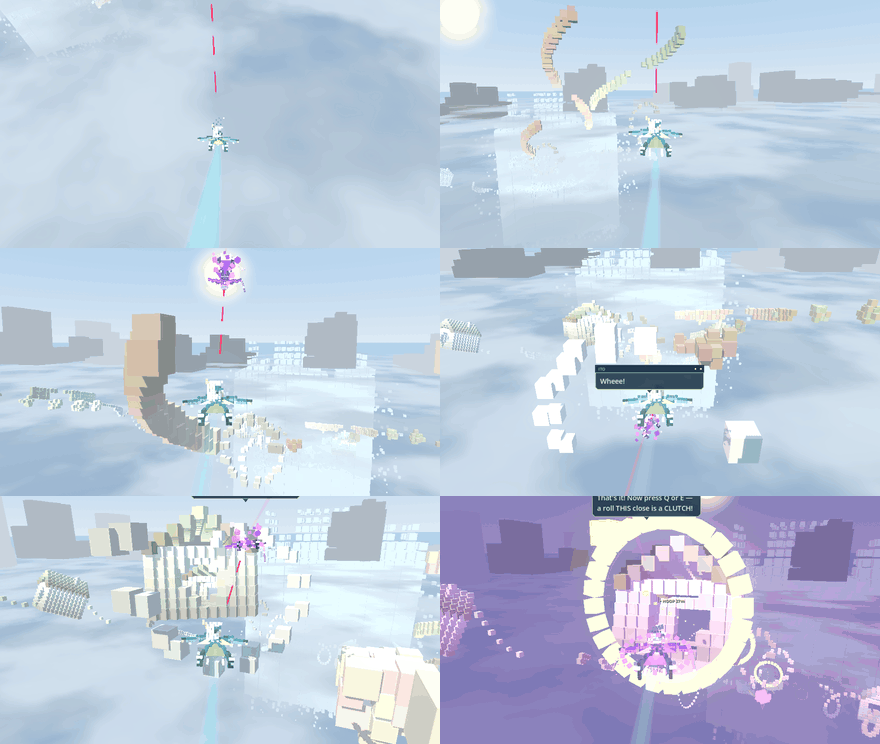
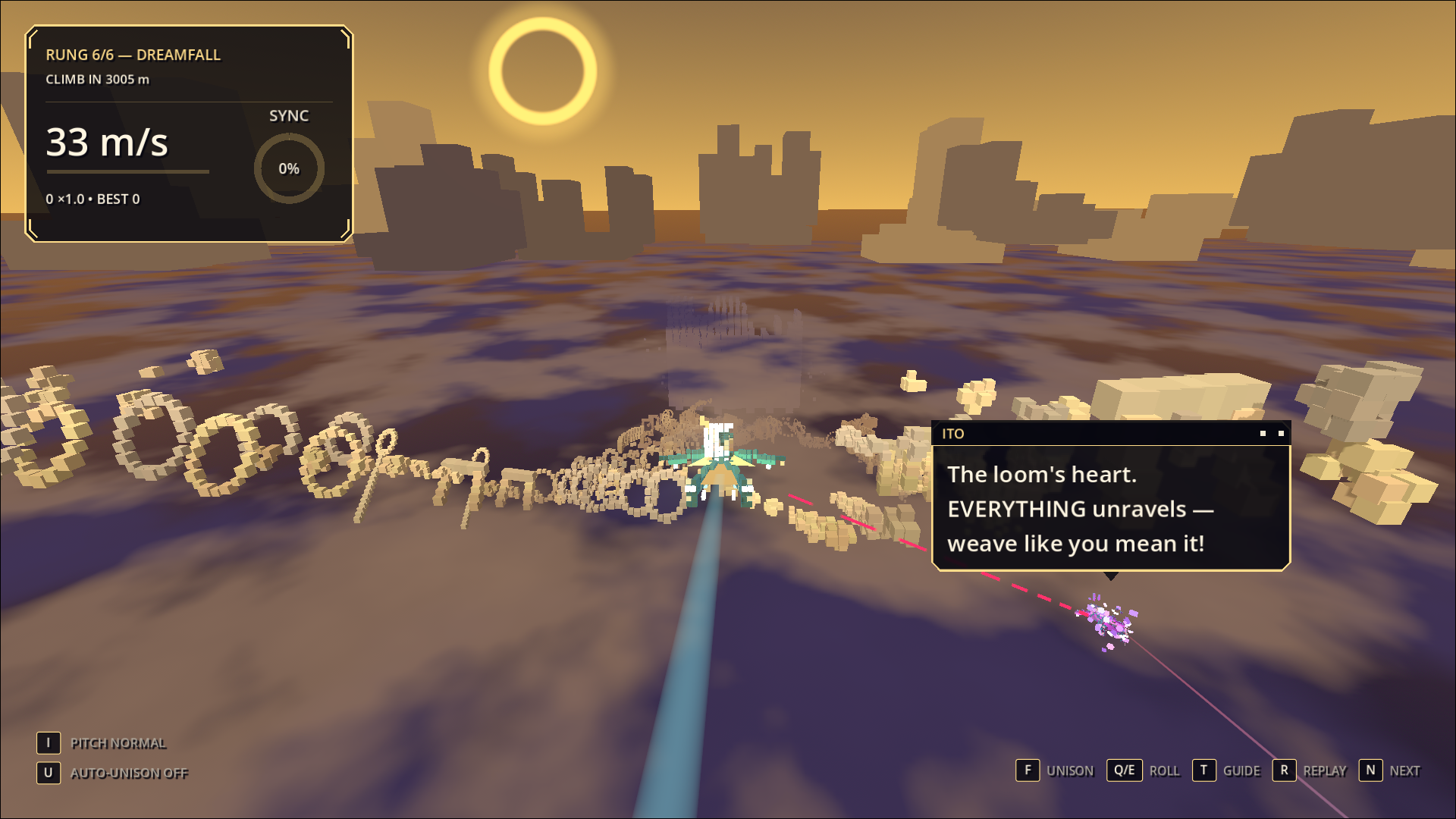
Finding the core loop, and then calibrating it. The AI could produce plausible systems far faster than we could tell which one was the game, so the loop was found by cutting rather than by adding, and every number in it was set by a playtest rather than by a guess. The loop that survived: flying close to the shapes pays, and flying wing to wing with Ito charges a bond that fuses the two of you into one being — the only thing that fits through the Climb. The decision that made it a game was coupling those two: flying together in safe open sky charges nothing at all. Before that, the Buddy was a shelter you could hide next to; after it, togetherness is something you can only earn where it is dangerous. That single rule is now an assertion in the test suite, because it is the one thing the whole design rests on. Then the calibration, and almost all of it came from watching people play. A first-time player could not get past layer 1 at all until the director sat beside her and explained each mechanic — that verdict produced the guided first dream and a one-per-session mercy on the opening layer. A flown probe showed that nobody, human or synthetic, was passing the Climb: auto-UNISON was spending the merge 300 m before the one wall it was the key to, so the bond is now held and spent at 150 m. The scoring pocket went to 9 m with hysteresis at 13 and one number per pass, because a stream of small numbers reads as noise and one number reads as a reward. Six layers were measured across two seeds and two pilot skill levels to check the curve actually rises. The hardest part was not building any of it — it was accepting how much had to be thrown away between the version that sounded good and the version that played.
AI Tools Used
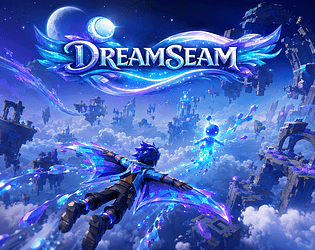
Claude (Anthropic), used through Claude Code, as the pair programmer for all of the code. Image generation for the crystalline logo and the cover art. The six per-layer music tracks were AI-generated (album "Dusk Drift", Treblo) and then processed by hand — low-passed at 3 kHz, normalised to -20 LUFS, faded — to the director's brief of "no highs, always fades, never loud". Every sound effect is synthesised in code; there are no audio asset files.
Areas Where AI Was Used
Code: all of it — flight, procedural world generation from a seed, the sky, the HUD, the 3D bedroom that opens the game, and the automated test suite. Music: generated, then processed by hand. Sound effects: synthesised in code. Images: the logo and the cover art. Not AI: every design decision, playtest verdict, difficulty call and art-direction call was the human director's. Several AI proposals were rejected outright — a throw/launch mechanic for the Buddy (twice), an angel-winged version of the fused form, and, in this last session, making the recording pilot invulnerable so the trailer clips would stop ending in crashes. That last one was cut with "it's no use making it survive the crash, it has to be a well-flown scene."


Leave a comment
Log in with itch.io to leave a comment.