

Ok great thanks, now tactical combat makes sense to me :)
A member registered Mar 27, 2026 · View creator page →
Creator of
Recent community posts
played it for a little bit, the things i liked -> i liked the musical composition and narration, overall polish was good. not sure if the tactical approach to battles was a good design choice, if you have only one character to control this is not really tactics, so this was weird. Also, progression through the scenes felt to linear, to much hand holding. A map would be a nice convenience feature, having to memorize sequence of scenes to get to a location sounds good in theory, but i think its an unnecessary limitation and an imposed restriction to freedom. Posted a screen shot for an opening scene, took me a while to figure out what to press, or if the first screen was the entire game that didn't load, like how would somebody know that pressing a small downward triangle will progress you further? no tool tips or explanation for the character stats. Scenes where there is an ability to collect resources allow collection once, but then those resources are still showing up as like they can be collected, thats confusing a little bit. If you are doing firebase login i would at least allow a player to set up a nick name, why would anybody like to be called their real name in the game ? ......so there ya go :)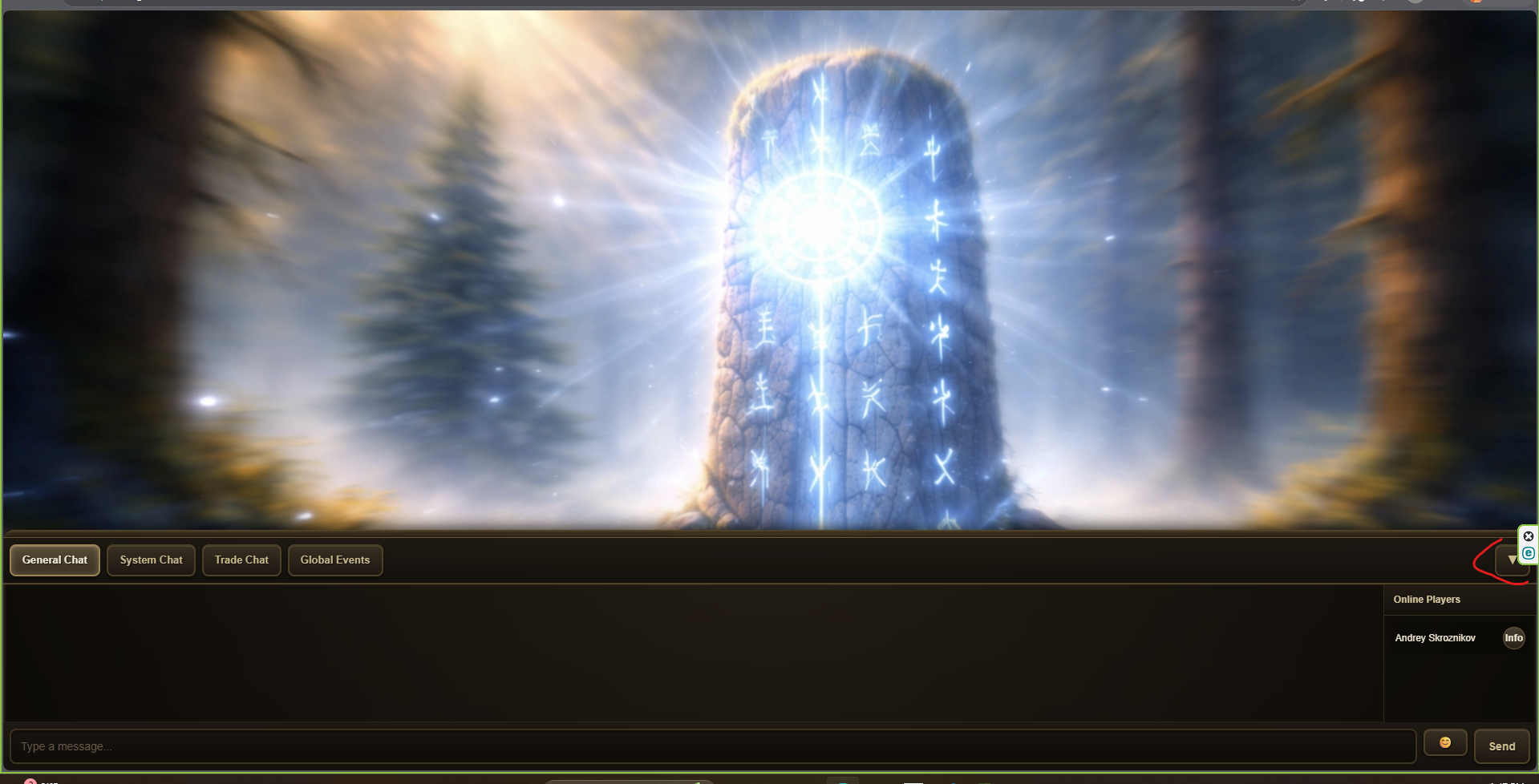
itch.io Community » Game Development » Get Feedback · Created a new topic Tacit Tactics BROWSER PC BATTLE DEMO
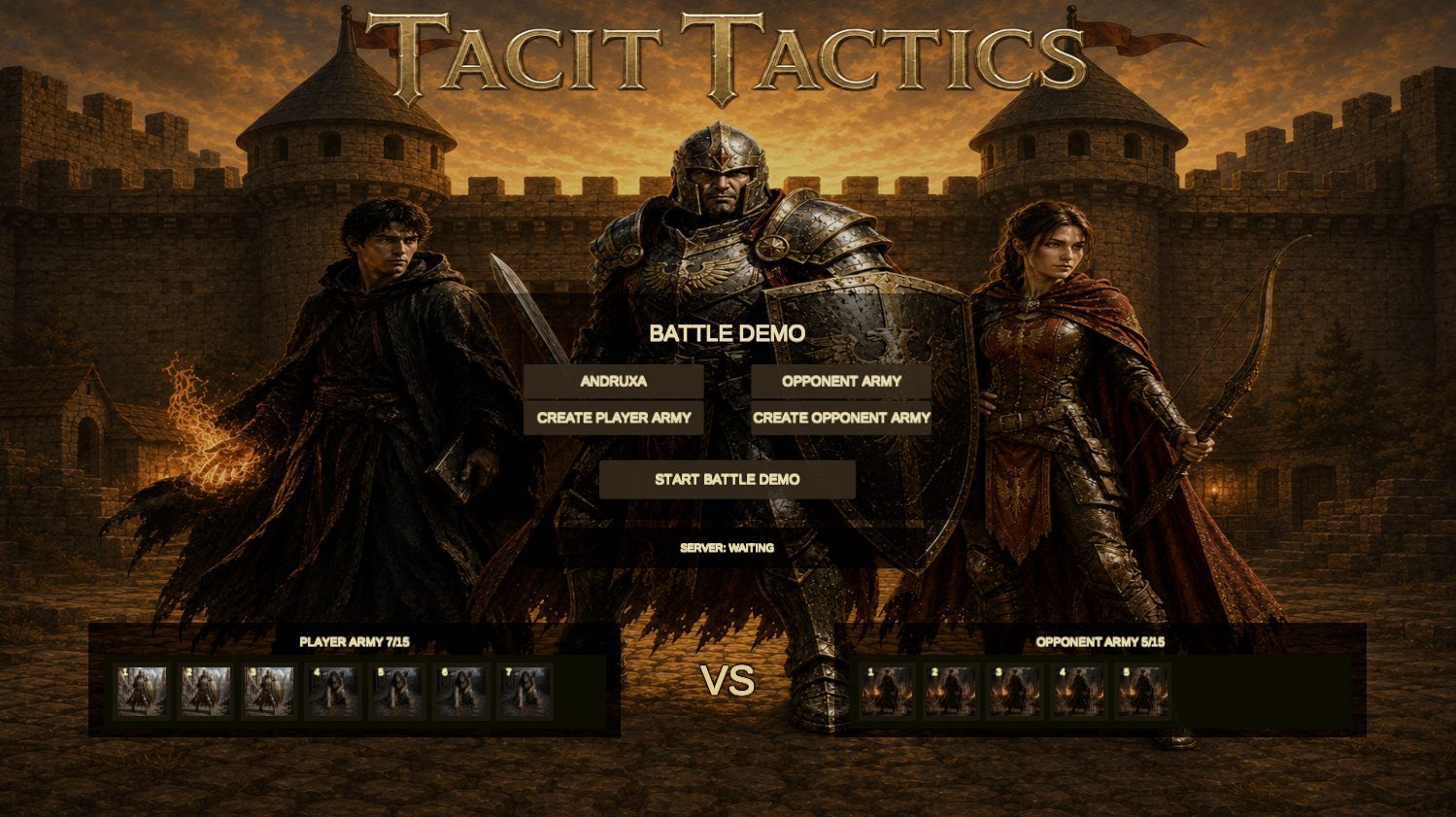
Hello everybody, there is a small browser demo available for tacit tactics battles ; it lets you create your own army composition and an army composition for your opponent and to battle it out.
battle scene controls: mouse scroll wheel for zoom in and out, token movements select tokens and move them to legal cells, hold right mouse click and do AWSD to fly around with the camera.
Please let me know if it was interesting, which army compositions did you enjoy playing as or against, thanks :)
https://tacittacticscdn.b-cdn.net/mmo/webgl-demo/dev-current/?v=20260725-headers
hey i tried your game, this brough back the memories of playing master of Orion 1 a very very long time ago, i am a fan of strategy games; but here is some honest feedback: 1. no way to plan route when sending ships eta to destination which should be important strategy element in my opinion 2. no right click menus or controls felt kind of weird for a strategy game 3. no names of the planets from the main view instead need to click every time i think this is something very basic that should be expected for strategy layer visibility 4. No estimate of enemy fleet strength before engagement should also be a basic feature, otherwise how would somebody make a proper decision which target to attack? 5. no ambient music 6. no tool tips explaining what every stat means - mystery stats no idea what they mean or represent. 7. also victory combat resolution stats make no sence, attacked with 50 ships against much smaller enemy with less bonuses and lost about the same number of ships as the enemy fleet; attached a screen shot with ui overlaps etc;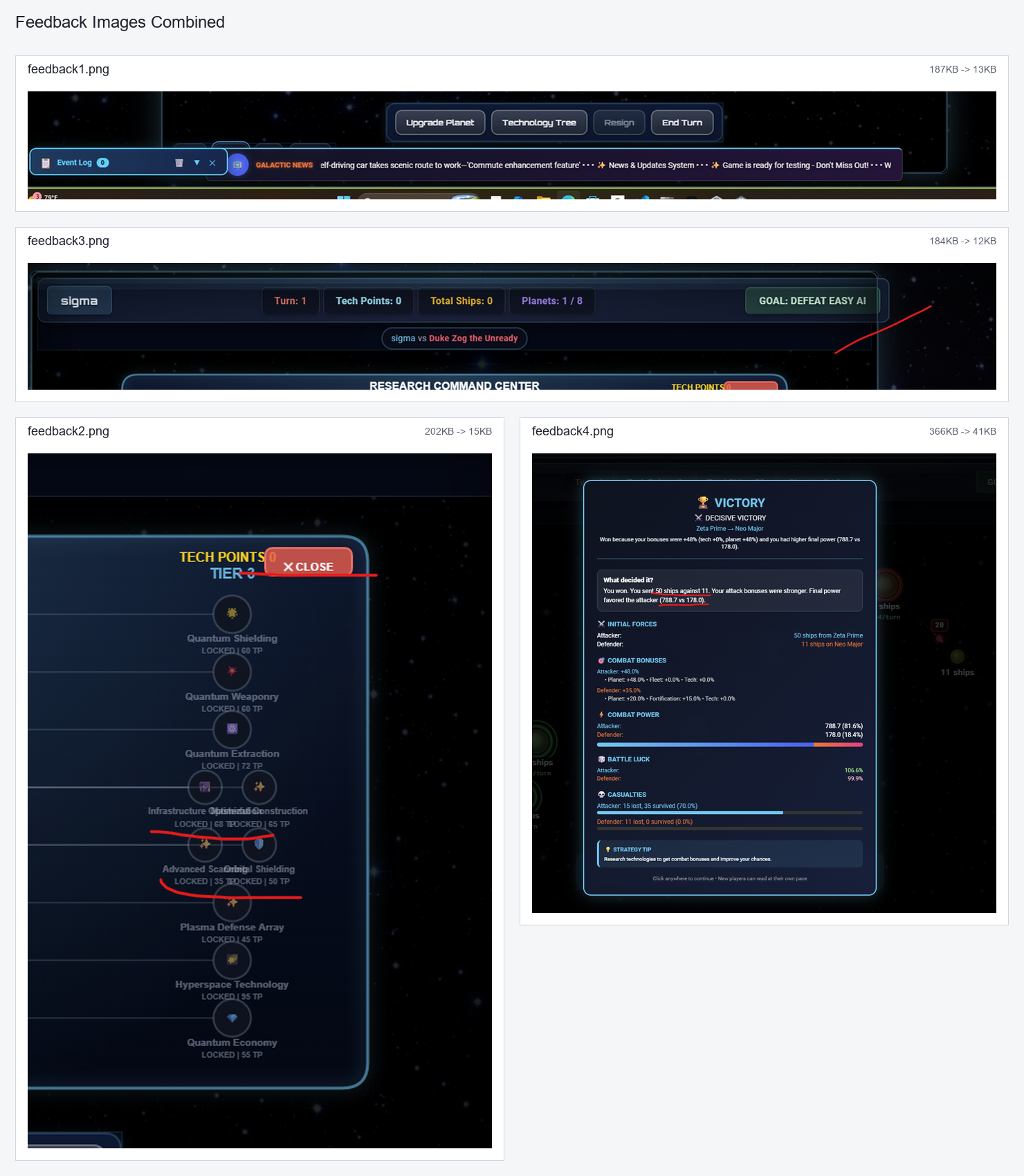
Hello everyone!
This is the first proper development update for Tacit Tactics, so the best
place to start i think would be to define what Tacit Tactics intends to become, and where this project is at the present time.
Tacit Tactics is intended to be a tactical token RPG battler, set inside a persistent online world, where PvE and PvP encounters, world events, and everyday gameplay interactions are shaped by risk-versus-reward choices, long-term resource management, and lasting recognition for player achievements.
The medieval fantasy theme, with warriors, mages, undead, and vampires, comes from games that have inspired me for years: Heroes of Might and Magic, Disciples, and Magic: The Gathering. The battle system grew from an idea to make tactical combat faster and more fluid, with short 30-second turns that keep PvE and PvP encounters moving while still preserving the structure of turn-based play. Above all, the goal is for the game to feel fun and engaging, not like a chore.
Having said all that let me give you a little bit of technical detail, on the size of the project, and what is it that has been so far deployed on itch io.
Frontend: Tacit Tactics currently uses a Unity desktop client with a separate desktop launcher for firebase login(verified google accounts), update checks, and game handoff. The client is built around three major scenes: Start for entry and character selection, Global for the persistent world, and Battle for tactical combat.
Backend: The backend uses a multi-service, server-authoritative architecture written in Rust, with PostgreSQL storing persistent account, character, inventory, world, battle, market, and event data.
As of July 23, 2026, Tacit Tactics has been in development for approximately five months. It has been built by a single developer, a former back-office banking analyst who decided to leave spreadsheets and office politics behind to build a game. At the time of writing, the prototype contains roughly 326,000 lines of project code across Rust backend services, Unity C# client code, Python tooling, shaders, and local development scripts, plus a large body of design documentation and test data.
Disclosure: Tacit Tactics is not a vibe-coding project. It is closer to a synthesis workflow, where AI is one tool inside a larger human-directed development process.
What has been deployed on itch io?
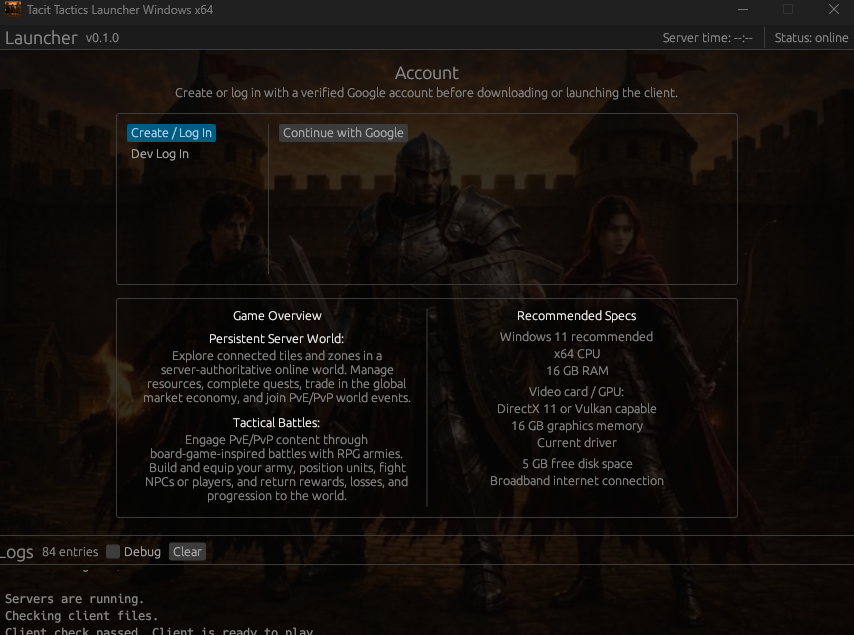
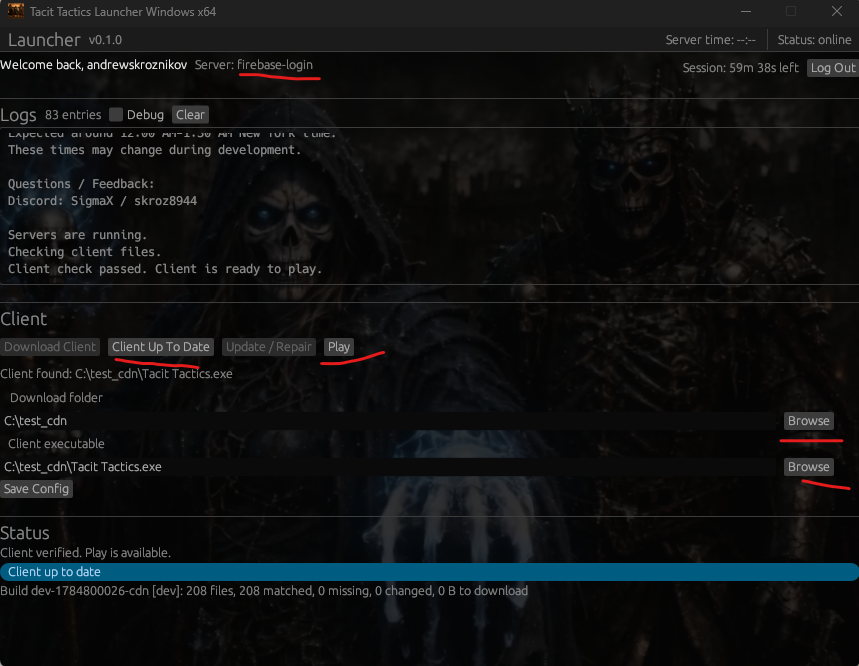
1 .Tacit Tactics widows game launcher with the following features:
The Tacit Tactics Windows launcher handles player authentication, account registration, and client delivery. After authentication, the launcher receives update information from the backend and can either download the full Unity client from the CDN or update/repair an existing client folder.
File size and hash checks make the update process lightweight: if only a small part of the client has changed, the launcher downloads only the changed files instead of the entire game again.
The launcher itself is intentionally simple. It downloads the game client into a single self-contained folder, with no traditional installation process. That means the client can be removed easily without leaving scattered files, registry entries, or other leftovers on the user’s system. By default, the launcher also prevents multiple instances of the Tacit Tactics client from running on the same machine, helping avoid duplicate-session issues during normal play.
2. start scene features:
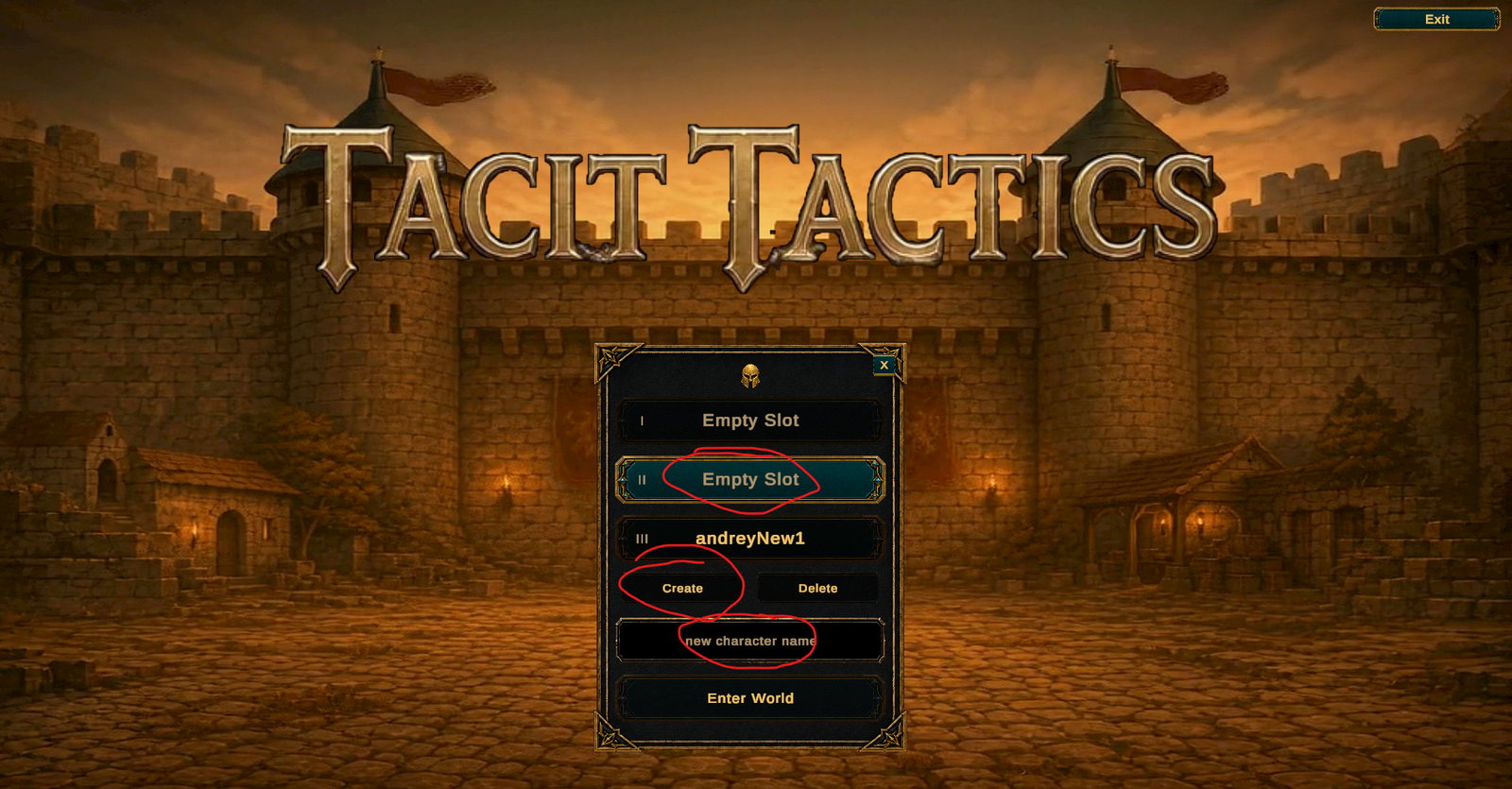
The Start scene handles the first in-client step after launcher authentication. From here, the player can select one of three character slots, create a character by assigning a name to an empty slot, and adjust rudimentary video settings before entering the game world.
3. global scene features:
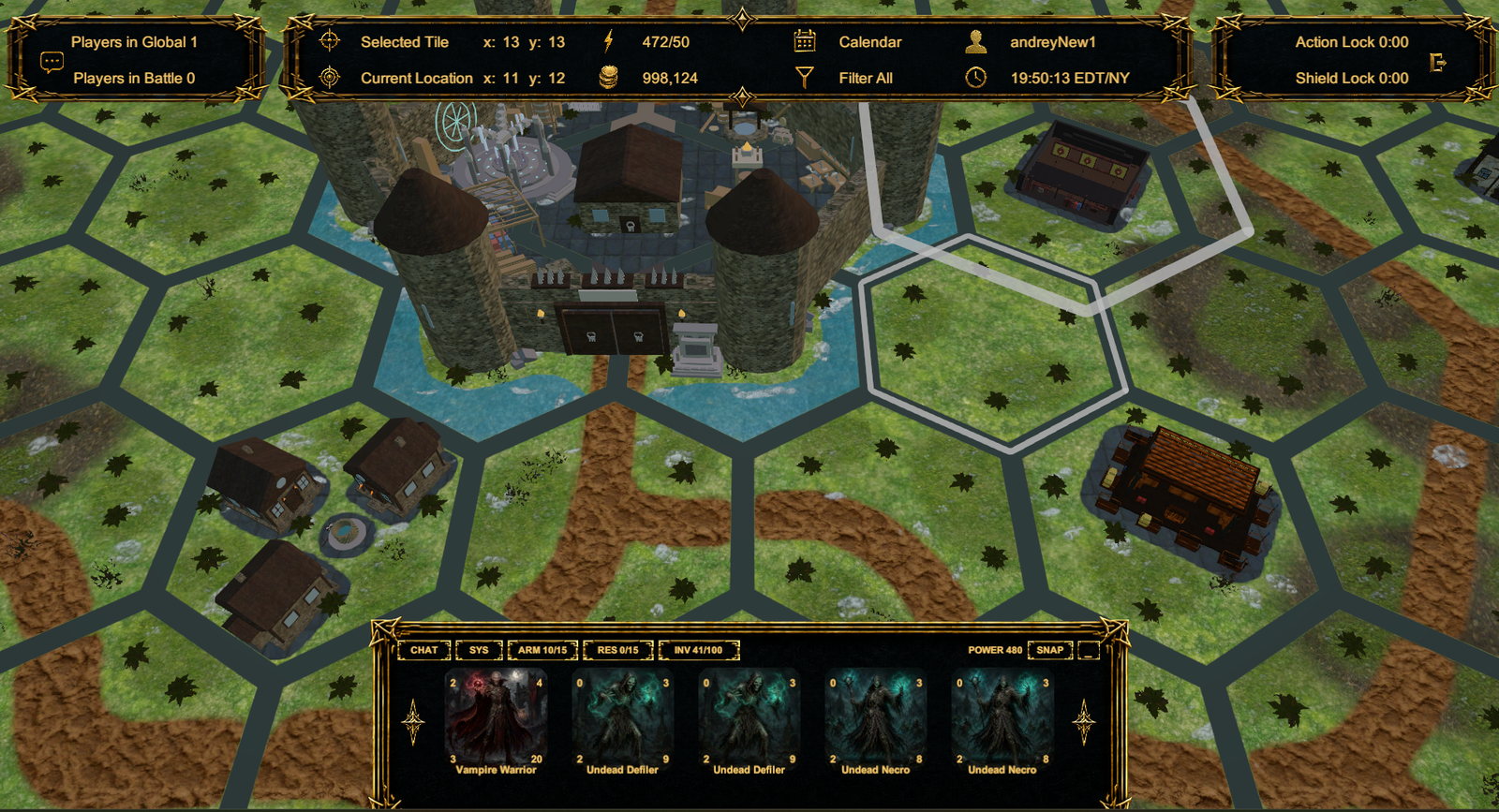
The Global scene is the persistent-world layer of Tacit Tactics. It lets the player move across the shared world grid, manage energy and resources,equiping tokens with items, view nearby (on the same tile)players and NPCs, access inventory and army/reserve loadouts, enter city and market services, accept and claim quests, read rankings and see just as participate in world-events, use global chat, and queue into PvE or PvP tactical battles depending on rules of engagement and the lock out timers.
Global scene visibility updates and chat delivery currently run on a one-second server tick, keeping the shared world responsive while leaving authority on the backend.
scene controls: AWSD, mouse wheel for zoom, ESC to close out some menus.
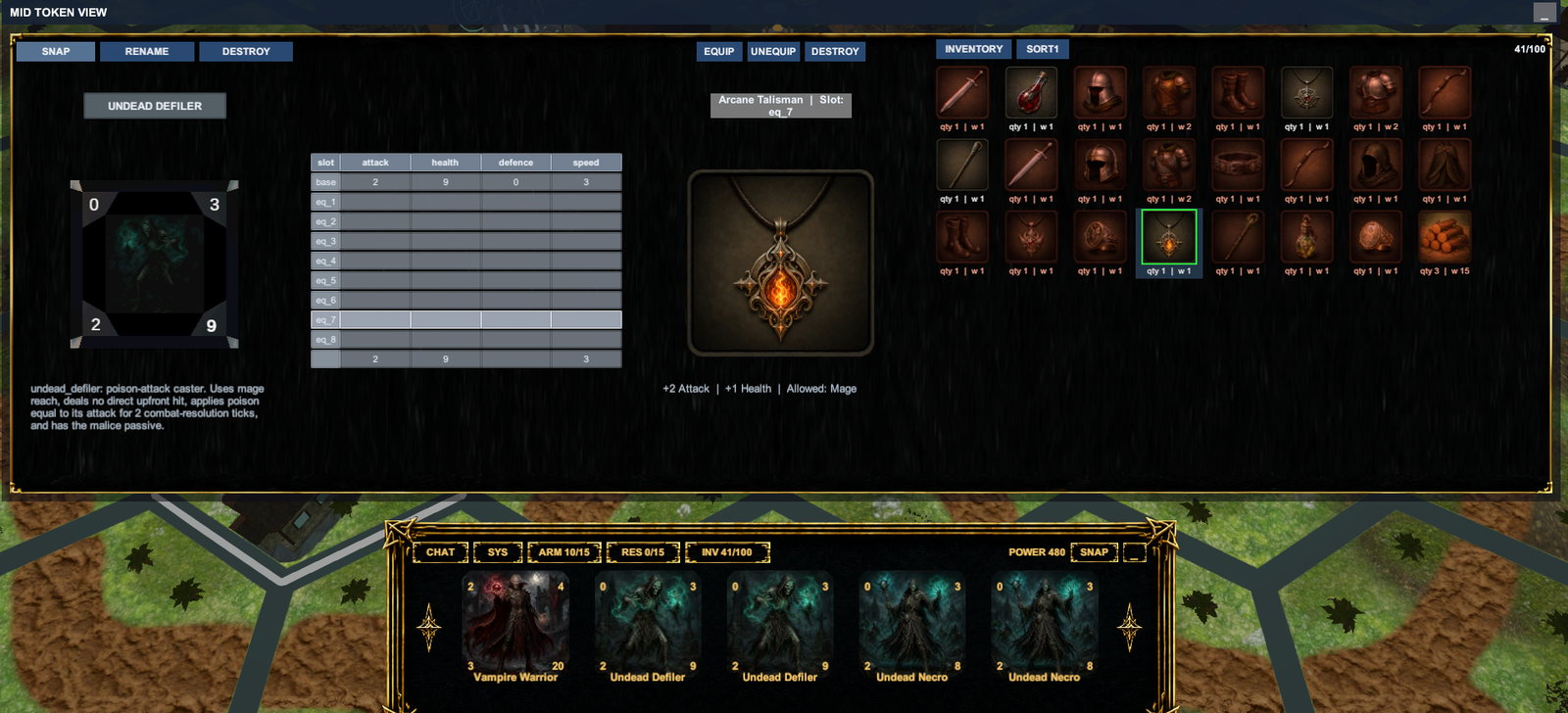
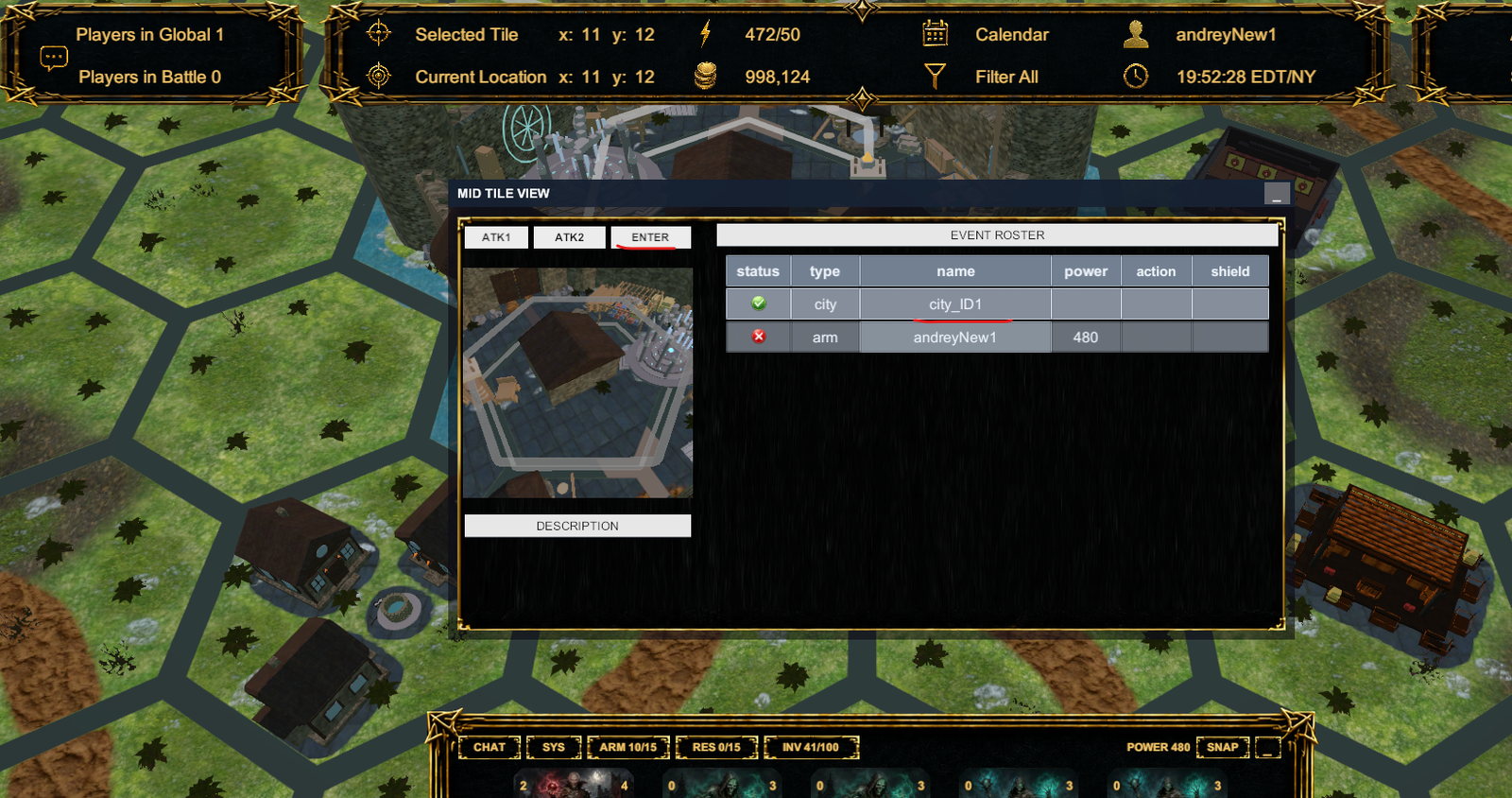
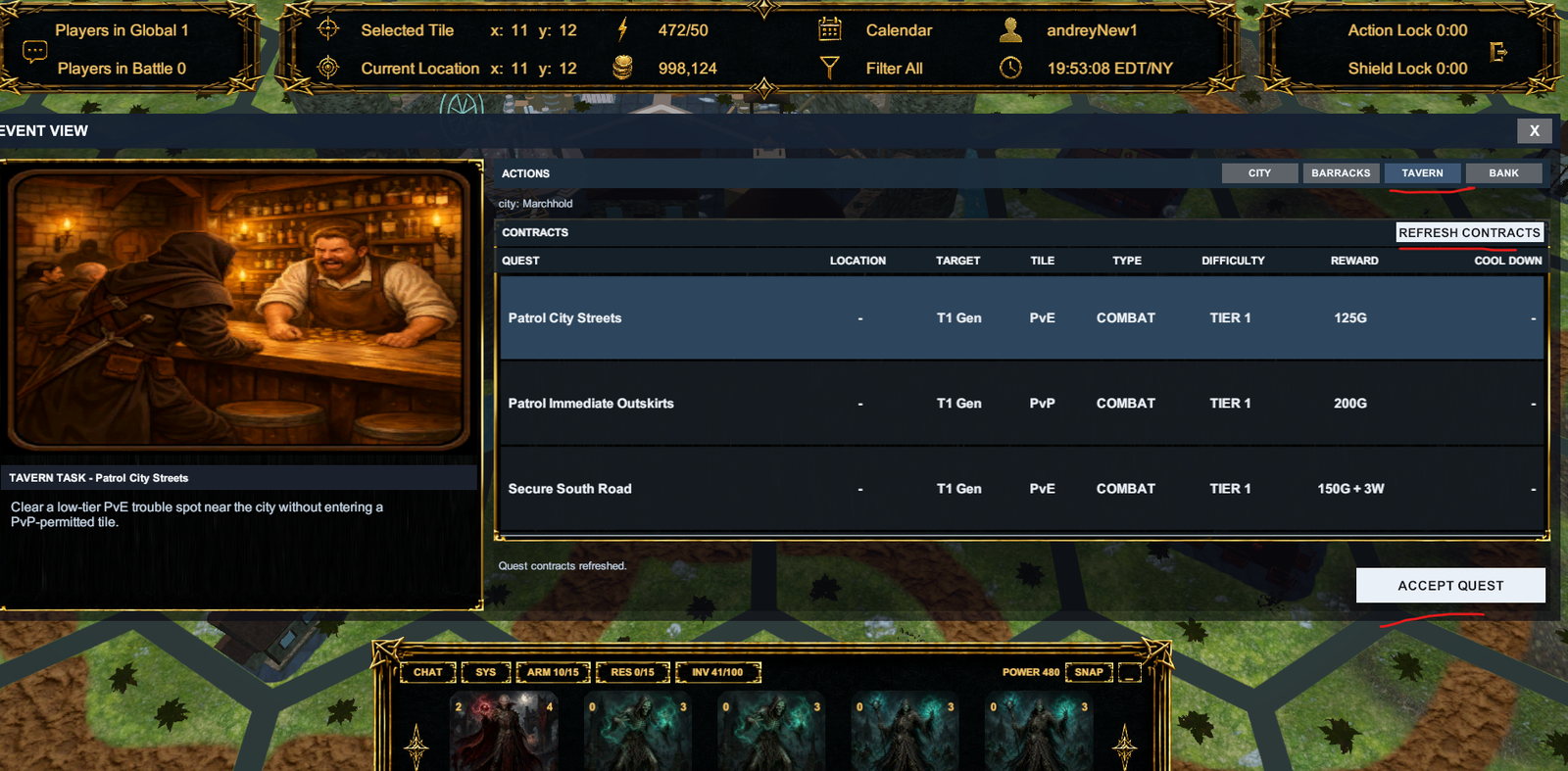
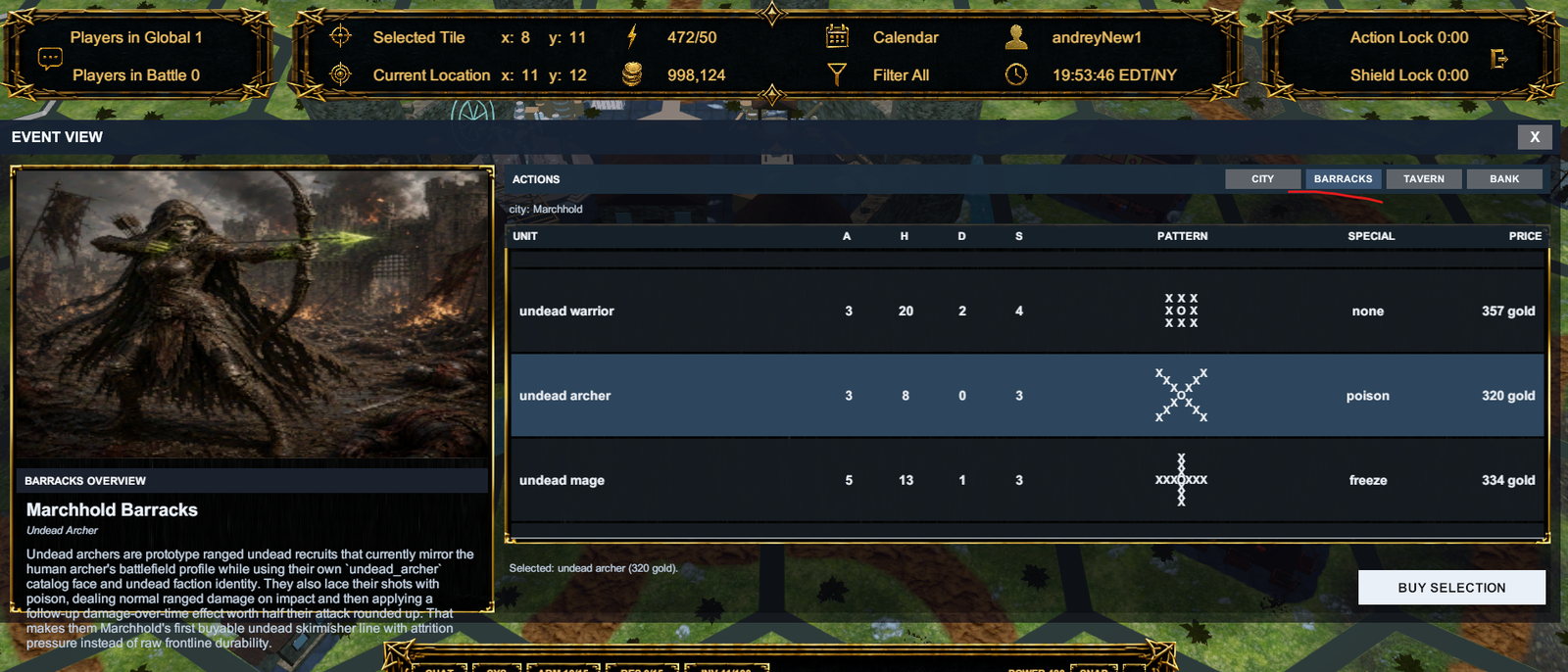
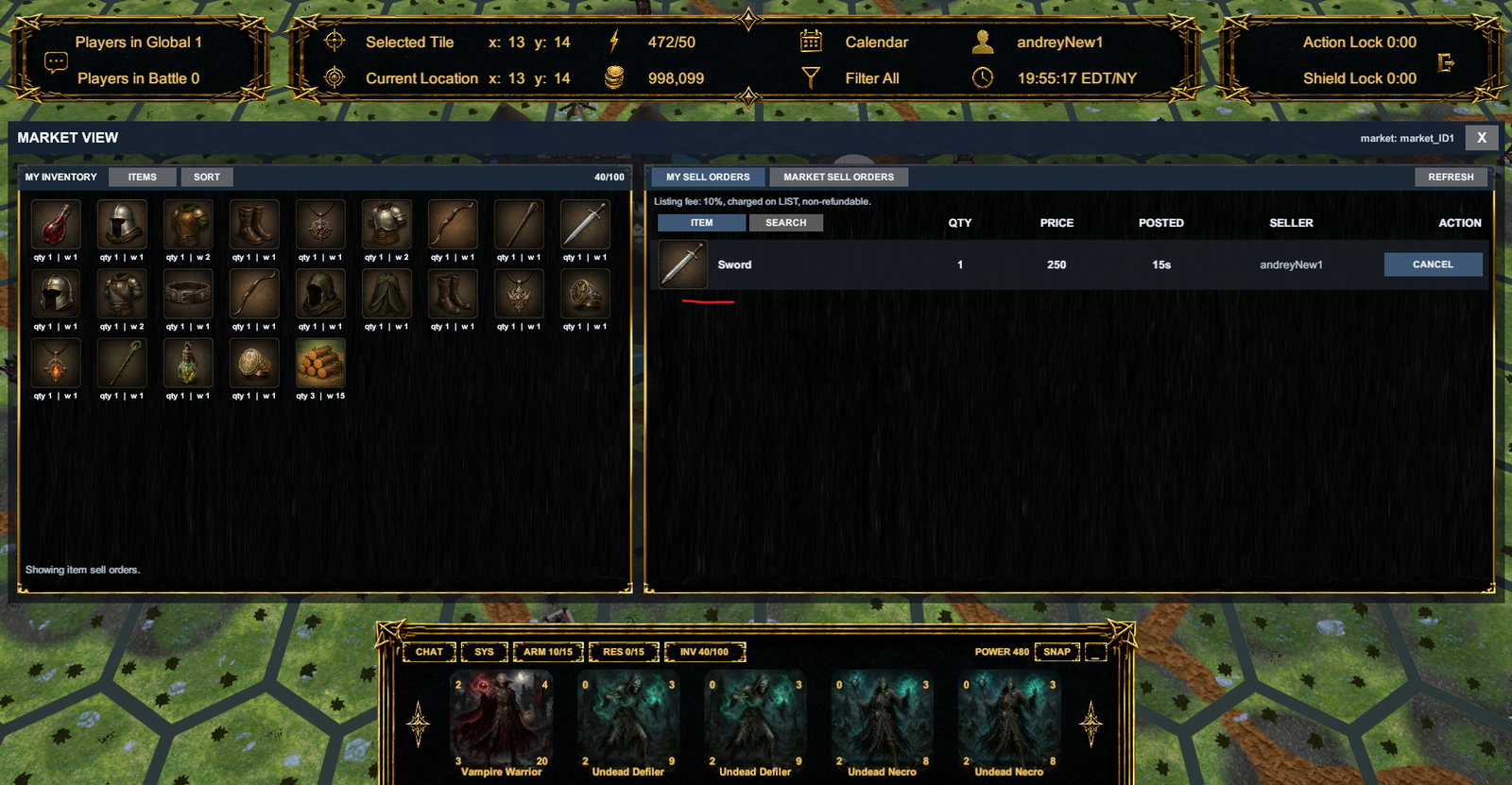
4. battle scene features:
The Battle scene is the tactical combat layer of Tacit Tactics. It presents server-authoritative PvE and PvP battles where players command token-based units with distinct stats, roles, equipment, and special behaviors. Combat uses short 30-second turns to keep encounters moving while preserving turn-based decision-making. controls AWSD holding the right mouse button , mouse wheel for zoom, mouse rotation
The current battle flow supports movement validation, AI-controlled enemies, PVP as well; attack resolution, morale pressure, summons, status effects, combat summaries, rewards, and return to the persistent world after the battle ends.
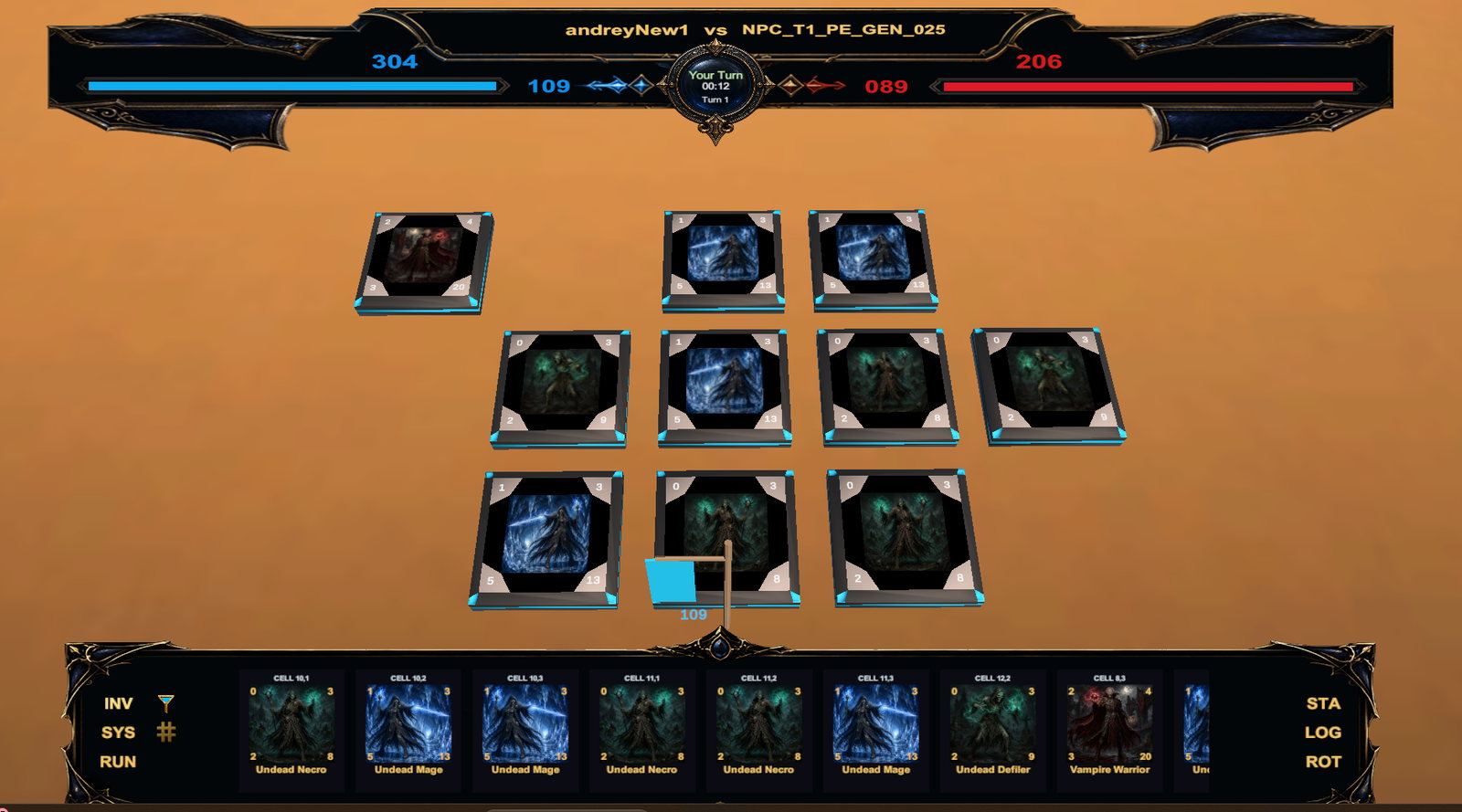
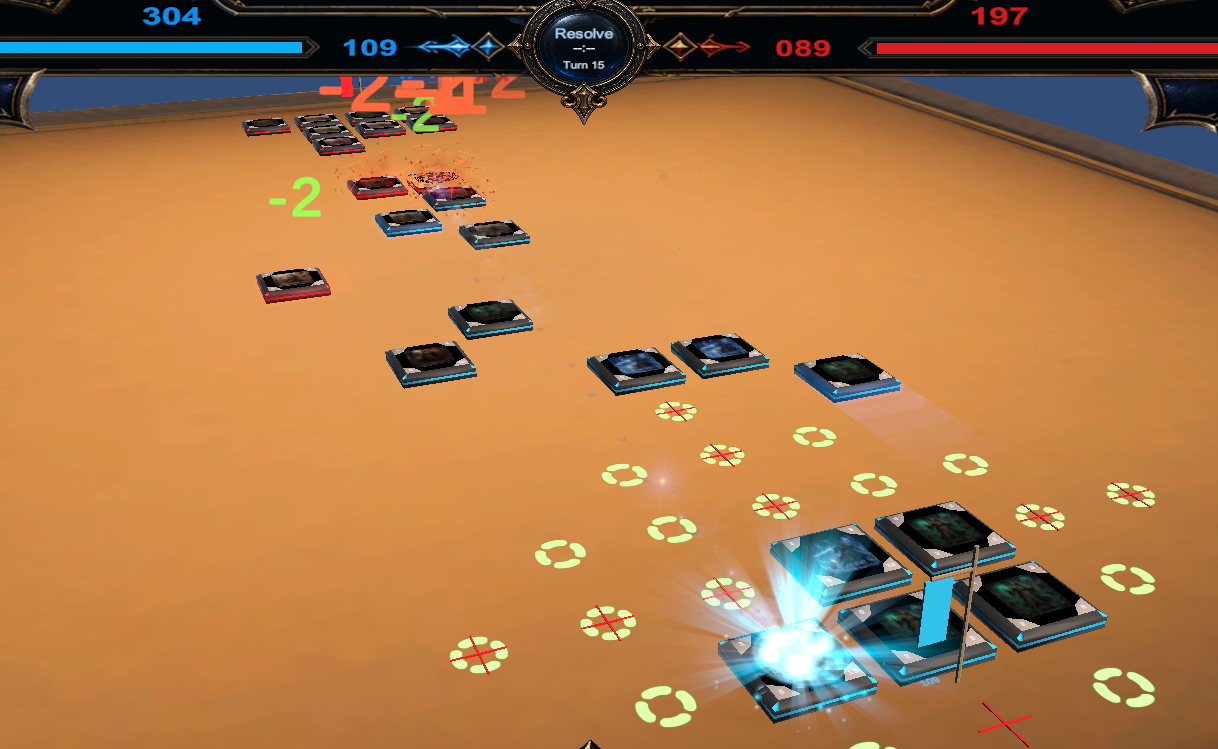
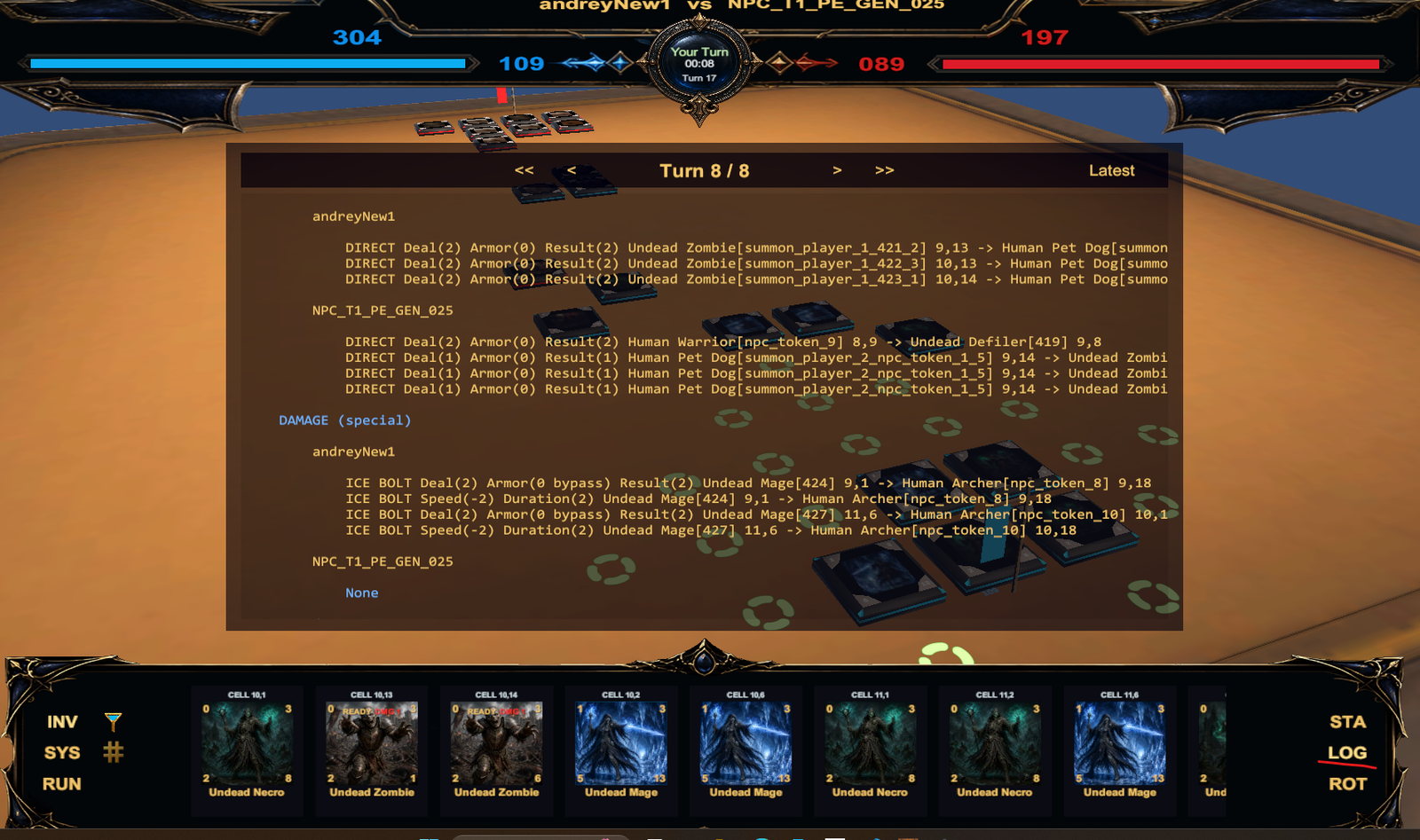
overall, at this time there is a total of 21 different token types (warrior, mage , etc.) with 30 pieces of different equipment. (Tokens can be purchased from the city barracks with gold)
At this stage, Tacit Tactics has 21 different token types, including warriors, archers, mages, healers, summoners, undead, vampires, and other enemy/faction variants. There are also 30 different pieces of equipment. Tokens can currently be purchased from city barracks using gold.
PvE fights on non-PvP tiles generate NPC armies that match the number of tokens the player brings into battle. PvP tile fights require the player to enter with a full active army inventory of 15 tokens. At the moment, PvP battles do not provide loot rewards, but token and equipment losses are permanent.
In the near term, the development focus will be on building a cleaner CI/CD pipeline, improving the deployment workflow, and then returning to Global scene UI polish so the game is easier to test and better prepared for a future alpha build. If anyone like the project please reach out, i am rather chatty when not busy :)
itch.io Community » General » General Discussion · Replied to hechelion in Can games from itch.io be trusted anymore ?