Indie game storeFree gamesFun gamesHorror games
Game developmentAssetsComics
SalesBundles
Jobs
TagsGame Engines

Indie developers, I’d love to hear your experiences 🎮

A topic by Jinxed1997 created 21 days ago Views: 396 Replies: 26
Viewing posts 1 to 10
(+2)

Hey everyone! I’m planning to make my first short game, and I’d love to hear from people who have already been through the process.

I have some new ideas and weird stories I’d like to turn into games 😅. I don’t know much about coding yet, so I’ll probably start with something like RPG Maker and learn along the way.

For those of you who have made and released a game: what was your first experience like? What do you wish you knew before releasing it, and what mistakes did you make along the way?

I’m also curious about how you got your first players and how long your first game took to make.

And one thing I’ve been wondering about: is pixel art still a good direction for indie games?

Would love to hear your stories, even if your first game was a complete disaster 😂
(+4)

Some of the mistakes I made I should have probably know before hand is making the Art before the first systems/mechanics.

But to go in order, there are some things I recommend, learn from my mistakes.

Planning: Even if it's just a .txt file. Pour everything you want your game   to be in a GDD (Game design document).  It doesn't have to be too detailed. But basic stuff like what the game is going to be about, The genre, etc. Should be there. Also, if your game is long to develop, try to keep track of the different things you are doing, about to do in a 'to do list'. 

Developing-phase 1: In the desired engine, Create the systems/mechanics your game is going to have, you don't need to create sprites or any specific stuff now, you can use coloured circles and squares. The idea here is to make sure the different ideas you though are actually doable. Don't be afraid or feel bad if you have to change or discard many system/mechanics/ideas for any reason. All games went through that (even AAA).  Did you know about the dev rooms in games like TLoU or Sonic? Those are make here. Also, if you are a solo dev, or part of a small team, keep things small. Do not try to create an epic CoD, an MMO, or the next GTA. Or in your case you mention RPG maker, a... idk  'The Witcher'. 

-----Small note: If it's your first time with that or a new engine.Don't start with your game right away. Perhaps it's better to first create a small and more or less simple 'ugly' game, no to publish, but for you to practice and learn how the engine work. Also, test stuff, test your game like if your life depends of it (okay not so drastic) but try to 'break' your game while testing it, like, idk, see what happens if you smash a important button fast,   what happens if you make your character to go the other direction, try to open a door that you know should be close, things like that.

Developing-phase 2: Once you have your game (or at least many scenes) pretty much created with grayboxes, placeholders simple 'beta' feel, etc. It's time to decorate it. Polishing sprites, creating new ones, loading the right music for the scene, etc, etc. 

I think pixel art is still pretty good. All depends of what aesthetic and 'feelings' you want to transmit. Games are Art, and Art is a entertainment medium where a creator transmit sensations and feelings towards an spectator.


Of course, many things will be different depending the engine and genre you wanna make, but I think this wall of text pretty much summarise the overall process.

Also, it's okay if you don't get many or any players at first, specially if you don't promote your game in forums/socials.  That or the fact my games are kinda shitty haha, so, perhaps you wanna take all I said with a grain of salt.

Lucks. 

(+2)

This valuable information you’ve given me senpai!!, I’ll definitely keep it in mind. And what I’m thinking about now is: can my feelings and experiences actually be transmitted to the player?

As you mentioned, that’s really what I’m aiming for, because I love creating things that stay in your memory and leave a lasting impression.

My plan right now is to make a short story and a small game so I can learn, experiment, and keep moving forward. It’s not like I’m trying to create The Witcher, which I absolutely love, btw xD. I just want to create something small that can still make the player feel something and remember it afterward.

Thank you for your reply!

(+2)

I have used RPG Maker MV for years. It's a bit pricy so I recommend getting it during a sale, a demo version, or uh... (getting it 'elsewhere').

If you ever need any help there's lots of resources for it and RPG Maker is capable of making all types of games, not just 2D rpgs, when you start getting into the scripting + plugin side of things. Just remember to take it slow and focus on learning. RPG Maker has an easy interface and the coding is akin to scratch so I think you'll be able to pick up on it well. If you have any questions I'd love to help!

(+2)

This actually encourages me a lot! I was also wondering about the capabilities of the engine, and it seems really good so far, especially when it comes to the plugins. I thought I wouldn’t be able to do much with them, but now I’m even more excited to explore what’s possible.

Thank you for the valuable reply. Salute! 🫡

(+1)

I just checked their website. I mean RPG Maker there are two versions, MV and MZ. Are there any significant differences between them? It seems to me that MZ is just the newer version, but please correct me if I’m wrong.

(+2)

Me personally, I'd look into MV since it has more plugin support. I've even had some coders I know whip up some crafty plugins for MV (clicking pictures, image collision, etc). I can't really speak for MZ, but I've read that it's newer software, and has a lot of easier interfaces than MV, but both of them have all the essential features for an RPG, both have scripts, and both have plugin support. But as I said I prefer MV just because I have a folder with over a hundred plugins, and I've been using it for years so I could probably answer any question you have with it.

However I suggest you do some research and choose the one which has the support and plugins your type of game would need.

(+2)

I just wanted to add to this, I don't really know what type of game you're making. Could you specify and I'd be able to see if it could be made easily in RMMV?

I did some research and found out that one of the main differences between MV and MZ is the number of plugins available. MV has a huge number of plugins, but many of them don’t work properly with MZ without being updated or modified. I’ve also heard that people are currently reworking some of these plugins to make them compatible with MZ.

As for my game, I’m aiming for something similar to an RPG, but without traditional battles or combat. The main focus would be on exploration, crafting, interacting with characters, and progressing through the story.

At the moment, I’m still figuring out what the game will become. I’m also considering adding some minigames, maybe something like a gacha system or other small activities, but I haven’t decided on the details yet.

Yeah you could totally do something like that in RPG Maker. I've actually seen it done but it's very hard. I think something like that would be hard to  do even in other game engines. You need to have a good idea of how programming works in general, since rpg maker follows programming logic, even if it's simplified.

I think your first project should be something simple to test if you understand the mechanics of the engine, and if you're good at it then go for the more complicated stuff. But you probably already knew that.

(+2)

Hello!

First of all, good luck with your game.  😘

It took me just over two years to get my first project to a playable stage, and I also chose RPG Maker to design it...

As for something I’ll bear in mind for future projects, it’ll be to narrow down exactly what I want to do; in this case, I wanted to make a game that wasn’t too long, and it has between 10 and 14 hours of gameplay. 😅

And as for pixel art, I still love it for this sort of game.

If you have any other questions, I’d be happy to answer them!

(+1)

First of all, you spent two years completing your game? I actually consider that a success. I really respect that commitment. Secondly, you mentioned writing everything down before starting, and I think that’s a really good point. Thank you for sharing your experience.

Just one question about pixel art: I really love it, but I’m not good at drawing, so I’ll probably get some help from someone. But is there a big difference between using AI tools and working with a professional artist? Or can AI tools be good enough? I’m just wondering if they could help save some time.

Thank you for the valuable reply!

(+2)

I don't mean to intrude on this comment but I noticed you brought up AI. I think if you're making a test game, or just looking for placeholders, you can use AI, I suppose. But try to consider for a fully released project, or something you intend to leave a lasting effect on the player, you should opt for human created assets. AI should be a tool, not a replacement. And it also takes the fun out of picking a style for your game too.

(+2)

I get your point. I’ve seen some games that use AI art, and honestly, they often feel like they don’t have a real visual identity or a distinct style. I thought I was the only one who felt that way, so I asked this question to hear about other people’s experiences.

(+3)

In my experience, if it’s a project for which you’re going to need a considerable number of assets, using AI is impractical—it’ll end up looking like a slapdash job. It tends to make mistakes; the assets it generates won’t match what you’re looking for, and it’s incapable of creating pixel art scenes that look consistent with one another. 

It might be useful for a very specific drawing, a cover, or simply to generate placeholders, but in my opinion, not much else...

If my experience is of any help, I didn’t draw a single illustration for my game (and it’s very long—it has hundreds of maps and scenes) since I don’t know how to draw either. I used free assets and, when necessary, edited them slightly so they’d fit better with the game’s style.

For the character portraits, I hired a professional artist, who I hope will also design the final cover art once I can afford it. 😅

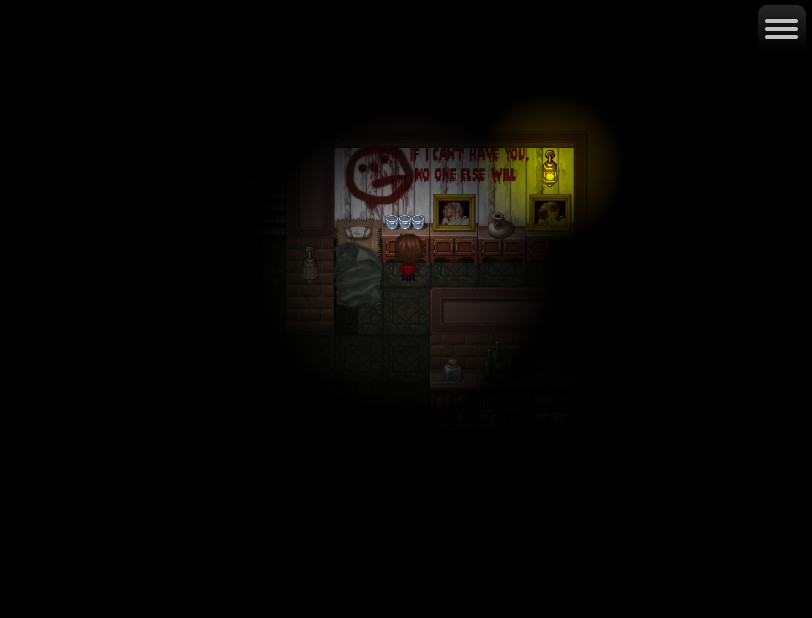
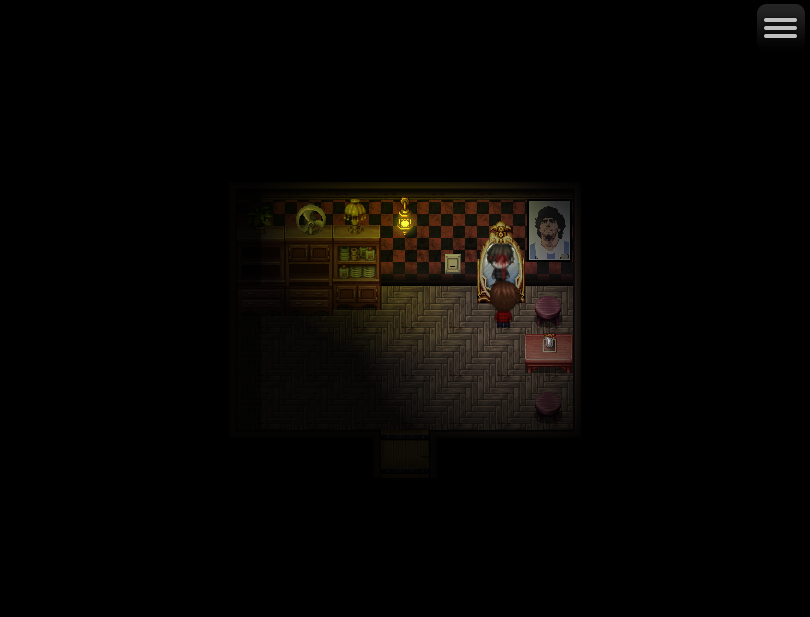
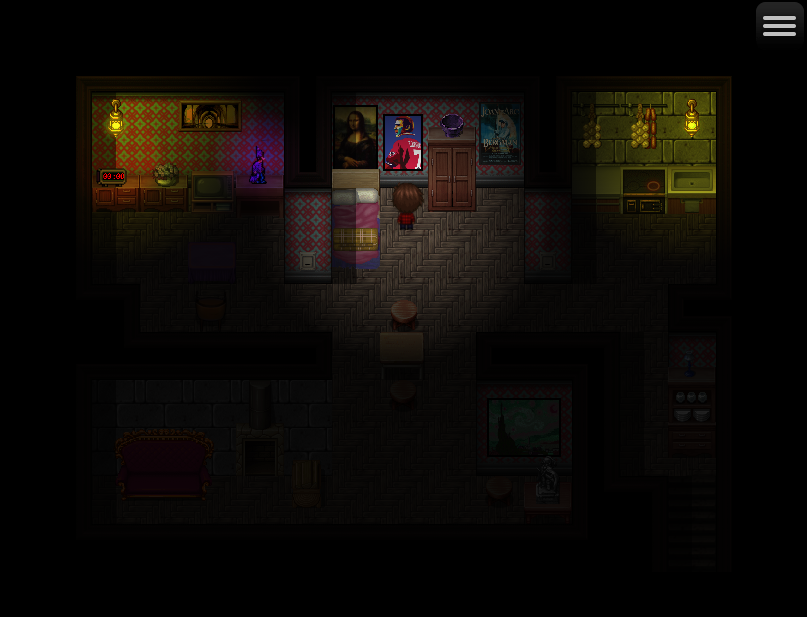
Here are a few examples; if I can help with anything else, I’d be happy to!


(+3)

I see… That’s a really good example. Thank you for sharing your experience. Maybe I can use AI for some of the things you mentioned, but as a tool rather than a replacement for human created work. 

Thanks

(1 edit) (+1)

A heads up: there are players who will skip games made with AI “as a tool” in any way and ignore anything the publishers offer from there on out.

Even a small use of what we’re calling “AI” in the wider world (and not the “enemy AI” from decades old games) has shown to cause long-term damage to the user’s perception. It’s basically designed and pushed to act like an addictive drug. Study results on this are alarming with how hard the Epstein class or whatever we’re calling it’s being pushed everywhere.

Most models seem to contribute to massive social and environmental damage.

On the social part, it wasn’t uncommon the past few years for digital artists to switch to pixel art to shake off or mess with scrapers for AI training datasets. The people who then spent that time feeding and tweaking scraped assets and art portfolios to train models to spit out credible pixel art have created widespread despair and outrage. That’s what you would be choosing to continue into by using “some” AI for pixel art.

Hiring an artist or finding an art mentor is easier when there’s trust, which for many creators is broken when presented with “slop” or otherwise pressured engage with someone who might not understand the basics of consent or moral rights.

This site is full of pixel art freebies that may be used as training assets and test fillers until you know exactly what you want for your game.

I bring this up because I feel sad when new developers learn about the potential consequences too late. Obviously, you can and will do what you want.

(+2)

I started with 2D platformers, realized that was far beyond what I was ready to take on with how long it would take me to figure out the available software. Nodes? Mapping? Pixelax or however that’s spelled? These were totally unfamiliar unless I considered vague memories of making vector art in Inskscape or watching behind-the-scene specials for animation. Watching developers struggle with exports and backups of Scratch on one side, pretty much everything including game playing in Unity, and the slopification everywhere, I realized I needed to be picky about the programs used.

I was coming from story writing; webpage building; raster art on free, low-resource software; and very limited experience as a game player. The obvious way for me to start learning gaming concepts and culture was with visual novels and mixed-type game development spaces like here.

I’m planning on returning to my 2D platform games next year, likely in Godot or with LUA, assuming I can afford to maintain any computers then. 😅 I sporadically focus on the sprites, backgrounds, and instructions for those games.

I guess my point is to figure out what you already know and are comfortable doing and build up from there.

For your last question: As a pixel artist, I’m fond of (genuine) pixel art. 😄

(+1)

I have found itch has renewed my passion for 2D gaming.

I actually get your point about figuring out what you already know and building from there, and I agree.

I’ve played a lot of games, and some of them were very simple, but I never forgot them because of their story, theme, or the unique feeling they gave me. They made me feel like I was experiencing something different.

What I’ve always dreamed of is creating a game where the player genuinely enjoys the game loop, the theme, and the story, while also developing a real connection with the characters.

That’s why I started experimenting with different game engines. And now I can see that I actually can do it. I just need to figure out which engine and tools are right for the kind of game I want to make, and then slowly build my skills from there.

(1 edit) (+1)

Back in 2013, I was lucky I got my hands with a game development book, using Java at that time (which I was a noob at coding too), that took me to a very nice step by step guide on how to make it, it took a week or two to make. This taught me many valuable lessons about game dev but I think some of the few more important ones are this:

  • It is mandatory to aim small. Small enough that you have something playable (far from perfect) asap
    • Nowadays, with the help of AI, you can and should be able to have something playable in a day or two, however bad it is. Back then (in 2013), without AI, it was about 2 weeks
  • For the first game, it does not have to be an innovation, but along the way of making it you will get shots of creativity to include in it.
  • Procrastination happens because you are over-complicating things and that makes you tired and frustrated that you want to take breaks often
    • This is one of the reasons why many people are here on itch instead of actually developing their games
  • ALWAYS focus on mechanics first and iterate until you have something usable
    • You'll have time to add art, sounds, music and story later, but if your mechanics are not there then nothing else can fit it. Mechanics are the backbone of the game.
  • Practice detachment from ideas (yours or other people's)
    • Some ideas just get stuck or just sounds great in theory but don't work in reality
    • A rule of thumb for this is if you don't have something playable in two weeks you are either wasting time because your idea doesn't work or you are over-complicating things. Leave it and go for something simpler, you can come back later with a fresh mind

  • About Marketing: Share your game's playable file or link asap so you hear feedback from players. Post regular updates on features, struggles, ideas, future, etc.

  • And finally: Give back to the community. If you share tutorials or some stories on how to do something in particular or assets, etc. the community appreciates this and tries your game. This is how I got a book contract.

Best of luck, and feel free to reach out if you need a hand planning your game. I offer free consultation (been doing it since 2024).

Actually, you’ve touched on one of the most important points. I don’t know how to describe it exactly, but it’s like you touched someone’s wound and they scream, “Whoa, stop that!” and then they realize that you actually touched the place that needed healing. 😂

Yes, you’re right. Procrastination is something that makes you suffer. But I’ve already passed that point, and I’ve already started working on my game.

As you mentioned, some people have also told me that the best approach is to start by writing down the game’s core mechanics first, and then build everything else around them.

Thanks, man! 🙌

(+1)
  • Nowadays, with the help of AI, you can and should be able to have something playable in a day or two, however bad it is. Back then (in 2013), without AI, it was about 2 weeks

100% . AI have been HUGE. They handle logic stuff extremely fast.

RAHHHHHHHH WHYS THE SCREEN BLANK AND WHYS IT TELLING ME TO GO JUMP RAHHHH

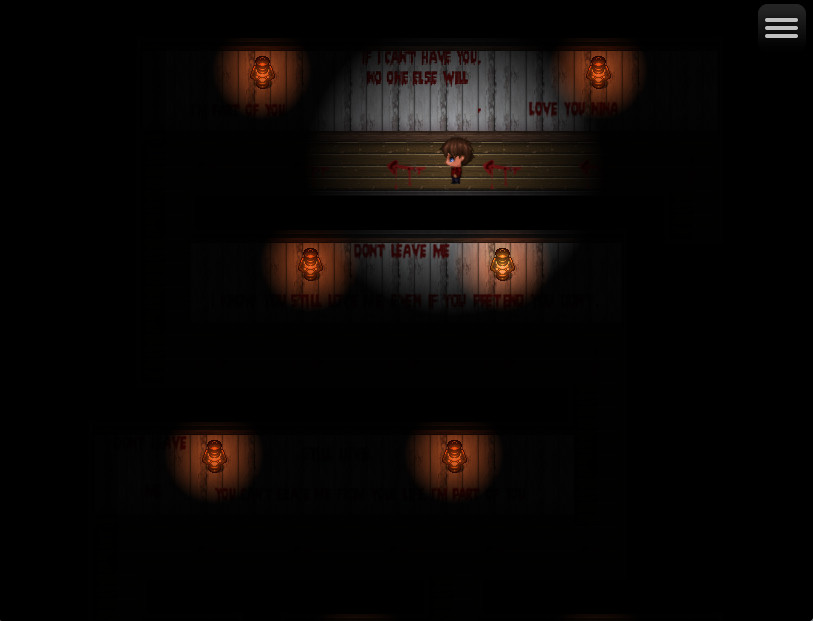
Nice atmosphere! The lighting and dark pixel art style fit the horror theme really well.

At the beginning, i thought my first game would be 2D space shooter. It couldn't be that hard? Welp, i got overwhelmed so fast. I end up making shitpost game instead.

The next project i went straight to 3D. Work on that for very long time. Until i reach big roadblock; I can't animate for shit. Since im already invest so much time on it, i end up just slap some free asset make another garbage game.

I’ve been making games independently for many years, and I’ve made plenty of mistakes along the way.

Probably my biggest mistake was focusing too much on development and leaving promotion until later.

I kept thinking, “First I need to make the game good, then I’ll think about marketing.” And when the time came, I also tried to handle promotion mostly by myself instead of seriously looking for someone who was actually good at it.

Looking back, I think that was a mistake. Making a game and getting people to notice it are almost two different jobs, and being able to do one doesn’t automatically mean you’ll be good at the other.

That said, since you’re just about to start making your first game, I actually think concentrating on development right now is completely fine. Getting something playable and discovering what you enjoy making is probably more important at this stage. Promotion becomes a much bigger concern once you decide, “I really want to release and sell this.”

Another thing I’ve learned is that playing a prototype as early as possible is incredibly useful. I’ve had ideas that sounded fun in my head, but once I actually played them, I immediately realized the basic action wasn’t satisfying. These days I try to get to a playable version quickly and judge the idea from there.

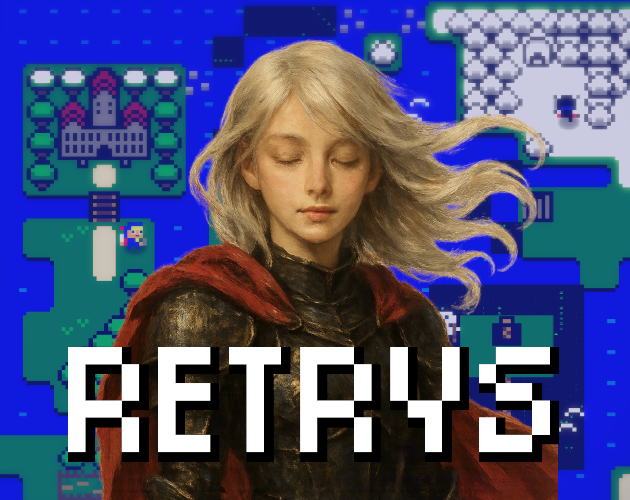
I’ve made games in several different ways. One of my recent Steam games, RETRYS, was made with RPG Maker and uses pixel art. So if you’re wondering what kind of game can be made with RPG Maker and pixel graphics, feel free to take a look at it as one example. 
You can also play it directly in your browser on itch.io.
https://ikepapa.itch.io/retrys

RETRYS

As for pixel art itself, I definitely think it’s still viable. RETRYS is a pixel-art game, and I don’t think pixel art is something you need to avoid just because it’s an older style. If it fits the game you want to make, I’d use it.

More recently I’ve also been making much smaller browser games and releasing them on itch.io. I enjoy that process because I can experiment with an idea, let people play it, learn something, and then move on to the next thing much faster.

https://ikepapa.itch.io/sen

https://ikepapa.itch.io/siegecraft

https://ikepapa.itch.io/kanjiname-ninja

Anyway, I’m still figuring things out too. Even after years of making games, every project teaches me something I didn’t expect.