Results
Ranked from 13 ratings. Score is adjusted from raw score by the median number of ratings per game in the jam.
The Biggest Challenge
The biggest challenge was that the things that make a game good — fun, fair difficulty, natural-feeling physics, readable visuals — are exactly what an AI can’t judge just by looking. The breakthrough was turning every subjective goal into a measurable target that the AI could test on its own.
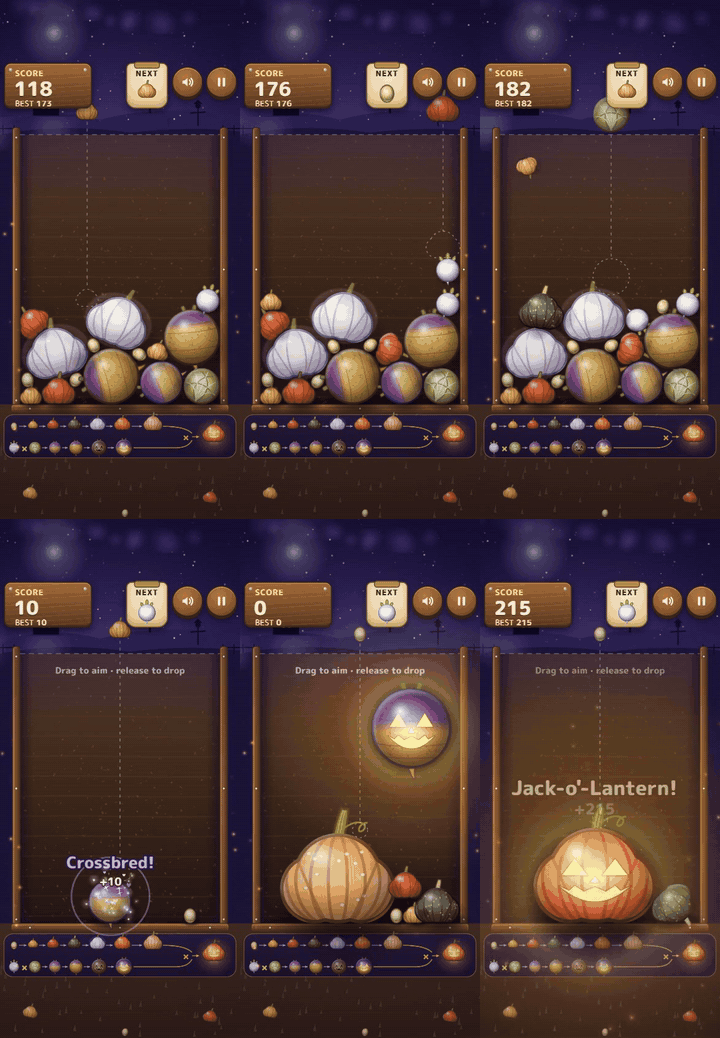
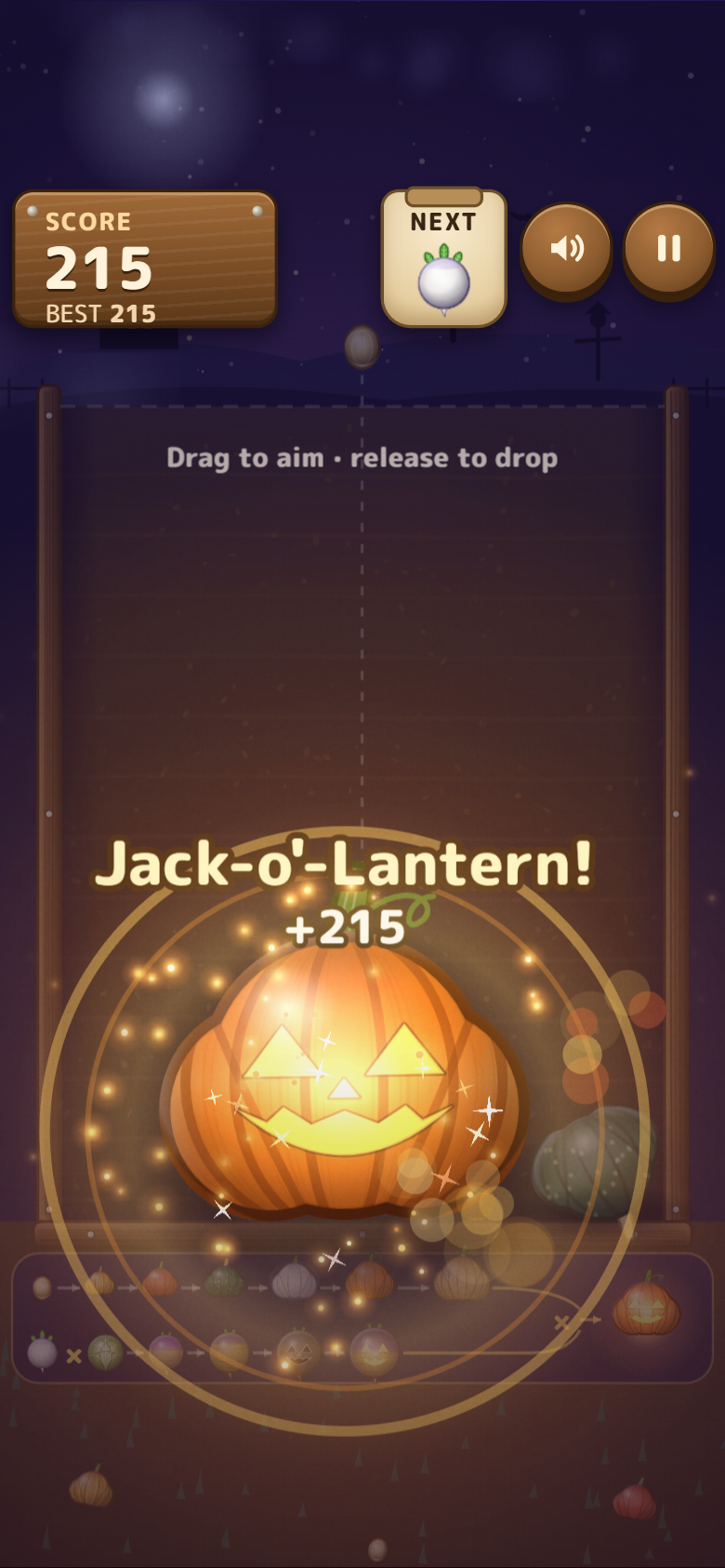
For example, I asked that making one Jack-o’-Lantern should feel like an achievement, and two should be legendary. Claude turned that into a target: a skilled AI player makes at least one in about 20% of games, and two in 3% or fewer. It built three simulated player models and tuned the piece sizes against 80 simulated games, keeping a separate set of holdout seeds for checking.
Later I asked for pumpkins that roll naturally around their center of mass, and the game suddenly became too easy (39% reached one Jack-o’-Lantern). The simulations caught it, and the AI re-tuned the game back to 16%.
The same approach covered about 90 automated checks in total, for example:
Physics: a pumpkin tilted 20° must right itself within 3 seconds
Lighting: the light direction stays consistent
Performance: frames stay within 16 ms on a slowed-down phone
Audio: loudness stays within set limits
This let the AI iterate quickly and honestly. I stayed in the director’s chair: choosing ideas, playtesting, and saying no when something didn’t fit. We built cute ghost and skeleton cameos, I didn’t like them, and they were removed.
AI Tools Used
Claude Code Only
Areas Where AI Was Used
Almost everything was made with AI, directed by me, using Claude (Anthropic) in Claude Code.
Code: all of it.
A custom physics engine (bottom-heavy, pumpkin-shaped rigid bodies that tip and roll about their center of mass)
The merge and crossbreed rules, rendering and effects
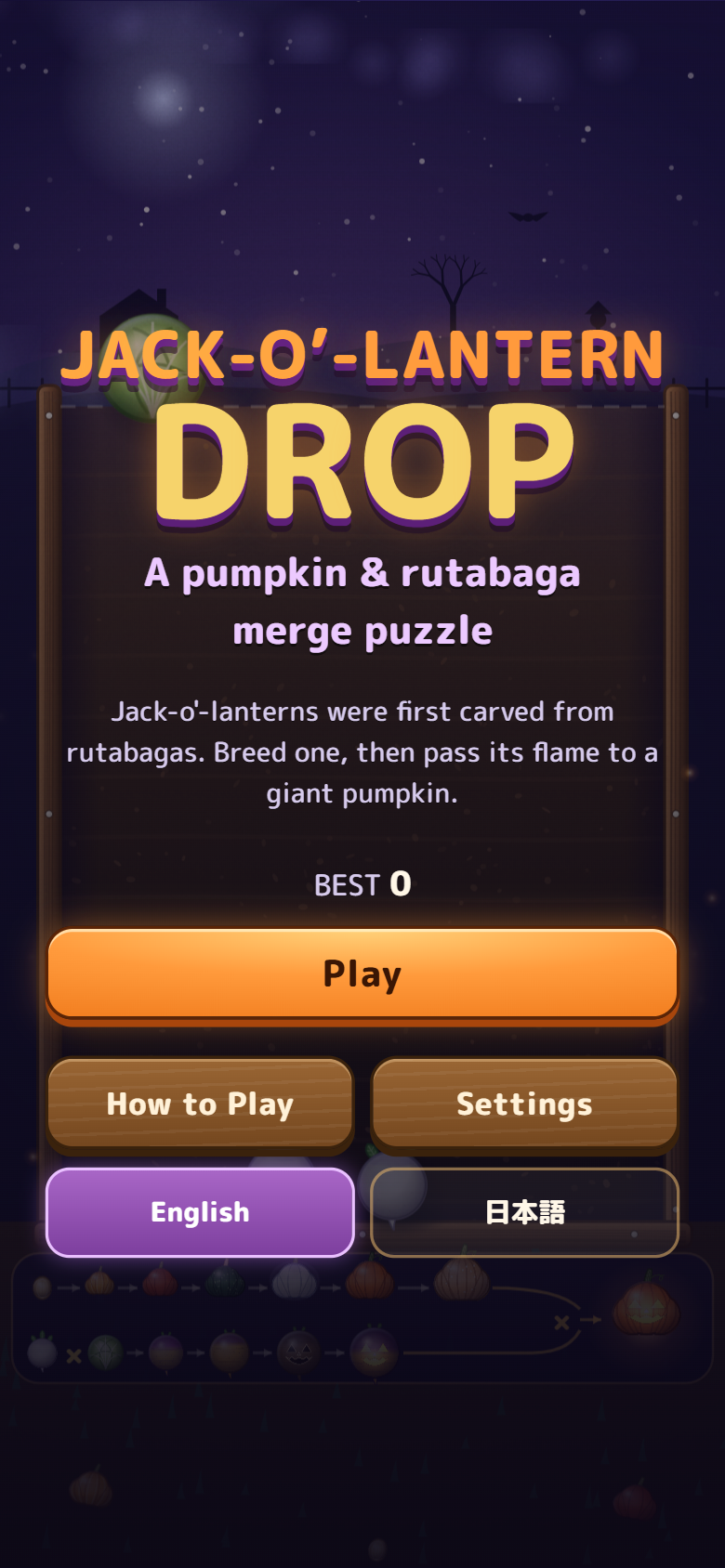
The bilingual (EN/JA) UI, plus save-image and share-to-X features
Art: every graphic is drawn by code the AI wrote: the veggies, moonlight shading, the night-field background, the cinematics, even the cover and page banner. No image generator and no image files.
Audio: everything is synthesized live with the Web Audio API by AI-written code.
An original Celtic-Halloween soundtrack (harp, tin whistle, fiddle, bodhrán), with the instruments placed on a stereo stage
22 sound effects
Game design & balance: idea generation, rule design, and difficulty tuning with simulated AI players.
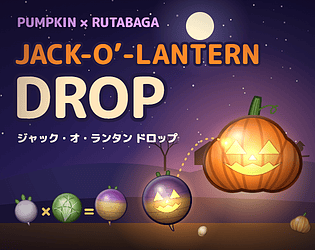
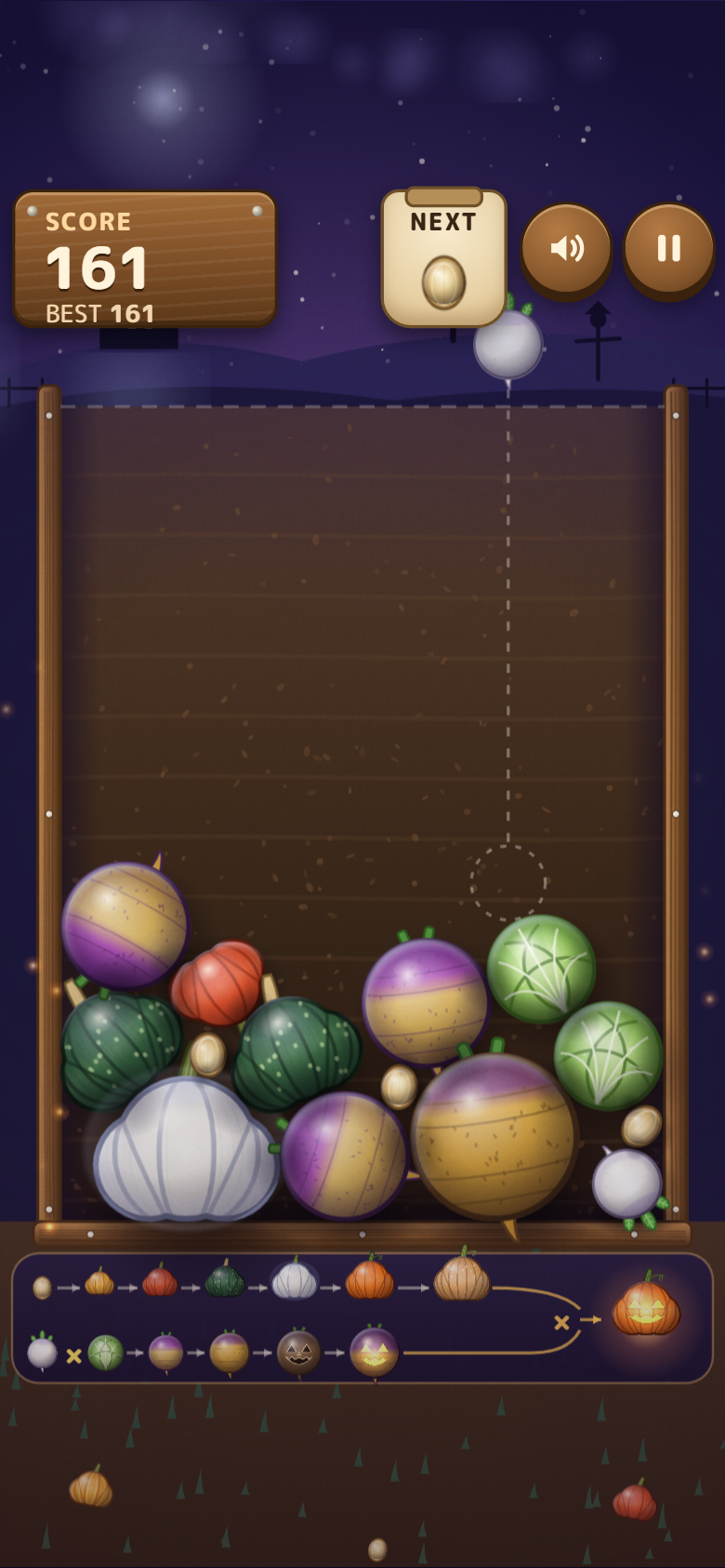
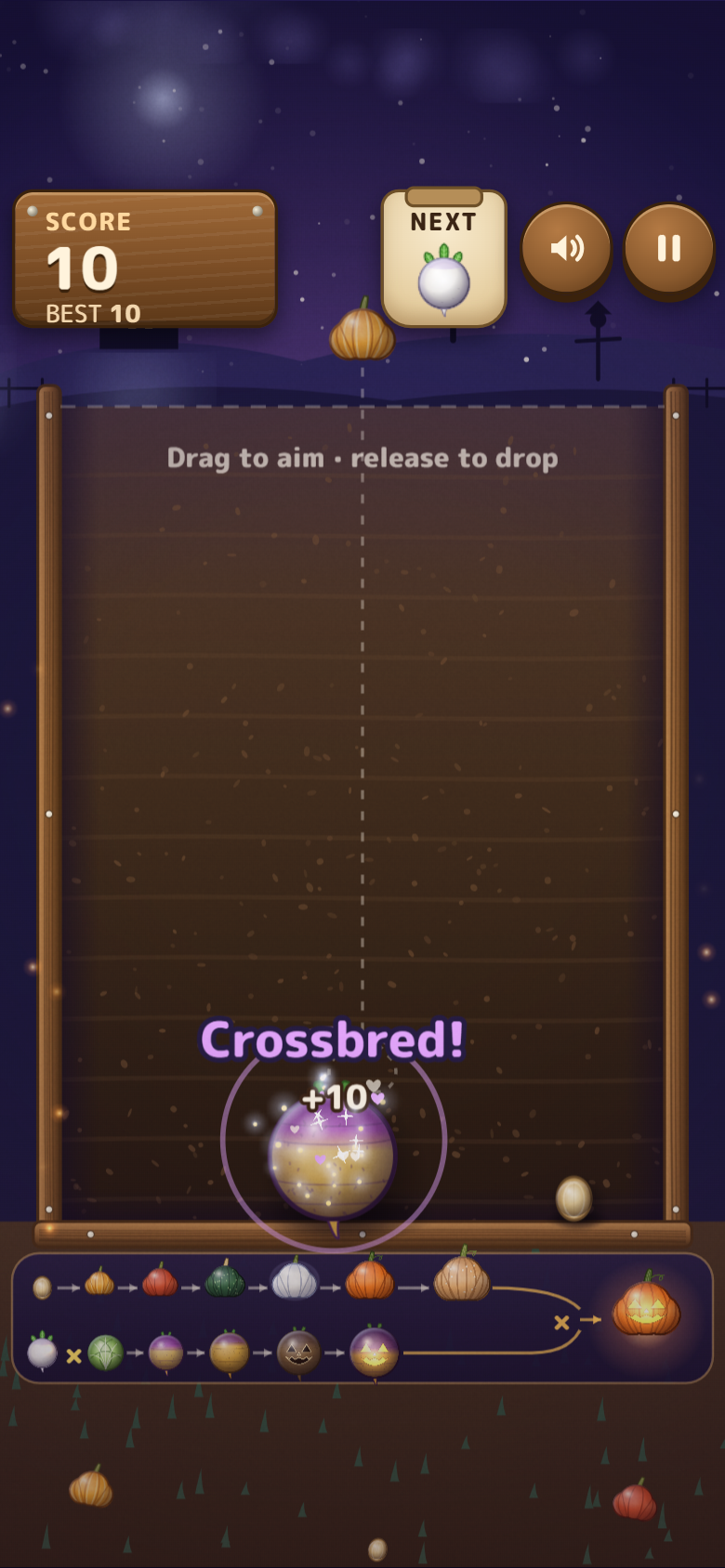
The RUTABAGA twist came from AI research: jack-o’-lanterns were first carved from rutabagas and turnips, and the rutabaga is believed to be a turnip × cabbage cross. That became the core mechanic: breed a rutabaga, light it, and pass its flame to a giant pumpkin.
Writing & research: UI text and fact-checked trivia in English and Japanese, the itch.io description, research on similar games, and itch.io embed specs.
QA: automated tests for physics, UI, visuals, audio and performance, plus the screenshots and gameplay video.
Human part: creative direction and every decision (concept, art style, difficulty target, which features to keep).
Non-AI asset: the only one is the open-source font M PLUS Rounded 1c (SIL OFL). The whole game is a single ~400 KB HTML file.


Leave a comment
Log in with itch.io to leave a comment.